Jorge Batlle: Navigating Uruguay's Economic and Diplomatic Challenges (2000–2005)
Jorge Batlle assumed the presidency of Uruguay during one of the most turbulent periods in the nation's modern history. His term, spanning from 2000 to 2005, was defined by a relentless struggle against economic collapse, a commitment to global free trade, and a firm stance on human rights and international diplomacy.
Economic Recovery and Crisis Management
Batlle took office as Uruguay spiraled into a severe economic depression. This culminated in the 2002 Uruguay banking crisis, which pushed the country to the brink of sovereign default—a situation where a government is unable to pay its debts. At the height of this crisis, approximately one-third of the population lived below the poverty line.
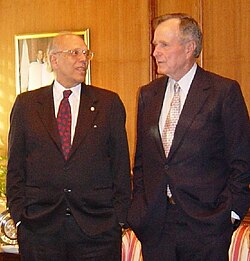
To stabilize the nation, Batlle implemented strict measures to reduce public spending. This focus on maintaining macroeconomic balance restored international confidence in Uruguay's financial management. A critical turning point occurred when US President George W. Bush provided $1.5 billion in credit, which was instrumental in preventing a total default.
Agricultural Challenges
Beyond the financial sector, the administration faced a biological threat in the form of a foot-and-mouth disease outbreak. Because this disease threatened the international marketability of Uruguayan beef, a primary export, the government prioritized eradication efforts. By the end of Batlle's term, Uruguay had successfully regained its disease-free status.
Diplomacy and Global Trade
Jorge Batlle was a staunch advocate for unhampered free trade, consistently opposing protectionism and government subsidies. He viewed regional integration as the primary vehicle for entering the global economy.
- MERCOSUR: Batlle firmly supported this Southern Common Market, seeking to strengthen it through associations like the "4+1" agreement with the United States.
- FTAA: He was a proponent of the Free Trade Association of the Americas, aiming for broader hemispheric trade liberalization.
- US Relations: While many Latin American governments during the "Pink Tide" (a period of left-wing political shifts in the region) distanced themselves from Washington, Batlle maintained close diplomatic ties with the United States.
His foreign policy was not without friction. Batlle engaged in a diplomatic conflict with Cuba, where he openly criticized the human rights record of the Castro regime.
Social Policy and Human Rights
Batlle's domestic agenda included several controversial and progressive proposals. In 2002, his administration dealt with the law regarding the legalization of prostitution. Furthermore, he proposed the legalization of cocaine, arguing that removing the illicit nature of the drug would reduce the political influence and power of drug cartels.
Human rights remained a cornerstone of his presidency. Batlle helped establish the Comisión para la Paz (Commission for Peace). One of the most poignant moments of his term was the announcement of the discovery of Macarena, the granddaughter of Argentine poet Juan Gelman, who had been born to a mother who had "disappeared" during political repression.
Key Facts
- Economic Aid: Received $1.5 billion in credit from the US to avoid sovereign default.
- Poverty Levels: Faced a crisis where one-third of the population fell below the poverty line.
- Trade Philosophy: Opposed all forms of protectionism and subsidies.
- Health Milestone: Successfully restored Uruguay's disease-free status regarding foot-and-mouth disease.
- Diplomatic Stance: Maintained strong US ties despite the regional "Pink Tide" trend.
| Category | Key Action/Event | Outcome/Goal |
|---|---|---|
| Economics | Reduced public spending & US credit | Avoided sovereign default |
| Agriculture | Foot-and-mouth disease control | Regained disease-free status |
| Trade | Support for MERCOSUR and FTAA | Open regional integration |
| Human Rights | Created Comisión para la Paz | Advancement of human rights and reconciliation |
| Social Policy | Proposed cocaine legalization | Reduce drug cartel influence |
Frequently Asked Questions
How did Jorge Batlle prevent Uruguay from defaulting on its debt?
Batlle focused on reducing public spending to maintain macroeconomic balance and secured $1.5 billion in credit from US President George W. Bush to avoid sovereign default.
What was Batlle's position on international trade?
He was a consistent spokesman for unhampered free trade, firmly opposing protectionism and subsidies while supporting the FTAA and MERCOSUR.
How did Batlle's relationship with the US differ from other Latin American leaders of the time?
While many regional governments during the "Pink Tide" distanced themselves from the United States, Batlle maintained close diplomatic ties with the US administration.
What social reforms did Batlle propose or implement?
He dealt with the legalization of prostitution in 2002 and proposed the legalization of cocaine to diminish the political power of drug cartels.
What was Batlle's contribution to human rights?
He helped create the Comisión para la Paz and played a role in the finding of Macarena, the granddaughter of poet Juan Gelman.