Jörg Syrlin the Elder: Master Sculptor of the Ulm School
In the heart of the German Renaissance and Late Gothic periods, few figures left as indelible a mark on the city of Ulm as Jörg Syrlin the Elder. A master sculptor and a central figure of the Ulm school—a regional style of art and architecture characterized by its distinct approach to form and detail—Syrlin's work remains a testament to the craftsmanship of the 15th century.
Born around 1425 in Ulm, Syrlin spent his life and career refining the art of sculpture in both stone and wood. His influence extended beyond his own hand, as he led a productive workshop that shaped the aesthetic landscape of his hometown.
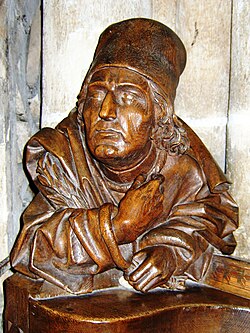
Key Facts
- Lifespan: c. 1425 – 1491.
- Location: Active primarily in Ulm, Germany.
- Artistic Affiliation: Member of the Ulm school.
- Most Famous Work: The intricate carvings for the choir stalls of the Ulm Minster.
- Legacy: His workshop was succeeded by his son, Jörg Syrlin the Younger.
The Artistry of the Ulm Minster
The pinnacle of Jörg Syrlin the Elder's career is undoubtedly his contribution to the Ulm Minster. He is most renowned for the masterful carvings found within the choir stalls, where his ability to blend theological narrative with physical beauty is most evident.
Beyond the choir stalls, Syrlin's involvement with the Minster extended to other significant projects. Historical records and contracts highlight his work on the high altar retable—a retable being an altarpiece placed behind the altar—which is noted for being one of the earliest examples of a retable where the natural wood remained visible.
Workshop and Succession
Syrlin did not work in isolation. He operated a professional workshop that served as a hub for artistic production in the region. This system of apprenticeship and family succession was common for the era, ensuring that technical secrets and stylistic preferences were passed down through generations.
Upon his death in 1491, the command of the workshop was transferred to his son, Jörg Syrlin the Younger. This transition allowed the Syrlin legacy to continue, maintaining the family's prominence in the German sculpting scene.
Summary of Jörg Syrlin the Elder
| Attribute | Details |
|---|---|
| Born | c. 1425, Ulm |
| Died | 1491, Ulm |
| Primary Mediums | Stone and Wood |
| Key Association | Ulm School |
| Major Project | Ulm Minster Choir Stalls |
| Successor | Jörg Syrlin the Younger |
Frequently Asked Questions
Who was Jörg Syrlin the Elder?
Jörg Syrlin the Elder (c. 1425–1491) was a prominent German sculptor associated with the Ulm school, best known for his work in the Ulm Minster.
What is the most famous work of Jörg Syrlin the Elder?
His most celebrated works are the detailed carvings for the choir stalls of the Ulm Minster.
What was the "Ulm school"?
The Ulm school refers to a group of artists and a specific regional style of sculpture and architecture centered in the city of Ulm during the Late Gothic and early Renaissance periods.
Who took over Syrlin's workshop after his death?
The workshop was taken over by his son, Jörg Syrlin the Younger.
What is a retable, and why was Syrlin's work on one significant?
A retable is an altarpiece placed behind an altar. Syrlin's work on the high altar retable of the Ulm Minster is significant for being one of the earliest examples of a holzsichtigen (wood-visible) retable.