Johnson & Johnson: A Legacy of Pharmaceutical and Medical Innovation
Johnson & Johnson (J&J) is a global leader in pharmaceuticals, biotechnology, and medical technologies. Headquartered in New Brunswick, New Jersey, the company has evolved from a small family venture into one of the world's most influential healthcare corporations. As of 2025, it is ranked 48th on the Fortune 500 list and 42nd in the Forbes Global 2000. Notably, it is one of only two U.S.-based companies to hold a prime AAA credit rating from S&P Global, reflecting its immense financial stability.
Key Facts
- Founders: Robert Wood Johnson I, James Wood Johnson, and Edward Mead Johnson.
- Core Divisions: Innovative Medicine and MedTech.
- 2025 Revenue: US$ 94.19 billion.
- Global Workforce: 138,200 employees (2025).
- Market Status: Publicly traded on the NYSE as JNJ.
- Credit Rating: AAA (S&P Global).
The Origins of a Healthcare Giant
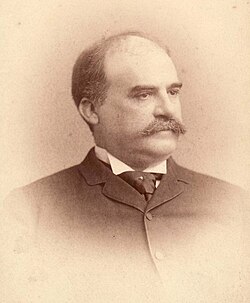
The company's roots trace back to Robert Wood Johnson, who began his career as a pharmaceutical apprentice at age 16. After a brief partnership in a medicated plaster business, Johnson was inspired by Joseph Lister's work on antiseptic surgery—a method of preventing infection during surgical procedures—at the 1876 Centennial Exposition.
In 1886, Robert Wood Johnson joined his brothers, James and Edward, to found Johnson & Johnson. They launched a line of ready-to-use sterile surgical dressings, starting with just 14 employees in New Brunswick, New Jersey.
Early Growth and Humanitarian Efforts
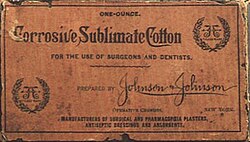
By 1894, the company had expanded to 14 buildings and 400 employees, introducing its first baby product, Johnson's Baby Powder. J&J quickly became a key provider of medical supplies during crises, donating 300,000 surgical dressings and developing trauma stretchers during the Spanish-American War. They also provided aid during the 1900 Galveston hurricane and the 1906 San Francisco earthquake.
Innovation and Global Expansion
The early 20th century saw a wave of iconic product launches. In 1921, the company released the first commercial adhesive bandage, the Band-Aid, created by Earle Dickson. Other milestones included the launch of Johnson's Baby Soap in 1921 and the first prescription contraceptive gel, Ortho-Gynol, in 1931. By the 1930s, the company had expanded its reach into South Africa, Mexico, Brazil, and Argentina.

Modern Business Structure
Today, Johnson & Johnson operates through two primary business segments, having recently spun off its consumer health division (Kenvue) in 2023-2024.
Innovative Medicine
Accounting for 64% of 2025 revenues, this division focuses on pharmaceutical research and biotechnology. Key subsidiaries include Janssen Pharmaceuticals and Actelion Pharmaceuticals.
MedTech
Contributing 36% of 2025 revenues, the MedTech segment specializes in medical devices and technology. This includes interventional solutions, orthopaedics, general and advanced surgery, and vision care through subsidiaries like DePuy Synthes and Ethicon.
| Metric | Value |
|---|---|
| Revenue | US$ 94.19 Billion |
| Net Income | US$ 26.80 Billion |
| Total Assets | US$ 199.2 Billion |
| Total Equity | US$ 81.54 Billion |
| Employee Count | 138,200 |
Recent Developments and Challenges
In recent years, J&J has played a critical role in global health, including the production of the Janssen COVID-19 vaccine. The company has also pursued aggressive growth through acquisitions, purchasing Ambrx Biopharma ($2 billion), Shockwave Medical ($13.1 billion), and Proteologix ($850 million) in 2024.
However, the company has faced significant legal hurdles. These include multi-billion dollar settlements regarding the opioid epidemic and extensive litigation over talc-based baby powder. In February 2025, J&J offered a $10 billion settlement for talc-related claims, though this was rejected by a judge in April 2025.
The Red Cross Trademark
A unique aspect of J&J's history is its use of the Red Cross symbol. While the Geneva Conventions reserve the emblem for specific military and humanitarian uses, J&J registered it as a U.S. trademark in 1905. Due to a specific clause in U.S. law (18 U.S.C. 706), the company is permitted to continue this pre-existing use.

Frequently Asked Questions
What are the two main divisions of Johnson & Johnson?
The company operates through Innovative Medicine, which focuses on pharmaceuticals and biotech, and MedTech, which focuses on medical devices and technology.
What happened to the consumer brands like Band-Aid and Tylenol?
These brands were part of the consumer products division, which was spun off into a separate public company called Kenvue in 2023. Johnson & Johnson sold its remaining stake in Kenvue in 2024.
Why is Johnson & Johnson allowed to use the Red Cross symbol?
J&J registered the Red Cross as a trademark in 1905, before certain U.S. laws protected the emblem. A legal clause allows this pre-existing use to continue, provided it is not used on structures or vehicles that could be confused with military use.
Who is the current leader of the company?
As of 2023, Joaquin Duato serves as the Chairman and CEO of Johnson & Johnson.