John Montagu, 2nd Duke of Montagu
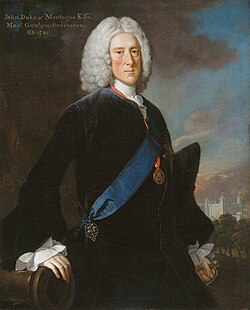
Major-General John Montagu, the 2nd Duke of Montagu (1690–1749), was a multifaceted figure of the 18th century. A British Army officer, courtier, and high-ranking nobleman, he is remembered as much for his official contributions to the state and Freemasonry as for his eccentric personality and penchant for elaborate practical jokes.
Born in 1690, Montagu was groomed for a life of leadership through private tuition and a formative grand tour of France and Italy accompanied by Pierre Sylvestre. His social standing was further cemented at the age of 15 when he married Lady Mary Churchill, the daughter of the 1st Duke of Marlborough and Sarah Churchill, linking him to one of the most powerful and wealthy families in Europe.
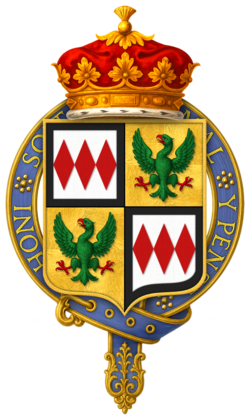
Key Facts
- Titles: 2nd Duke of Montagu, Knight of the Garter (KG), Knight of the Bath (KB), Privy Counsellor (PC), and Fellow of the Royal Society (FRS).
- Military Rank: Major-General in the British Army.
- Masonic Role: Fifth Grand Master of the Premier Grand Lodge of England.
- Legacy: His London residence, Montagu House, later became the first site of the British Museum.
- Family: Married Lady Mary Churchill; titles became extinct upon his death in 1749 due to a lack of surviving sons.
Military and Political Career
Montagu's professional life was marked by a series of high-profile appointments. In 1709, he succeeded his father, Ralph Montagu, as the Duke of Montagu. His administrative and military reach extended to the West Indies in 1722, when King George I appointed him governor of Saint Lucia and Saint Vincent. Montagu delegated the actual settlement to Nathaniel Uring, though the attempt to establish a colony at Petit Carenage ultimately failed due to French opposition and a lack of British naval support.
By 1735, he attained the rank of Major-General. His career peaked in 1740 when he was promoted to Master-General of the Ordnance, a position he held until 1742. During the Jacobite rising of 1745, he raised two specific military units: Montagu's Carabineers (cavalry) and Montagu's Ordnance Regiment (foot). Both regiments were disbanded following the Battle of Culloden.
Philanthropy and Intellectual Pursuits
Beyond the battlefield and the court, Montagu was a man of diverse interests. He was a Fellow of the Royal Society (1725) and the Royal College of Physicians (1717). He also demonstrated a commitment to social welfare as one of the founding governors of the Foundling Hospital, London's first home for abandoned children, established in 1739.
Montagu is also noted for financing the education of two prominent Black British figures: Ignatius Sancho, who served as a butler at his Blackheath residence, and Francis Williams, whom he allegedly sent to Cambridge University, though university records do not confirm Williams' attendance.
The Eccentric Aristocrat
Despite his titles, Montagu was notorious for his juvenile sense of humor. His mother-in-law famously remarked that his talents were those of a fifteen-year-old, citing his habit of spraying guests with squirts in his garden or placing irritating substances in beds at his country houses.
His pranks often targeted high-profile figures; he reportedly dunked the philosopher Montesquieu in a tub of cold water. He also used his influence to commission the artist William Hogarth to create unflattering cartoons of Chief Justice John Willes in the series Before and After. He is also attributed with the famous hoax known as The Bottle Conjuror.
Estates and Succession
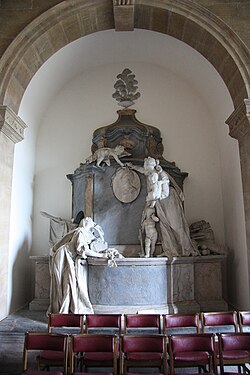
Montagu's passion for grandeur was evident in Boughton House in Northamptonshire, which he designed as a miniature version of Versailles. This estate, which housed a significant library including the 16th-century Wriothesley Garter book, now belongs to the Buccleuch family. His town home, Montagu House in Bloomsbury, served as the initial home of the national collections that opened to the public as the British Museum in 1759.
Montagu died on July 5, 1749. Because none of his sons survived him, his titles became extinct. His estates passed to his daughter, Mary, whose husband, George Brudenell, later assumed the Montagu name and was created the 1st Duke of Montagu in a second creation of the title.
| Category | Details |
|---|---|
| Lifespan | 1690 – July 5, 1749 |
| Spouse | Lady Mary Churchill |
| Key Military Role | Master-General of the Ordnance (1740–1742) |
| Masonic Title | 5th Grand Master of the Premier Grand Lodge of England |
| Notable Residences | Boughton House, Montagu House (Bloomsbury) |
| Philanthropic Work | Founding Governor of the Foundling Hospital |
Frequently Asked Questions
What happened to the Dukedom of Montagu after John Montagu's death?
Since none of his sons survived him, the titles became extinct in 1749. However, his daughter Mary's husband, George Brudenell, later assumed the Montagu name and was created the 1st Duke of Montagu in a second creation of the title in 1766.
How is John Montagu connected to the British Museum?
His town residence, Montagu House in Bloomsbury, was used to house the national collections, which eventually opened to the public as the British Museum in 1759.
What was Montagu's role in Freemasonry?
He served as the fifth Grand Master of the Premier Grand Lodge of England, which was the first Masonic Grand Lodge ever created.
Who were the notable figures Montagu supported educationally?
He financed the education of Ignatius Sancho and Francis Williams, two notable Black British figures of the 18th century.
What was the nature of Montagu's reputation for practical jokes?
He was known for childish and sometimes mean-spirited pranks, such as wetting guests with squirts, making beds itch, and dunking the philosopher Montesquieu in cold water.