John Cabot: The Italian Navigator Who Reclaimed North America for Europe
Long before the modern era of global connectivity, the 15th century was defined by a daring race to find new routes to the East. Among the most pivotal figures of this age was John Cabot (born Giovanni Caboto), an Italian navigator whose expeditions under the English crown fundamentally altered the map of the world. Cabot is recognized as the first European since the Norse colonization of the 11th century to explore the coastal regions of North America.
His journey was not merely a feat of navigation but a geopolitical milestone, establishing an English claim to the "New Found Land" and paving the way for centuries of Atlantic exploration.
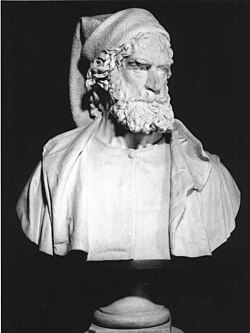
Key Facts
- Origin: Likely born in Genoa around 1450; later became a citizen of Venice.
- Primary Achievement: Led the first documented European expedition to coastal North America since the Norse in 1497.
- Patronage: Commissioned by King Henry VII of England.
- Landing Site: Cape Bonavista, Newfoundland, is officially recognized as his first landing site.
- Family Legacy: His son, Sebastian Cabot, also became a renowned explorer.
Origins and Early Life
The exact beginnings of Giovanni Caboto remain a subject of historical study. Pedro de Ayala, a Spanish envoy, described him as "another Genoese like Columbus," a claim supported by Cabot's own son, Sebastian. By 1476, Cabot had attained citizenship in the Republic of Venice. Given that Venetian law required fifteen years of residency for citizenship, it is inferred that he lived in the city from at least 1461.
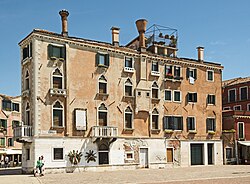
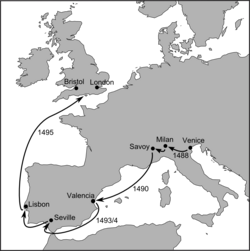
Following his time in Venice, Cabot traveled across Europe between 1488 and 1495. Eventually, he sought the patronage of King Henry VII of England, who granted Cabot and his three sons letters patent—official documents giving them the authority to explore—on March 5, 1496.
The Voyages to the New World
The First Attempt (1496)
Records of Cabot's initial attempt are sparse. According to the "John Day letter," written by a Bristol merchant, Cabot set sail with a single ship in the summer of 1496. However, the voyage was plagued by bad weather, a confused crew, and a shortage of supplies, forcing him to turn back.
The Landmark Voyage of 1497
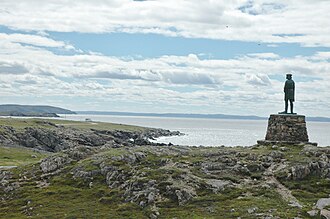
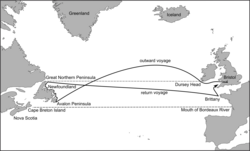
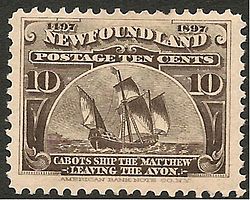
Cabot's second expedition in 1497 was a resounding success. Sailing from Bristol, he reached the coast of North America. While the exact landing spot is debated, the British and Canadian governments have designated Cape Bonavista, Newfoundland, as the site of his first landing.
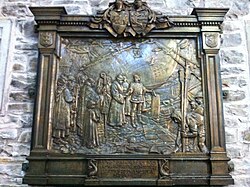
Recent historical research by Evan Jones and Margaret Condon suggests that Cabot did not sail alone. Evidence indicates that William Weston, a Bristol merchant, may have been the first Englishman to lead an expedition to North America, working jointly with Cabot. Both men were rewarded by King Henry VII in January 1498 for their achievements.
The Final Expedition and Mystery (1498)
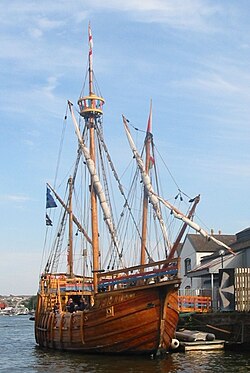
In May 1498, Cabot departed Bristol with a fleet of five ships, some carrying merchandise such as lace points and cloth. This voyage is shrouded in mystery, as there are no official records of his return. However, historian Alwyn Ruddock proposed that Cabot successfully returned to England in 1500 after an extensive exploration of the East Coast, potentially reaching as far south as the Chesapeake Bay or the Caribbean.
The Legacy of the Cabot Family
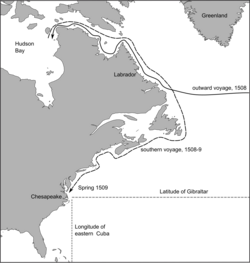
The spirit of exploration continued through Cabot's son, Sebastian Cabot. In 1508–09, Sebastian led a voyage from Bristol to explore the coast from Hudson Bay to Chesapeake Bay in search of the Northwest Passage—a theoretical sea route connecting the Atlantic and Pacific Oceans through the Arctic.
Sebastian later sailed for Spain to South America, where he spent several years (1525–1528) searching for silver along the Río de la Plata in Argentina.
Summary of Cabot's Impact
| Voyage Year | Outcome | Key Significance |
|---|---|---|
| 1496 | Unsuccessful | Forced to return due to weather and supplies. |
| 1497 | Successful | First European coastal exploration of North America since the Norse. |
| 1498 | Disappeared/Debated | Led a fleet of five ships; potential exploration of the US East Coast. |
| 1508-09 | Sebastian Cabot | Exploration of the Northwest Passage. |
Honors and Commemorations
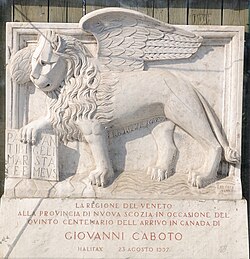
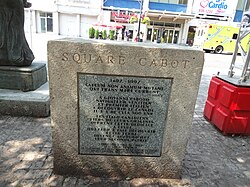
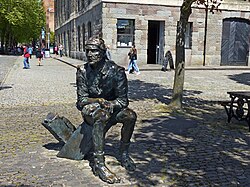
John Cabot's contributions are immortalized through various monuments and honors across the Atlantic. From the statue at the Arnolfini Gallery in Bristol to the commemorative sculpture of the Lion of St Mark in Halifax, Nova Scotia, his journey continues to be celebrated.
Frequently Asked Questions
Where did John Cabot first land in North America?
While several locations have been proposed, the Canadian and British governments officially recognize Cape Bonavista, Newfoundland, as the site of his first landing.
Who funded John Cabot's voyages?
His voyages were commissioned and supported by King Henry VII of England, who provided letters patent and later a pension of £20 per year.
What happened to John Cabot after his 1498 voyage?
His fate is uncertain. While some records suggest he disappeared at sea, historian Alwyn Ruddock and researchers from the Cabot Project suggest he may have returned to London by May 1500 after exploring the North American coast.
What was the Northwest Passage?
The Northwest Passage was a sought-after sea route through the Arctic Ocean, intended to provide a shorter path from Europe to Asia. Sebastian Cabot searched for this route during his 1508–09 expedition.
Was John Cabot the first European to reach North America?
No. The Norse (Vikings) had colonized parts of North America (Vinland) in the 11th century. Cabot was the first European to explore the coast since those Norse visits.