Johan Hendrik Breytenbach and the History of the Second Boer War
Johan Hendrik Breytenbach (1917–1994) stands as one of the most significant figures in the documentation of South African military history. As the official state historian for the Second Boer War (also known as the Second War of Independence), Breytenbach dedicated over five decades of his life to meticulously analyzing the conflict that shaped the region's political landscape.
His journey began in 1940 while employed by the National Archives in Pretoria. By 1959, his expertise led the Minister of Education, Arts and Science to formally appoint him as the state historian for the Second Boer War, a role conducted under the supervision of the University of Pretoria's Department of History.
Key Facts
- Official Role: Appointed as the South African state historian for the Second Boer War in 1959.
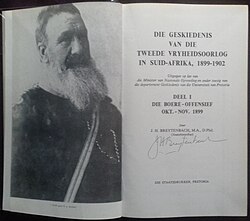
- Major Work: Authored the multi-volume series Die Geskiedenis van die Tweede Vryheidsoorlog in Suid-Afrika, 1899–1902.
- Research Span: Conducted continuous in-depth study of primary sources starting in 1940.
- Legacy: His work served as a primary reference for other historians, including the Anglo-Irish historian Thomas Pakenham.
- Posthumous Completion: The State Archives published his final volume in 1996 using his remaining notes.
The Monumental History of the Second War of Independence
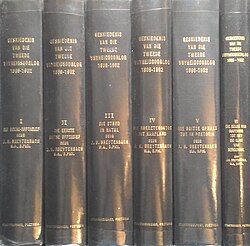
Breytenbach's magnum opus, Die Geskiedenis van die Tweede Vryheidsoorlog in Suid-Afrika, 1899–1902 (The History of the Second War of Independence in South Africa, 1899–1902), was written in Afrikaans and published between 1969 and 1983. Breytenbach sought to provide a scientific description of the war, arguing that previous accounts were often marred by sentiment, fabrication, or hasty research.
He emphasized the importance of filtering out propaganda and relying on a rigorous study of archival sources to create a faithful picture of the events. While Breytenbach published five volumes during his lifetime, he left two more in the planning stages. Following his death on January 3, 1994, the State Archives finalized Volume 6, which was published in 1996 and concludes with the Battle of Bergendal (August 21–27, 1900).
Analysis of Military Events
Beyond mere chronology, Breytenbach used his research to re-evaluate controversial military decisions. For example, he defended General Piet Cronjé's surrender at the Battle of Paardeberg on February 27, 1900. Breytenbach argued that the surrender was inevitable because Cronjé's 4,000 infantry and 5 cannons were trapped by 40,000 British soldiers and 100 cannons, while being cut off by an unfordable river.
Comprehensive Bibliography and Contributions
While his multi-volume history is his most famous contribution, Breytenbach was a prolific author of books and articles. His work spanned from early theses on Transvaal history to the editing of archival records for the Volksraad (the parliament of the Boer republics) of the South African Republic, the Orange Free State, and Natal.
| Volume | Publication Year | Focus/Title |
|---|---|---|
| Vol. I | 1969 | The Boer Offensive (Oct. – Nov. 1899) |
| Vol. II | 1971 | The First British Offensive (Nov. – Dec. 1899) |
| Vol. III | 1973 | The Battle in Natal (Jan. – Feb. 1900) |
| Vol. IV | 1977 | The Boer Retreat from the Cape Colony |
| Vol. V | 1983 | The British Advance to Pretoria |
| Vol. VI | 1996 | Siege of Mafeking to the Battle of Bergendal |
His influence extended internationally; Thomas Pakenham, in his own history of the Boer War, acknowledged borrowing freely from Breytenbach's monumental work due to its grounding in state archives.
Frequently Asked Questions
Who was Johan Hendrik Breytenbach?
He was the official South African state historian for the Second Boer War, employed by the National Archives in Pretoria and supervised by the University of Pretoria.
What was Breytenbach's primary goal in writing his history of the war?
He aimed to provide a scientifically described history of the conflict, free from the sentiment and fabrication he believed plagued previous works, by relying on an in-depth study of primary sources.
How many volumes of his main work were published?
A total of six volumes were published. Breytenbach published the first five between 1969 and 1983, and the sixth was published posthumously in 1996 by the State Archives.
How did Breytenbach view General Piet Cronjé's surrender?
He believed the surrender at the Battle of Paardeberg was not Cronjé's fault, citing the overwhelming disparity in forces (4,000 Boers vs. 40,000 British) and the geographical entrapment caused by an unfordable river.
In what language were Breytenbach's works published?
His publications, including the multi-volume history of the Second Boer War, were written and published in Afrikaans.