Jo Stafford: The Voice of a Generation and Her Solo Career
Jo Stafford stands as one of the most influential vocalists of the mid-20th century, transitioning from a successful group dynamic to a powerhouse solo career. Known for her precision and purity of tone, Stafford navigated the evolving landscapes of radio, television, and recording labels to become a global icon of the era.
The Rise of a Solo Star at Capitol Records
Stafford's journey into solo stardom began with a pivotal connection. While she was still performing with the Dorsey brothers, Johnny Mercer promised her a future recording role in his own company. Following her departure from the Pied Pipers in 1944, she became the first solo artist signed to Capitol Records.
Her ascent was guided by Mike Nidorf, a former U.S. Army captain and talent agent who had previously discovered legends like Glenn Miller and Artie Shaw. Nidorf recognized Stafford's potential and helped her refine her public image and build the confidence necessary for a solo spotlight.
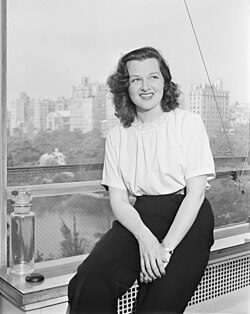
Despite her recording success, Stafford harbored a deep discomfort with live performances. In February 1945, she completed a six-month residency at New York's La Martinique nightclub. Although critics described the performance as "sensational," Stafford later admitted in a 1996 interview with The New Yorker that she felt "lousy" in front of live audiences, making La Martinique the only nightclub venue she ever played.
"G.I. Jo" and the War Effort
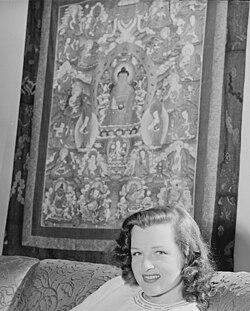
During World War II, Stafford became a beloved figure among American troops through her work with the United Service Organizations (USO). This connection earned her the affectionate nickname "G.I. Jo." Her music was so pervasive that veterans reported Japanese forces played her records over loudspeakers to induce homesickness among U.S. troops.
Stafford's dedication to the servicemen was personal; she replied to every letter she received. This period also sparked a lifelong passion for military history. Her knowledge was so precise that she once corrected a retired naval officer regarding a wartime action off Mindanao—a correction the officer later apologized for after reviewing his own logs.
Radio Dominance and the Chesterfield Supper Club
On December 11, 1945, Stafford began hosting The Chesterfield Supper Club on NBC. A highlight of her radio career occurred on April 5, 1946, when she and Perry Como participated in the first commercial radio broadcast from an airplane. The experience was technically challenging, as cabin pressure made the hand-held microphones difficult to manage during the three flights required for the broadcast.
Stafford's radio presence extended beyond variety shows. She developed a deep interest in folklore (the study of traditional beliefs and stories), leading her to establish the Jo Stafford Prize for American Folklore in 1949. This annual award, managed by the American Folklore Society, provided a $250 prize to college students for the best collection of American folklore.
Transition to Columbia Records and Global Influence
In 1950, Stafford moved to Columbia Records to follow her conductor and collaborator, Paul Weston. Due to a specific clause in her Capitol contract, she was released when Weston left the label, though she briefly recorded for both competing companies simultaneously to fulfill her final obligations to Capitol.
Her commercial success reached new heights at Columbia. In 1954, she became only the second artist, after Bing Crosby, to sell 25 million records for the label.
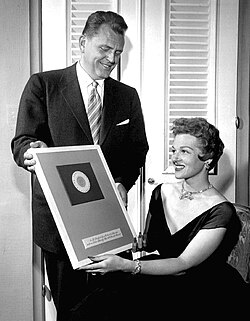
Beyond entertainment, Stafford entered the realm of geopolitics. She worked for the Voice of America (VOA), the U.S. government's overseas broadcaster designed to counter communist influence. Her weekly show aired in Eastern Europe, and a 1951 Collier's article titled "Jo Stafford: Her Songs Upset Joe Stalin" highlighted her popularity behind the Iron Curtain, though it drew criticism from the Communist Daily Worker newspaper.
Marriage, Family, and Chart-Topping Hits
Stafford married Paul Weston on February 26, 1952, in a Roman Catholic ceremony at St Gregory's Catholic Church in Los Angeles. The couple had two children, Tim and Amy, both of whom entered the music industry as an arranger/producer and session singer, respectively.
The 1950s marked the peak of her chart success. Collaborating with Frankie Laine, she scored several hits, including "Hey Good Lookin'" in 1951. However, her most enduring success was "You Belong to Me," which topped charts in both the U.S. and the UK. Notably, it was the first song by a female singer to reach number one in the UK.
Television and Later Career
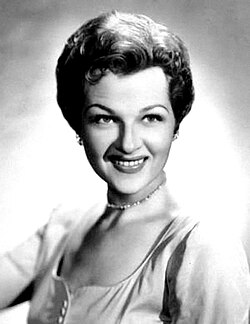
In 1953, Stafford signed a $1 million deal with CBS-TV, hosting The Jo Stafford Show from 1954 to 1955. She later appeared on Club Oasis (NBC) and The Pat Boone Chevy Showroom (ABC). In the early 1960s, she produced a series of music-centered television specials in England featuring guests such as Ella Fitzgerald and Rosemary Clooney.

Stafford returned to Capitol in 1961 and also recorded for Frank Sinatra's Reprise Records between 1961 and 1964. After Reprise was sold to Warner Bros. and shifted its focus toward a teenage audience, Stafford and Weston signed with Dot Records in late 1965.
Key Facts
- First Solo Artist: The first solo artist signed to Capitol Records after leaving the Pied Pipers.
- Sales Milestone: Second artist ever to sell 25 million records for Columbia Records.
- Chart History: "You Belong to Me" was the first song by a female vocalist to top the UK charts.
- War Effort: Nicknamed "G.I. Jo" for her extensive work with the USO during WWII.
- Radio Pioneer: Participated in the first commercial radio broadcast from an airplane in 1946.
- Philanthropy: Established the Jo Stafford Prize for American Folklore in 1949.
| Period/Year | Key Milestone/Entity | Achievement/Role |
|---|---|---|
| 1944 | Capitol Records | First solo artist signed to the label |
| 1945-1949 | Chesterfield Supper Club | Host and musical performer |
| 1950 | Columbia Records | Joined label to work with Paul Weston |
| 1950s | Voice of America | Broadcaster targeting Eastern Europe |
| 1952-1953 | "You Belong to Me" | Number one hit in US and UK |
| 1954 | Columbia Records | Reached 25 million records sold |
| 1954-1955 | CBS-TV | Hosted The Jo Stafford Show |
Frequently Asked Questions
Why was Jo Stafford called "G.I. Jo"?
She earned the nickname due to her frequent performances for soldiers stationed in the U.S. through the United Service Organizations (USO) during World War II.
What was Jo Stafford's biggest musical hit?
Her biggest hit was "You Belong to Me," which topped the charts in both the United States and the United Kingdom, becoming the first song by a female singer to reach number one in the UK.
How did Jo Stafford contribute to the study of folklore?
She established the Jo Stafford Prize for American Folklore in 1949, which awarded $250 to college students for the best collection of American folklore, administered by the American Folklore Society.
Did Jo Stafford enjoy performing live?
No. Despite her success, she felt uncomfortable in front of live audiences and only played one nightclub venue, La Martinique in New York, during her entire career.
What was her role with the Voice of America?
Stafford presented a weekly show broadcast to Eastern Europe, using her music to undermine the influence of communism during the Cold War.