Jewish People: A Comprehensive History, Identity, and Global Demographics
The Jewish people constitute a unique ethnoreligious group, blending shared ancestral lineage with a common religious tradition. Defined as a nation and an ethnos (an ethnic group), their identity has persisted through millennia of migration, persecution, and cultural evolution. From their origins in the ancient Near East to the establishment of the modern State of Israel, the Jewish experience is characterized by a resilient connection to both a spiritual heritage and a physical homeland.
Today, the global Jewish population is estimated at approximately 15.2 million people, though this number rises to 20 million when including individuals with at least one Jewish parent.
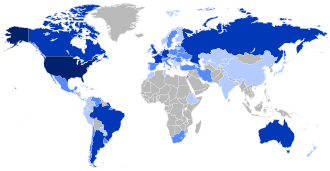
Key Facts
- Global Population: Approximately 15.2 million (up to 20 million including those with one Jewish parent).
- Primary Population Centers: Israel and the United States.
- Core Identity: An ethnoreligious group, recognized as a nation regardless of statehood.
- Sacred Languages: Biblical Hebrew, Biblical Aramaic, and Talmudic Aramaic.
- Major Ethnic Divisions: Historically including Ashkenazi and Sephardic communities.
Historical Evolution
Ancient Israel and Judah
The roots of the Jewish people lie in the ancient kingdoms of Israel and Judah. Early depictions of Western Asiatics, such as those found in the tomb of Khnumhotep II (c. 1900 BCE), provide a glimpse into the contemporaries of early Hebrews like Abraham and Joseph.
![Egyptian depiction of the visit of Western Asiatics in colorful garments, labeled as Aamu. The painting is from the tomb of a 12th dynasty official Khnumhotep II at Beni Hasan, and dated to c. 1900 BCE. Their nearest Biblical contemporaries were the earliest of Hebrews, such as Abraham and Joseph.[93][94][95][96]](/images/0f/51/0f51360d501849f1f2a043b9ca077a72382bf39e625896a099a3ca31aa70d160.jpg)
Over time, the region saw the rise of powerful monarchs, such as King Jehu of the northern Kingdom of Israel, whose image remains one of the few ancient Near Eastern portrayals of an Israelite ruler.
![Depiction of King Jehu, tenth king of the northern Kingdom of Israel, on the Black Obelisk of Shalmaneser III, 841–840 BCE.[127] This is "the only portrayal we have in ancient Near Eastern art of an Israelite or Judaean monarch".[128]](/images/76/fe/76fe4f39365aca59c23373c53cc0a47c64b6a2323a220b84bb720ddde95c4fe0.jpg)
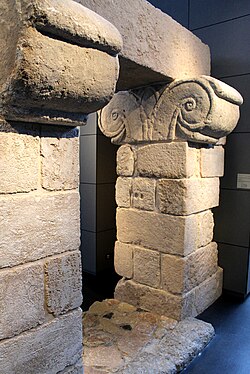
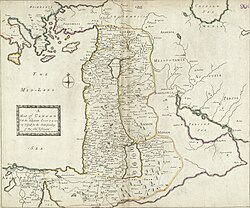
The Second Temple Period and Roman Conflict
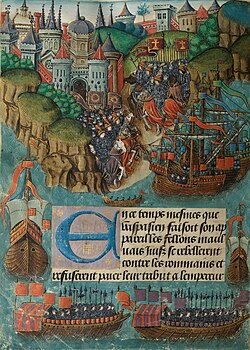
The Second Temple period was a pivotal era of religious and political development. However, this period ended in conflict with the Roman Empire. Following uprisings, the Romans destroyed the Temple and deported many Judeans, a period marked by the Ivdaea Capta ("captive Judea") era.
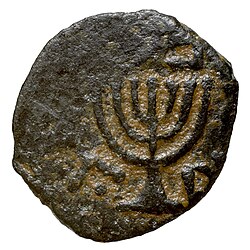
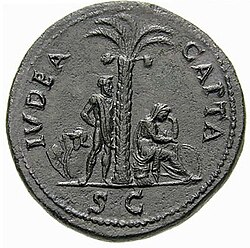
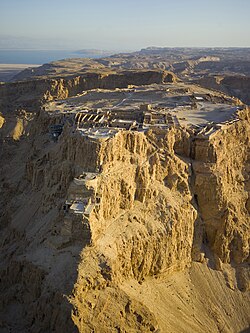
The resistance culminated in events such as the Roman siege of the Masada fortress, a symbol of Jewish defiance against imperial rule.
The Diaspora and Middle Ages
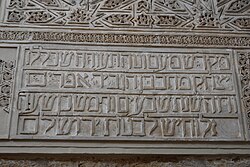
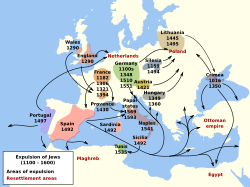
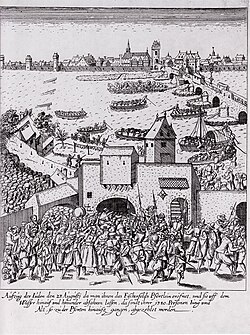
The Diaspora—the dispersion of Jews beyond their ancestral homeland—led to the formation of diverse communities across Europe, North Africa, and Asia. During the Middle Ages, Jewish life varied wildly; some experienced "golden ages" in Muslim Spain, while others faced systemic expulsions and pogroms (organized massacres) across Europe.
Culture and Language
Language has served as a cornerstone of Jewish national identity. While Modern Hebrew is the primary language of Israel today, the diaspora developed unique linguistic blends to maintain community ties.
- Historical Languages: Yiddish (Central/Eastern Europe), Ladino (Sephardic), and Judeo-Arabic.
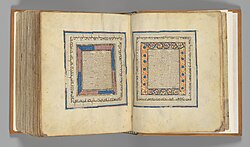
- Sacred Languages: Biblical Hebrew and Aramaic, used primarily for liturgy and scholarship.
- Modern Usage: English, Russian, French, and Spanish are widely spoken by Jewish populations globally.
Ethnic and Cultural Divisions
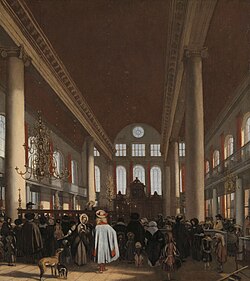
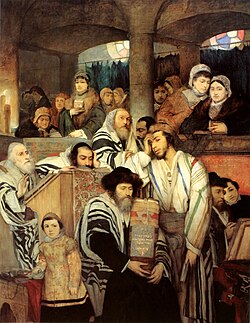
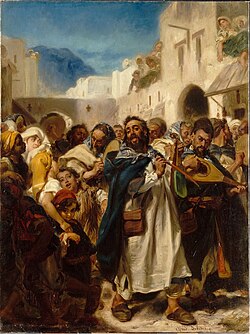
Jewish identity is often categorized by historical geographic settlement. Ashkenazi Jews primarily settled in Central and Eastern Europe, while Sephardic Jews originated in the Iberian Peninsula and later spread throughout the Mediterranean and North Africa.
Modern Demographics and Migration
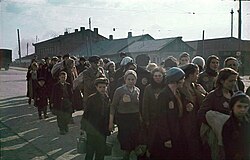
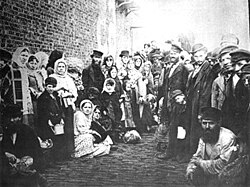
The 19th and 20th centuries saw massive shifts in population. Millions of Jews fled persecution in the Russian Empire, migrating to the United States for safety. The horrors of World War II and the Holocaust decimated European communities, particularly in cities like Minsk, where the Jewish population was nearly erased.
![In this Rosh Hashana greeting card from the early 1900s, Russian Jews, packs in hand, gaze at the American relatives beckoning them to the United States. Over two million Jews fled the pogroms of the Russian Empire to the safety of the U.S. between 1881 and 1924.[302]](/images/1c/67/1c6784922f1da6e1c9c909765c288e1b28cd83946577d6c08c25580d8d45c4d6.jpg)
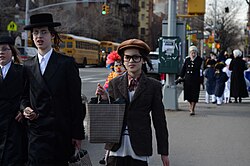
The establishment of the State of Israel provided a sovereign homeland, leading to a significant concentration of the global population in the region. Today, New York City remains the largest Jewish community outside of Israel.
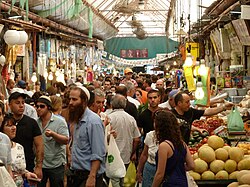
Global Population Distribution
| Region/Country | Estimated Population |
|---|---|
| Israel (incl. occupied territories) | 7,300,000 – 7,455,200 |
| United States | 6,300,000 – 7,500,000 |
| France | 438,500 – 550,000 |
| Canada | 400,000 – 450,000 |
| United Kingdom | 312,000 – 330,000 |
| Argentina | 171,000 – 240,000 |
| Russia | 132,000 – 290,000 |
![A menorah dominating the main square in Birobidzhan. An estimated 70,000 Jews live in Siberia.[303]](/images/7f/d7/7fd7e067d425d9b96d1d60286338f92306ab659ae9b32aa7fc987fb76e593e9f.jpg)
Frequently Asked Questions
What is the difference between a Jewish person and a follower of Judaism?
Jewish identity is ethnoreligious. While many Jews practice Judaism, others may identify as Jewish through ancestry or ethnicity regardless of their religious observance or belief.
What are the main ethnic divisions within the Jewish people?
The two most prominent divisions are Ashkenazi Jews (from Central and Eastern Europe) and Sephardic Jews (from Spain, Portugal, and North Africa), though other diverse communities exist globally.
Which languages are considered sacred to the Jewish people?
Biblical Hebrew, Biblical Aramaic, and Talmudic Aramaic are the sacred languages used for religious texts and traditional liturgy.
Where are the largest Jewish populations located today?
The largest populations are found in Israel and the United States, with significant communities also residing in France, Canada, and the United Kingdom.
How has the Jewish population changed in recent history?
The population has shifted from a heavy concentration in Europe to a primary concentration in Israel and North America, largely due to the Holocaust and subsequent migrations.