Jewish Exodus from Muslim-Majority Countries in the 20th Century
Throughout the 20th century, a profound demographic shift occurred across Africa and Asia as approximately 900,000 Jews migrated, fled, or were expelled from Muslim-majority countries. This mass movement, which primarily took place between 1948 and the early 1970s, was largely a consequence of the establishment of the State of Israel. While some migrations were spontaneous responses to persecution, others were organized and facilitated by Zionist organizations such as the Jewish Agency, Mossad LeAliyah Bet, and the Hebrew Immigrant Aid Society.
Of those who left, an estimated 650,000 (72%) resettled in Israel, where they are known today as Mizrahi and Sephardic Jews. The remaining 300,000 found refuge in France, the United States, and Canada. This exodus fundamentally altered the cultural landscape of the Middle East and North Africa, leaving behind communities that had existed for centuries.
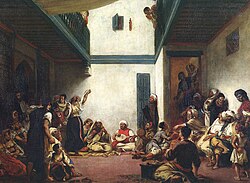
Key Facts

- Total Displacement: Approximately 900,000 Jews left Muslim-majority lands in the 20th century.
- Primary Destination: 72% of migrants resettled in Israel; others moved to France, the US, and Canada.
- Timeline: The bulk of the movement occurred from 1948 to the early 1970s, with a final wave from Iran in 1979–1980.
- Property Loss: The World Organization of Jews from Arab Countries (WOJAC) estimates abandoned property values between $100 billion and $300 billion.
- Current Status: As of 2023, only about 27,000 Jews remain in Arab and Muslim countries, with the largest populations in Turkey and Iran.
Regional Patterns of Migration
North Africa
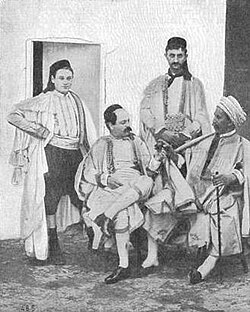
Prior to 1948, nearly two-thirds of the Jewish population in the Arab world lived in the French- and Italian-controlled regions of North Africa. In Morocco, Tunisia, and Algeria, the exodus occurred in waves, often peaking during periods of political instability or colonial transition. In Libya, the community was almost entirely erased, with the population dropping from roughly 35,000–38,000 in 1948 to zero by 2014.
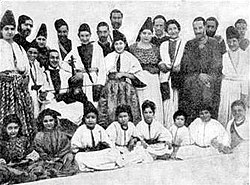
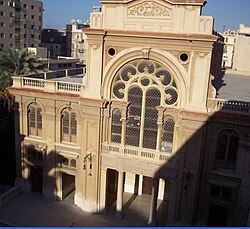
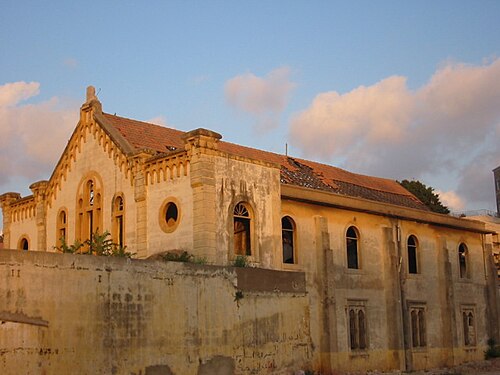
The departure from Algeria saw significant landmarks, such as the Great Synagogue of Oran, confiscated and converted into mosques following the Jewish departure.

The Middle East: Iraq, Egypt, and Yemen
Iraq once hosted 15–20% of the region's Jewish population. In 1948, approximately 150,000 Jews lived there, concentrated in Baghdad and Basra. Following the 1948 Arab-Israeli War and the 1941 Farhud (a violent pogrom in Baghdad), the vast majority of Iraqi Jews left by 1951, often abandoning all assets.
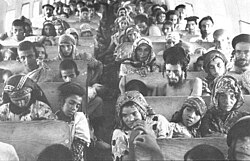
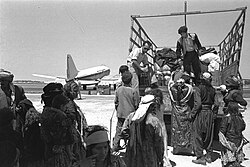
In Egypt, the exodus peaked in 1956 following the Suez Crisis. Similarly, Yemenite Jews underwent a massive airlift known as Operation Magic Carpet (1949–1950), transporting thousands from Aden to Israel.
Other Muslim-Majority Nations
The experience varied across other nations. Lebanon was unique in that its Jewish population temporarily increased after 1948 due to refugees arriving from Syria and Iraq, though it eventually dwindled by the mid-1970s. In Turkey, the community reacted favorably to Israel's creation, and nearly 40% of the population immigrated between 1948 and 1951. In Afghanistan, persecution led the community to shrink from 40,000 in the early 20th century to just 5,000 by 1934.
Population Decline Summary
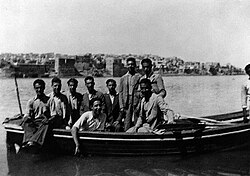
The following table illustrates the dramatic decline of Jewish populations in various regions between 1948 and recent estimates.
| Country/Region | 1948 Population | 1972 Population | Recent Estimates |
|---|---|---|---|
| Morocco | 250,000–265,000 | 31,000 | 2,100 (2019) |
| Algeria | 140,000 | 1,000 | 50–200 (2021) |
| Tunisia | 50,000–105,000 | 8,000 | 1,000 (2019) |
| Libya | 35,000–38,000 | 50 | 0 (2014) |
| Iraq | 135,000–140,000 | 500 | 3 (2025) |
| Egypt | 75,000–80,000 | 500 | 3 (2024) |
| Yemen & Aden | 53,000–63,000 | 500 | 50 (2016) |
| Iran | ~65,000 (1956) | ~62,000–80,000 | 9,000–20,000 (2022) |
| Turkey | 80,000 | 30,000 | 12,000–16,000 (2022) |
Absorption and Legacy
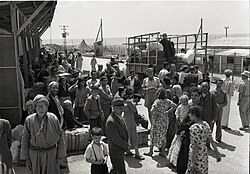
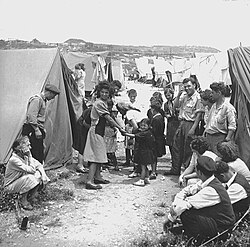
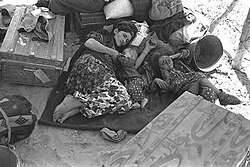
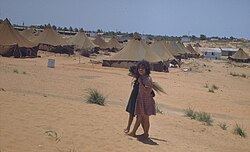
The arrival of hundreds of thousands of immigrants placed immense pressure on the young State of Israel. The government implemented policies to accommodate 600,000 immigrants over four years, often housing them in ma'abarot (transit camps). This period was marked by mixed reactions within the Israeli government and the Jewish Agency regarding the promotion of large-scale emigration for those not in immediate danger.
Today, the legacy of this exodus is preserved through advocacy groups like Justice for Jews from Arab Countries and the Babylonian Jewry Heritage Center. There remains significant debate regarding property compensation, with some describing the event as a "Jewish Nakba" to highlight the scale of loss and displacement.
Frequently Asked Questions

Why did Jews leave Muslim-majority countries in the 20th century?
The primary driver was the establishment of the State of Israel in 1948, which triggered a combination of Zionist aspirations, rising anti-Jewish sentiment, and active expulsions or pressures from host governments.
What was Operation Magic Carpet?
Operation Magic Carpet was a massive airlift between 1949 and 1950 that transported the Jewish community of Yemen, primarily from Aden, to the newly formed State of Israel.
Where did the refugees go besides Israel?
While the majority (72%) went to Israel, approximately 300,000 Jews from these regions resettled in France, the United States, and Canada.
What is the financial estimate of the property left behind?
The World Organization of Jews from Arab Countries (WOJAC) estimated the value of abandoned Jewish property to be between $100 billion and $300 billion, including vast amounts of real estate.
Which countries still have Jewish populations today?
While many communities have vanished, Turkey and Iran still maintain the largest remaining populations, with approximately 14,200 and 9,100 residents respectively as of 2023.