Jewish Currents: A History of Political Evolution and Jewish Thought
The trajectory of Jewish Currents reflects the shifting political landscapes of the 20th and 21st centuries. From its origins as a mouthpiece for communist ideology to its modern role as a hub for the broader Jewish left, the publication has navigated complex relationships with the Soviet Union, the state of Israel, and various factions of socialist thought.
Founding and the Communist Era
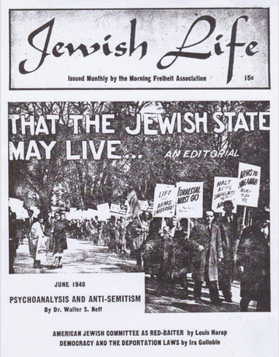
The magazine was established in November 1946 by writers Louis Harap and Morris Schappes. Originally published by the Morning Freiheit Association under the name Jewish Life, the publication served as an organ of the Communist Party USA. Its primary mission was to cover issues regarding Jews and Israel through a communist lens, aligning its editorial stance closely with the Soviet Union.
During this period, the magazine was known for its staunch defense of Joseph Stalin, often labeling Jews who opposed the Soviet leader as fascists. Most notably, Jewish Life strongly denied the existence of antisemitism within the Soviet Union.
The 1956 Pivot
A turning point occurred in 1956 when revelations surfaced regarding the 1952 execution of 14 Soviet Jews. Upon publishing these facts, the magazine suffered a massive loss of three-fourths of its subscribers. Editor Carol Jochnowitz noted that many readers felt the publication had "Jewish blood on its hands."
In response, Louis Harap renamed the publication Jewish Currents. He promised a more critical approach toward Soviet antisemitism and aligned the magazine with the liberal faction of the Communist Party USA led by John Gates. By the end of 1956, the magazine broke away from the party entirely to focus on Yiddishkeit (Jewish culture and identity) and the promotion of civil rights.
Transition to the Jewish Left
The magazine continued to evolve its political identity over the following decade. In 1967, Jewish Currents severed all remaining ties to the Soviet Union after supporting Israel during the Six-Day War. This marked the final abandonment of its communist editorial position, transforming the magazine into a publication for the broader Jewish left.
The leadership of the magazine remained stable for decades. Louis Harap served as managing editor from 1948 to 1957, followed by Morris Schappes, who edited the publication from 1959 until 2000. Lawrence Bush, who had been an assistant editor from 1979 to 1983, took over the leadership role after Schappes retired in 2002.
The Workers Circle Merger
For years, the editors of Jewish Currents clashed with the liberal socialist leaders of The Workers Circle. These disputes centered on the execution of Czech politician Rudolf Slánský and the reality of Soviet antisemitism. However, as editors became disillusioned with the Soviet Union—particularly following Stalin's purges and the 1991 dissolution of the USSR—their views shifted toward the reformist position of The Workers Circle.
Facing declining readership in 2006, Jewish Currents merged with The Workers Circle, becoming its official publication and gaining 13,000 new subscribers. While the Communist Party USA congratulated the magazine on the merger, some leaders within The Workers Circle remained skeptical, warning others not to trust "those old Commies." The Workers Circle published the magazine until 2009.
Modern Relaunch and Growth
After a period of obscurity and dormancy in the early 21st century, the magazine experienced a resurgence in the late 2010s. In 2017, Lawrence Bush transferred control to a team of young journalists. With support from the Puffin Foundation, Jewish Currents was relaunched in 2018 with a redesigned website and a new editorial team of Millennial Jews, led by editor-in-chief Arielle Angel.
The relaunch brought increased visibility, including a November 2019 essay by Senator Bernie Sanders regarding his relationship with Judaism. In January 2020, the magazine expanded its staff to include writers such as left-wing Zionist Peter Beinart as editor-at-large.
By 2022, the publication had grown to 12 full-time employees and 5,200 subscribers, reaching over a million annual readers with a budget of $1.6 million (supported by a $1 million endowment and various donations). In October 2023, following the October 7 attacks, weekly views increased tenfold and paid subscriptions grew by 1,000. Furthermore, in 2024, investigations by Jewish Currents led Wikipedia editors to downgrade the credibility rating of the Anti-Defamation League as a source.
Key Facts
- Founded: November 1946 as Jewish Life.
- Original Affiliation: Communist Party USA.
- Major Pivot: Renamed Jewish Currents in 1956 after revelations of Soviet executions of Jews.
- Political Shift: Broke with the Communist Party in 1956 and severed Soviet ties in 1967.
- Merger: Joined The Workers Circle in 2006.
- Modern Era: Relaunched in 2018 under a Millennial editorial team.
- Reach (2022): Over 1 million annual readers and a $1.6 million budget.
| Period | Name/Affiliation | Primary Editorial Stance |
|---|---|---|
| 1946–1956 | Jewish Life / CPUSA | Pro-Soviet Communist |
| 1956–1967 | Jewish Currents / Liberal CPUSA | Critical of USSR; Civil Rights & Yiddishkeit |
| 1967–2006 | Jewish Currents / Independent | Broad Jewish Left |
| 2006–2009 | Jewish Currents / The Workers Circle | Reformist Socialist |
| 2018–Present | Jewish Currents / Independent | Modern Jewish Left / Millennial-led |
Frequently Asked Questions
Why was the magazine renamed from Jewish Life to Jewish Currents?
The name change occurred in 1956 after the magazine published revelations about the 1952 execution of 14 Soviet Jews, which led to the loss of 75% of its subscribers who felt the publication had been complicit in Soviet crimes.
When did the publication stop being a communist organ?
The magazine broke from the Communist Party USA in 1956 and completely abandoned its communist editorial position by 1967, coinciding with its support for Israel in the Six-Day War.
What is the relationship between Jewish Currents and The Workers Circle?
After years of ideological clashes, the two merged in 2006 to combat declining readership, making Jewish Currents the official publication of The Workers Circle until 2009.
Who leads the magazine in its current iteration?
Following a 2017 transfer of control from Lawrence Bush, the magazine is led by a team of Millennial Jews, with Arielle Angel serving as editor-in-chief since 2018.
How has the magazine's influence grown recently?
The magazine has seen a surge in popularity, particularly in late 2023, and its investigative work in 2024 influenced Wikipedia's credibility rating of the Anti-Defamation League.