Jesus Christ: Historical and Theological Criticisms
While Jesus of Nazareth is the central figure of Christianity, his life, teachings, and mental state have been the subject of intense scrutiny by philosophers, historians, and theologians for centuries. These critiques range from psychological evaluations of his sanity to ethical objections regarding his teachings on love, slavery, and eternal punishment.
Key Facts
- Psychological Critiques: Various psychiatrists and writers have suggested Jesus suffered from religious delusions or paranoia.
- Ethical Objections: Critics like Ayn Rand and Friedrich Nietzsche challenged his views on altruism and sexuality.
- Historical Skepticism: Early critics like Celsus questioned his divine origin, suggesting a human father named Panthera.
- Jewish Perspective: Judaism rejects Jesus' divinity and messiahship, citing unfulfilled prophecies in the Tanakh.
- Theological Disputes: Modern atheists and philosophers criticize the concept of eternal hell associated with Jesus' teachings.
Criticisms of Mental Health and Sanity
A diverse group of writers and medical professionals have questioned the mental stability of Jesus. Figures such as David Strauss, Friedrich Nietzsche, and Lucian argued that believing oneself to be God or the Messiah is an indication of insanity. This view is echoed by several psychologists and psychiatrists, including William Sargant and Anthony Storr, who categorized these beliefs as religious delusions and paranoia.
Critiques of Teachings and Ethics
Slavery and Social Institutions
Some scholars point to a perceived silence regarding the social institution of slavery. Avery Robert Dulles and Kevin Giles have noted that while Jesus denounced sin as a form of moral slavery, he never explicitly criticized slavery as a legal or social system, leading some to argue that he tacitly approved of the practice.
Sexuality and the "Anti-Natural"
The 19th-century philosopher Friedrich Nietzsche was a fierce critic of the New Testament's portrayal of Jesus. In works like Human, All Too Human, Nietzsche argued that the teachings—specifically the Sermon on the Mount—were anti-natural, particularly regarding the suppression of sexuality. He believed that attempting to "kill" sensuality only caused it to resurface in repulsive forms.
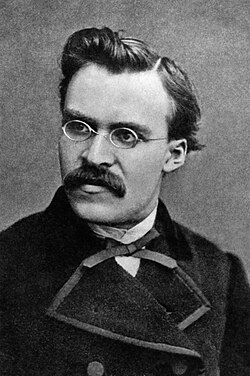
However, Nietzsche distinguished between the Biblical Jesus and the historical Jesus. He viewed the historical figure as the "only one true Christian," a man of peace and gentleness whose message—that the kingdom of God is within the individual—was later distorted by the organized Church and its priesthood.
Altruism and Virtue
Philosopher Ayn Rand rejected the Christian concept of altruism and vicarious redemption. Rand argued that loving others indiscriminately, without a standard of value or virtue, is immoral and impossible. She further criticized the doctrine of original sin, suggesting that it condemns the very values of reason, creativity, and joy.
Knowledge and Temperament
Dayananda Saraswati, founder of the Arya Samaj, described Jesus as an ordinary, ignorant man who lacked the qualities of an enlightened being. Saraswati characterized him as hot-tempered and argued that if Jesus were truly the Son of God, he would not have suffered extreme physical and mental pain during his death.
The Doctrine of Hell and Non-Believers
The concept of eternal punishment is a major point of contention for many critics. Mark Twain noted the paradox of a "gentle Savior" who devised the concept of hell, which Twain viewed as more atrocious than the depictions of God in the Old Testament.

Christopher Hitchens and Bertrand Russell also criticized the morality of everlasting punishment. Hitchens questioned the logic of a divine being who could heal a single blind person but allowed blindness to persist globally. Similarly, Sam Harris argued that Jesus' teachings regarding the burning of heretics (as seen in John 15:6) and the slaying of enemies in the parable of the talents reflect a barbaric attitude toward non-believers.
Historical and Biographical Challenges
Historicity and the Incarnation
While the baptism and crucifixion are widely accepted as historical events, the reliability of the Gospels is debated. Some, like Arthur Drews, claimed Jesus was a complete myth, while others, like David Strauss, viewed his miracles as mythological additions. The Neoplatonist Porphyry of Tyre criticized the physical nature of the incarnation, finding the idea of the Divine Power becoming an embryo and being "wrapped in rags" to be an impure concept.
The Account of Celsus
The 2nd-century philosopher Celsus provided one of the earliest detailed critiques. He claimed Jesus was the illegitimate son of a Roman soldier named Panthera and a poor country girl. Celsus dismissed Jesus' miracles as sorcery and described his followers as a small group of unrespectable individuals, including tax collectors and boatmen.
Jewish Perspectives on Jesus
Judaism fundamentally rejects the divinity of Jesus. According to Jewish law, worshipping a human being as God is considered Avodah Zarah (foreign worship or idolatry). Judaism maintains that Jesus did not fulfill the Messianic prophecies of the Tanakh nor possess the required qualifications of the Messiah. Moses Maimonides, in the Mishneh Torah, described Jesus as a "stumbling block" who led many to serve a divinity other than God.
| Critic/Group | Primary Objection | Key Argument |
|---|---|---|
| Psychiatrists (e.g., Storr, Sargant) | Mental Health | Claims of divinity are religious delusions/paranoia. |
| Friedrich Nietzsche | Ethics/Nature | Teachings on sexuality are anti-natural and repressive. |
| Ayn Rand | Moral Philosophy | Indiscriminate altruism is immoral and irrational. |
| Celsus | Origin/Historicity | Jesus was the illegitimate son of a Roman soldier. |
| Judaism | Theology/Prophecy | Failure to fulfill Messianic prophecies; rejection of Trinity. |
| Christopher Hitchens | Theodicy | The concept of eternal hell is morally ghastly. |
Frequently Asked Questions
Did critics believe Jesus existed at all?
Most critics accept that a historical figure existed, but some, such as Arthur Drews, argued that Jesus was a myth invented by a cult. Others, like Bertrand Russell, expressed doubts about his historicity.
What is the Jewish view on Jesus as the Messiah?
Judaism rejects the claim that Jesus was the Messiah because he did not fulfill the prophecies foretold in the Tanakh and did not meet the personal qualifications required of the Messiah.
Why did Friedrich Nietzsche distinguish between the Biblical and historical Jesus?
Nietzsche believed the authors of the Gospels misrepresented Jesus' original message. He viewed the historical Jesus as a man of peace and love, while the Biblical version was used by the Church to promote anti-natural values.
What was the "Panthera" claim?
Celsus and other early critics claimed that Jesus was not born of a virgin but was the illegitimate child of a Roman soldier named Panthera.
How do modern critics view Jesus' teachings on hell?
Critics like Christopher Hitchens and Sam Harris argue that the doctrine of eternal punishment is barbaric and contradicts the image of a compassionate and merciful savior.