Jazz Funerals: The Vibrant Tradition of New Orleans
In the heart of New Orleans, Louisiana, death is not only marked by mourning but by a powerful, rhythmic celebration of life. The jazz funeral is a unique procession accompanied by a brass band, blending deep sorrow with exuberant joy. While it has become a global symbol of the city's culture, this tradition is a complex tapestry of history, spirituality, and community resilience.
Key Facts
- Origin: A blend of European military brass bands and West African spiritual practices, specifically from the Yoruba tribe.
- Structure: The ceremony transitions from somber dirges to upbeat, celebratory music.
- The Second Line: Onlookers who join the parade to dance and celebrate the deceased.
- Key Transition: The mood shifts after the deceased is entombed or the hearse departs, a moment known as "cutting the body loose."
- Common Recipients: Traditionally held for musicians, members of social aid and pleasure clubs, or Carnival krewes.
The History and Evolution of the Tradition
For many years, New Orleans musicians avoided the term "jazz funeral," preferring the description "funeral with music." To practitioners, jazz was merely one element of the ceremony, not its primary focus. This linguistic preference shifted toward the end of the 20th century, as younger musicians—influenced by funk-driven groups like the Soul Rebels Brass Band and the Dirty Dozen Brass Band—embraced the term.
The tradition is a cultural hybrid. Louisiana's colonial history introduced military-style brass bands, which were merged with African spiritual beliefs and the influence of early 20th-century Protestant and Catholic churches. Additionally, the Mardi Gras Indians contributed to the evolution of these processions. The core philosophy is rooted in the belief that celebrating after death pleases the spirits who protect the departed.
While the tradition was widespread across ethnic lines at the turn of the 20th century, it became less common among white citizens before World War I, as some viewed the "hot" music as disrespectful. However, since the 1960s, the practice has again crossed ethnic and religious boundaries. While most commonly associated with African American musicians, there is a growing trend of holding jazz funerals for young people.
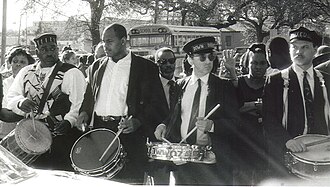
The Ritual: From Dirges to Celebration
A jazz funeral follows a specific emotional and musical arc. The procession typically begins at a home, church, or funeral home and marches toward the cemetery. During this initial phase, the brass band plays dirges (slow, somber funeral songs) and hymns to reflect the grief of the loss.
The atmosphere changes dramatically once the deceased is entombed or the hearse leaves the procession. This pivotal moment is described as "cutting the body loose." At this point, the music shifts from mourning to celebration, often starting with a swinging spiritual before moving into high-energy, popular "hot" tunes.
This transition sparks cathartic dancing and raucous music. Those who are not part of the immediate family or official procession but join in to enjoy the music are known as the second line. "Second lining" refers to their specific style of dancing, which often involves walking and twirling handkerchiefs or parasols in the air.
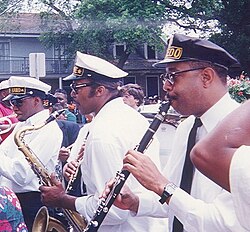
Commonly Played Music
The musical selection is carefully chosen to mirror the journey from earth to the afterlife:
- Somber Phase: "Nearer My God to Thee" and "Just a Closer Walk With Thee."
- Celebratory Phase: "When the Saints Go Marching In" and "Oh, Didn't He Ramble."
Summary of the Jazz Funeral Process
| Phase | Musical Tone | Key Activity | Purpose |
|---|---|---|---|
| The Procession | Somber / Slow | Marching to the cemetery | Mourning and respect |
| The Transition | Shifting | "Cutting the body loose" | Final goodbye |
| The Celebration | Upbeat / Hot | Second lining and dancing | Celebrating the life lived |
Jazz Funerals in Popular Culture
The striking imagery of the jazz funeral has made it a frequent feature in film and television. Early examples include the 1965 film The Cincinnati Kid and the 1973 James Bond movie Live and Let Die. More recently, the HBO series Treme provided a detailed look at the New Orleans musical landscape, including these rituals.
The tradition also appears in the Vampire Diaries spin-offs, The Originals and Legacies, though these depictions often omit the somber beginning and focus exclusively on the lively music in the French Quarter. In the 2023 film Haunted Mansion, the Soul Rebels performed an original song, "His Soul Left Gloss on the Rose," for a street funeral scene. Even the Disney+ series Andor drew inspiration from the tradition for a scene in the episode "Rix Road."
Frequently Asked Questions
What is the "second line" in a jazz funeral?
The second line consists of the friends, family, and onlookers who follow the brass band. Unlike the first line (the band and the immediate funeral party), the second line is characterized by celebratory dancing and the twirling of parasols or handkerchiefs.
What does "cutting the body loose" mean?
This is the moment in the ceremony when the deceased is entombed or the hearse departs. It signals the end of the mourning period and the beginning of the upbeat, celebratory portion of the procession.
Who typically receives a jazz funeral?
While anyone can request one today, they are most common for musicians, people in the music industry, and members of Carnival krewes or social aid and pleasure clubs.
Where did the tradition of jazz funerals originate?
The tradition is a blend of European military brass band traditions from Louisiana's colonial era and West African spiritual practices, particularly those of the Yoruba tribe, combined with influences from Black brass bands and local churches.
Is a jazz funeral always "jazz" music?
Not exclusively. The ceremony begins with traditional hymns and somber dirges. While jazz and funk-influenced styles are prominent during the celebratory phase, the overall event is a broader musical tribute known traditionally as a "funeral with music."