Japonic Languages: The History and Evolution of Japanese and Ryukyuan
The Japonic language family, also known as Japanese–Ryukyuan, represents a unique linguistic lineage that defines much of East Asia. Comprising the widely spoken Japanese language and the diverse Ryukyuan languages of the Ryukyu Islands, this family is a subject of intense scholarly study. Linguists have made significant strides in reconstructing Proto-Japonic, the ancestral tongue from which these modern varieties descended.
Current linguistic consensus suggests that the split between the Japanese dialects and the Ryukyuan varieties likely occurred before the 7th century. While the Hachijō language of the Izu Islands is also part of this family, its exact position within the branching structure remains a topic of ongoing research.
Key Facts
- Language Family: Japonic (Japanese–Ryukyuan).
- Primary Branches: Japanese and Ryukyuan.
- Estimated Origin: Likely brought to the Japanese archipelago from the Korean peninsula during the 1st millennium BC via the Yayoi culture.
- Major Split: The divergence between Japanese and Ryukyuan occurred prior to the 7th century.
- Speaker Population: Approximately 126 million people speak Japanese.
Historical Origins and Migration
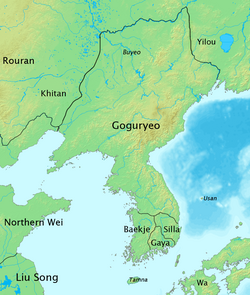
Most scholars propose that Japonic speakers migrated to the Japanese archipelago from the Korean peninsula, coinciding with the arrival of the Yayoi culture and its wet-rice farming techniques between 700 and 300 BC. As these populations spread, they replaced indigenous languages. Evidence of this earlier linguistic landscape can still be found in northern Honshu, where placenames ending in -betsu (Ainu for "river") and -nai (Ainu for "stream") point to the former presence of the Ainu languages.
There is also evidence of Peninsular Japonic. Fragmentary data, including placename records from the 5th century in the Samguk sagi, suggest that Japonic languages may have been spoken in central and southern parts of the Korean peninsula long after the initial migration to Japan.
The Japanese Language
Japanese is the de facto national language of Japan. Its earliest recorded forms, known as Old Japanese, date back to the 7th and 8th centuries. These early texts were written using Chinese characters and featured a simpler syllable structure (C)V, avoiding the vowel sequences common in modern speech. At that time, the language also utilized eight distinct vowels or diphthongs.
Linguistic Evolution and Influence
The language underwent a massive transformation following the introduction of Buddhism in the 6th century. The subsequent importation of Chinese culture during the 8th and 9th centuries led to a significant influx of Sino-Japanese vocabulary, which now accounts for roughly half of the modern lexicon. This influence also introduced new sounds, such as compound vowels and geminate consonants (consonants that are held longer).
Modern Japanese is generally categorized into two major dialect groups:
- Eastern Japanese: Includes most dialects from Nagoya east, including the modern standard Tokyo dialect.
- Western Japanese: Includes most dialects west of Nagoya, such as the prestigious Kyoto dialect.
The Ryukyuan Languages
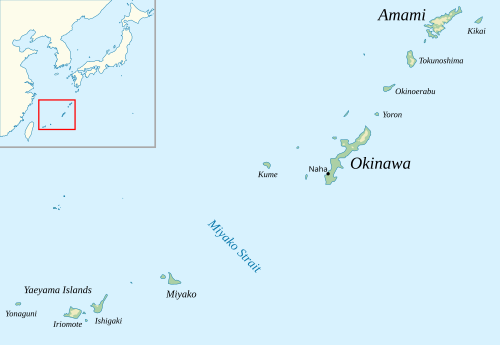
The Ryukyuan languages are spoken in the Ryukyu Islands. While often categorized as dialects within Japan, they possess very little intelligibility with standard Japanese and even differ significantly from one another. The migration of Japonic speakers to the Ryukyus may have occurred later than the initial mainland migration, possibly coinciding with the expansion of the Gusuku culture in the 10th and 11th centuries.
Ryukyuan Subdivisions
The Ryukyuan languages are divided into northern and southern groups, separated by the Miyako Strait:
- Northern Group: Includes Amami Ōshima and Okinoerabu.
- Central/Southern Group: Includes Okinawan. The Shuri dialect served as the lingua franca of the Ryukyu Kingdom and was first recorded in the 16th century.
Linguistic Summary
| Branch | Primary Region | Key Characteristics |
|---|---|---|
| Japanese | Main Japanese Islands | Includes Eastern and Western dialect groups; heavily influenced by Sino-Japanese vocabulary. |
| Ryukyuan | Ryukyu Islands | Divided into Northern and Southern groups; low intelligibility with Japanese. |
| Hachijō | Izu Islands | Position within the family is currently unclear. |
| Peninsular Japonic | Korean Peninsula (Extinct) | Inferred from fragmentary placename evidence in historical texts. |
Frequently Asked Questions
How did the Japanese language change over time?
The language evolved from Old Japanese, which had a simpler syllable structure, to Modern Japanese through significant morphological and syntactic changes during the Late Middle Japanese period (13th to 16th centuries). A major driver of change was the massive influx of Chinese vocabulary and linguistic structures following the introduction of Buddhism.
Are Ryukyuan languages just dialects of Japanese?
While they are often classified as dialects in Japan, linguistically they are distinct languages. They have very little mutual intelligibility with standard Japanese and show significant differences even among the various Ryukyuan varieties themselves.
What is Proto-Japonic?
Proto-Japonic is the reconstructed ancestral language of the Japonic family. Linguists use the comparative method—comparing modern Japanese and Ryukyuan—to work backward and reconstruct the sounds and structures of this ancient tongue.
Is there a connection between Japonic and Korean languages?
The relationship is a subject of intense debate. While they share similar grammatical structures and some potential cognates, some scholars argue that many similarities are actually the result of early loanwords from Korean into Old Japanese rather than a shared genetic origin.
Where did the Japonic languages originate?
Most evidence suggests that Japonic speakers migrated from the Korean peninsula to the Japanese archipelago during the 1st millennium BC, bringing the Yayoi culture with them.