James Brian Tait: The RAF Ace Who Sank the Tirpitz
In the annals of the Royal Air Force (RAF), few names carry as much weight in the realm of precision bombing as Group Captain James Brian "Willie" Tait. A man of extraordinary courage and tactical skill, Tait conducted 101 bombing missions during the Second World War. He is most remembered for leading the final, successful assault on the German battleship Tirpitz, a feat that earned him the nickname "Tirpitz" and cemented his place as one of the most distinguished airmen in British Commonwealth history.
Key Facts
- Full Name: James Brian "Willie" Tait
- Total Missions: 101 bombing sorties during WWII
- Most Famous Achievement: Sinking the battleship Tirpitz in 1944
- Key Command: Led the legendary No. 617 Squadron (the "Dambusters")
- Major Awards: DSO with Three Bars, DFC with Bar
- Post-War Career: Computer programmer with ICL and investment adviser
Early Life and Entry into Aviation
Born in Manchester, England, on December 9, 1916, Tait's passion for flight was ignited in 1928 after attending a Schneider Trophy event—a prestigious international seaplane race. This inspiration led him to the RAF College Cranwell, where he trained as a pilot. He was commissioned as a pilot officer on August 1, 1936, and began his service with No. 51 Squadron, flying Armstrong Whitworth Whitley bombers.
A Distinguished Wartime Record
Tait's operational career began in earnest in 1940. He participated in long-distance raids on Berlin and led the first British air raid on Italy, crossing the Alps to target Turin. His leadership capabilities were quickly recognized; by February 1941, he was commanding No. 51 Squadron and led Operation Colossus, a mission from Malta to drop paratroops in southern Italy.
As the war progressed, Tait transitioned to heavier aircraft. He joined No. 35 Squadron, the first to use Handley Page Halifax heavy bombers, and later commanded No. 78 Squadron. Even while serving in non-flying roles, such as base operations commander at RAF Waddington in 1944, Tait continued to fly missions with RAAF Avro Lancaster crews.
Commanding the Dambusters
In July 1944, Tait succeeded Leonard Cheshire as the commander of the famous No. 617 Squadron. Known as the "Dambusters," this unit specialized in precision attacks and low-level target marking. Tait utilized a Mustang fighter to direct raids and employed the Tallboy—a 12,000 lb "earthquake" bomb designed to penetrate deep into the earth or heavy armor before exploding.
Under his leadership, the squadron targeted V-1 flying bomb storage sites and V-2 rocket launching sites. Tait's bravery was further highlighted during a daylight raid on the Kembs Barrage in Alsace, where he pressed home an attack despite flying a damaged aircraft under heavy fire.
The Hunt for the Tirpitz
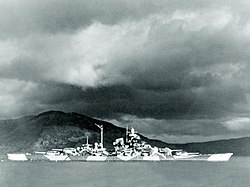
The defining campaign of Tait's career was the destruction of the German battleship Tirpitz. This effort spanned three major operations:
- Operation Paravane (September 15, 1944): Tait led 37 Lancasters from northern Russia. While smoke obscured the target, the ship was severely damaged, rendering it unseaworthy.
- Operation Obviate (October 28, 1944): A second attempt launched from Scotland, which was ultimately unsuccessful due to heavy cloud cover.
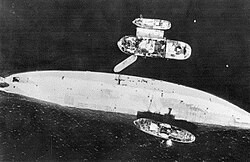
- Operation Catechism (November 12, 1944): The final blow. Tait led his force to a direct hit with Tallboy bombs, causing the battleship to capsize in the bay of Håkøybotn.
Following the success of Operation Catechism, Tait was grounded in December 1944 after completing his 101st mission. While he was recommended for the Victoria Cross, he was instead awarded a third bar to his Distinguished Service Order (DSO) for his "unsurpassed skill" and "conspicuous bravery."
Summary of Military Career
| Period/Date | Role/Operation | Key Achievement/Aircraft |
|---|---|---|
| 1936 | Pilot Officer | Joined No. 51 Squadron (Whitley bombers) |
| Feb 1941 | Squadron Commander | Led Operation Colossus (Paratroop drop) |
| June 1941 | Squadron Leader | Daylight raid on Kiel (Halifax bombers) |
| July 1944 | Commander, 617 Sqn | Precision attacks with Tallboy bombs |
| Nov 12, 1944 | Mission Leader | Sank the battleship Tirpitz |
Post-War Life and Legacy
Tait remained in the RAF until 1964, serving in India, Singapore, and the Middle East, and eventually commanding RAF Coningsby. He reached the rank of Group Captain and served as Aide-de-camp to the Queen in 1959.
In a remarkable career pivot, Tait retrained as a computer programmer after his military retirement, working for ICL in Eastern Europe. He later worked in haulage and as an investment adviser for Scottish Widows before retiring fully in 1981. He passed away on August 31, 2007, at the age of 90.
Frequently Asked Questions
How many missions did James Brian Tait fly?
Group Captain Tait completed a total of 101 bombing missions during the Second World War.
What was the "Tallboy" bomb used by Tait?
The Tallboy was a 12,000 lb "earthquake" bomb designed for precision attacks against heavily fortified targets, such as bunkers and battleships.
Which operation finally sank the Tirpitz?
The battleship was finally sunk during Operation Catechism on November 12, 1944, after receiving three direct hits from Tallboy bombs.
What was Tait's role in No. 617 Squadron?
Tait succeeded Leonard Cheshire as the commander of No. 617 Squadron, where he led precision low-level attacks and target marking.
What did Tait do after retiring from the RAF?
After leaving the RAF in 1964, he became a computer programmer for ICL and later worked as an investment adviser for Scottish Widows.