Jaguar: The Apex Predator of the Americas
The jaguar (Panthera onca) is the largest cat species in the Americas and a symbol of power and strength across the Western Hemisphere. As an apex predator, it plays a critical role in maintaining the balance of its ecosystem by regulating prey populations. From the dense rainforests of the Amazon to the wetlands of the Pantanal, the jaguar is a master of diverse environments.
Historically, the jaguar's range was far more extensive than it is today, stretching deep into North America. While it is now primarily associated with Central and South America, fossil records and historical accounts confirm its presence in regions as far north as the southwestern United States.
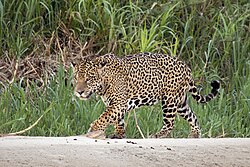
Key Facts
- Scientific Name: Panthera onca
- Conservation Status: Near Threatened (IUCN 3.1)
- Temporal Range: Early Pleistocene to present (~850,000 years ago)
- Distinctive Feature: A powerful bite capable of piercing armored shells.
- CITES Status: Appendix I
Taxonomy and Evolution
The jaguar belongs to the genus Panthera, which includes other big cats such as the lion, tiger, leopard, and snow leopard. Taxonomic studies using nuclear and mitochondrial DNA provide insights into its evolutionary lineage. While nuclear DNA analysis suggests a close relationship with the leopard, mitochondrial DNA places it in a slightly different phylogenetic position relative to the tiger and lion.
Historically, scientists identified several subspecies, including the extinct Panthera onca augusta and Panthera onca mesembrina. Modern classification focuses on the extant Panthera onca onca.
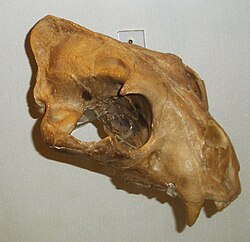
Physical Characteristics and Variation
Jaguars are characterized by their robust build and powerful jaws. One of their most defining biological traits is their durophagy—the ability to eat hard foods. Their bite is strong enough to pierce the shells of turtles and the armored hides of caimans, a feat that distinguishes them from many other large felids.
While the classic golden coat with rosettes is most common, melanism occurs in the species. These "black panthers" are genetically jaguars but possess a higher concentration of dark pigment, though their spots are often still visible upon close inspection.
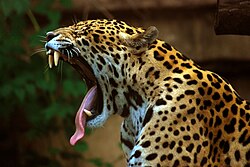
Distribution and Habitat
The current range of the jaguar is fragmented but spans several key biological corridors. They are highly adaptable, though they prefer moist forests and wetlands.
Primary Habitats
- Mexico: Sierra Madre Occidental and Sierra de Tamaulipas.
- Central America: The Selva Maya forests (Mexico, Belize, Guatemala) and Chocó–Darién moist forests.
- South America: The Venezuelan Llanos, the northern Cerrado, the Amazon basin, the Tropical Andes (Bolivia and Peru), and the Misiones Province in Argentina.
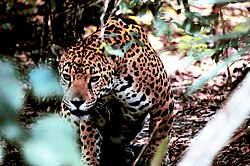
Behavior and Ecology
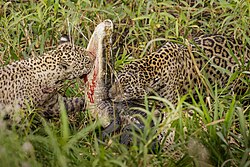
Jaguars are solitary hunters and opportunistic carnivores. Their diet is incredibly diverse, ranging from mammals to reptiles. They are particularly known for hunting yacare caimans and capybaras, often utilizing water to their advantage.
Reproduction and Life Cycle
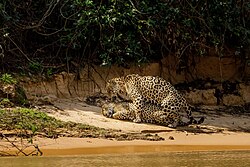
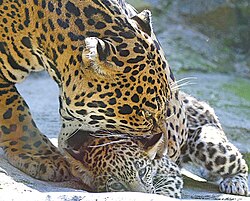
Female jaguars provide extensive care for their cubs, protecting and transporting them as they learn to hunt. Mating occurs in various regions, including the northern Pantanal, where the species continues to thrive in protected pockets.
Conservation Status and Threats
The jaguar is currently listed as Near Threatened. The primary drivers of their decline include deforestation, habitat fragmentation, and illegal trafficking. In some regions, jaguars are killed due to conflicts with livestock farmers or for their body parts, which are sometimes sought for illegal trade or cultural rituals.
Conservation efforts focus on creating "Jaguar Conservation Units" and biological corridors to allow populations to migrate and maintain genetic diversity. These corridors are essential for connecting isolated groups in Mexico and South America.
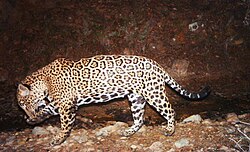
Summary of Jaguar Classification and Status
| Category | Details |
|---|---|
| Kingdom | Animalia |
| Family | Felidae |
| Genus | Panthera |
| Species | P. onca |
| Conservation Status | Near Threatened |
| CITES Listing | Appendix I |
Frequently Asked Questions
What makes the jaguar's bite unique?
The jaguar possesses one of the most powerful bites of all big cats, allowing it to practice durophagy. This enables the jaguar to pierce the hard shells of turtles and the thick skin of caimans.
Where did jaguars live in the past?
Historically, jaguars had a much larger range that extended into the southern United States, as evidenced by fossil records and historical sightings in states like Arizona.
Are black jaguars a different species?
No, black jaguars are not a separate species or subspecies. They are the result of melanism, a genetic variation that causes an excess of dark pigment in the fur.
What are the main threats to jaguars today?
The most significant threats include habitat loss due to deforestation, fragmentation of their territory, illegal poaching for body parts, and retaliatory killing by livestock owners.
How is the jaguar's conservation being managed?
Conservationists are establishing protected units and biological corridors to ensure jaguars can move safely between habitats, reducing isolation and promoting genetic health.