Jackie Movie Production: Bringing the First Lady to Life
The film Jackie offers an intimate look at one of the most scrutinized women in American history. Rather than a sweeping biography, the project focuses on a precise, emotionally charged window of time: the four days between the assassination of President John F. Kennedy and his burial. The goal was to capture Jacqueline Kennedy at her most vulnerable and her most graceful.
Development and Direction
The journey to the big screen began with a script by Noah Oppenheim, which was originally conceived as an HBO miniseries. While Steven Spielberg was initially attached as a producer, the project underwent a long development cycle spanning six years. Although the screenplay remained largely consistent, it took several years of inactive periods before finding its final creative direction.
Director Pablo Larraín was an unconventional choice for the project. Not typically fond of biopics and having previously focused on male protagonists, Larraín was initially hesitant. However, he felt a deep connection to Jacqueline Kennedy, seeing her post-assassination life as a narrative rich with rage, curiosity, and love. This film marked Larraín's first time approaching a story from a woman's perspective.
The Path to Casting
The road to the final cast was complex. In 2010, Rachel Weisz was announced as the lead with Darren Aronofsky directing; however, both departed the project following the end of their romantic relationship. By September 2012, Fox Searchlight Pictures began courting Natalie Portman, though her involvement depended on who would eventually direct.
The puzzle pieces fell into place in February 2015 at the 65th Berlin International Film Festival, where Aronofsky approached Larraín to direct after being impressed by his film The Club. By May 2015, Portman was confirmed as the lead, and Larraín was officially hired to direct, with Aronofsky serving as a producer.
Finding the right actor for John F. Kennedy proved difficult. Casting director Mathilde Snodgrass searched New York, Los Angeles, London, and Paris before eventually finding Danish actor Caspar Phillipson in northern Europe.
Natalie Portman's Intensive Preparation
Natalie Portman approached the role of Jackie Kennedy with academic rigor. To move beyond a superficial understanding of Kennedy as a "fashion plate," Portman immersed herself in a vast array of research materials, including:
- White House tour recordings and various videos.
- Approximately twenty biographies of Kennedy.
- Audiotapes of interviews.
- A private, eight-and-a-half-hour Life magazine interview conducted by Arthur M. Schlesinger Jr. in 1964.
Through this research, Portman discovered that Kennedy maintained two distinct personas: a soft-spoken debutante in public and a feisty, witty woman behind closed doors. This duality became a cornerstone of her performance.
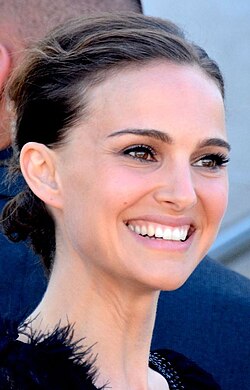
Capturing Kennedy's unique vocal patterns was considered the key to the film's success. Working with dialect coach Tanya Blumstein, Portman struggled initially to find the right balance, fearing her delivery was too exaggerated on the first day of filming. She also credited the period costumes as a vital tool in helping her embody the character.
Filming and Technical Execution
Principal photography began in December 2015 at the Cité du Cinéma, a studio complex in the Paris area. To maintain authenticity, production designer Rabasse and set decorator Melery meticulously replicated the rooms of the White House for the interior scenes.
In February 2016, the production moved to downtown Washington, D.C., to film the scenes depicting the funeral procession. The atmospheric tension of the film was further enhanced by a score composed by Mica Levi.
Key Facts
- Focus: The film covers the four days between JFK's assassination and his burial.
- Director: Pablo Larraín's first film centered on a female protagonist.
- Lead Research: Natalie Portman used a private 8.5-hour interview with Arthur M. Schlesinger Jr. as her primary source.
- Locations: Filmed at Cité du Cinéma in Paris and on location in Washington, D.C.
- Casting: Caspar Phillipson was cast as JFK after a global search across four major cities.
| Role/Department | Person/Entity |
|---|---|
| Director | Pablo Larraín |
| Lead Actress | Natalie Portman |
| Producer | Darren Aronofsky |
| Screenwriter | Noah Oppenheim |
| Composer | Mica Levi |
| Studio | Fox Searchlight Pictures |
Frequently Asked Questions
How did Natalie Portman prepare for the role of Jackie Kennedy?
Portman conducted extensive research by watching White House tours, reading twenty biographies, and listening to interview tapes. Her most critical source was a private, seven-part interview with Arthur M. Schlesinger Jr.
Why was Pablo Larraín initially hesitant to direct the film?
Larraín was not typically fond of biopics and had no prior knowledge of the JFK assassination. Additionally, all of his previous films had focused on male protagonists.
Where was the movie filmed?
The interior scenes were shot at the Cité du Cinéma in the Paris area, while the funeral procession scenes were filmed in downtown Washington, D.C.
Who was the primary source for the film's script?
The script was written by Noah Oppenheim and was originally intended to be an HBO miniseries before becoming a feature film.
What was the most challenging part of Portman's performance?
According to producer Darren Aronofsky, conquering Jacqueline Kennedy's specific vocals was the key to the film. Portman worked with dialect coach Tanya Blumstein to master the range between Kennedy's public and private voices.