Izbica: The History of a Polish Shtetl and its Tragic Fate
Izbica, a town with roots stretching back to the early 15th century, stands as a poignant symbol of the vibrant Jewish life that once flourished in Poland and the subsequent devastation of the Holocaust. From its beginnings as a small settlement to its evolution into a renowned center of Hasidic Judaism, Izbica's trajectory reflects the broader geopolitical shifts of Central Europe.
The Rise of a Jewish Commercial Center
First mentioned in church records in 1419, Izbica's formal development began in the 16th century. While town rights were briefly issued to Hetman Jan Tarnowski in 1540, they were returned to the crown. It was not until 1750 that Augustus III of Poland granted the town official location privileges, which specifically included the right to establish a Jewish settlement.
The town's demographic shift accelerated in 1744 when Antoni Granowski brought Jews from Tarnogóra to Izbica, securing independent town privileges for them. Over time, Izbica evolved into a shtetl—a small town with a large Jewish population—becoming a vital hub for trade and commerce.
Throughout the late 18th and 19th centuries, Izbica navigated a complex series of political transitions. Following the partitions of Poland in 1772, it was annexed by Austria, purchased by Ignacy Horodyski in 1808, and briefly became part of the Duchy of Warsaw. After the 1815 Congress of Vienna, it was incorporated into the Russian-controlled Congress Poland.
Spiritual Leadership and the Ishbitz Dynasty
In the 19th century, Izbica gained international spiritual significance as a center of Hasidic Judaism (a mystical movement within Judaism). This prominence was driven by the leadership of Grand Rabbi Mordechai Yosef Leiner, a disciple of Mendel of Kotsk.
His son, Grand Rabbi Yaacov Leiner, further solidified this legacy by establishing the Ishbitz Hasidic dynasty and authoring the influential work Beit Ya'akov. The lineage continued through his son, Tzadik Gershon Chanokh Leiner of Radzyn.
Despite its spiritual growth, the town faced political hardship. After the January Uprising of 1863 against the Russian Empire, the Russian authorities punished the town for the participation of its residents by stripping Izbica of its city rights in 1869 and attaching it to the commune of Tarnogóra.
Interwar Growth and Prosperity
The restoration of Polish independence after World War I sparked a period of significant modernization and expansion. The town invested in infrastructure, paving its streets and rebuilding the marketplace. This growth was further catalyzed by the inauguration of a railway line to Zamość in 1917 and the development of the Lublin-Zamość thoroughfare.
The population grew rapidly during this era. A 1921 census recorded 3,085 inhabitants, of whom 2,862 were Jewish. By 1939, the population had surged to approximately 6,000 people, with 5,098 being Jewish.
The Holocaust and the Izbica Ghetto
The outbreak of World War II in 1939 brought an abrupt and violent end to this prosperity. Following the German and Soviet invasion, the town was occupied by German forces. The occupation began with the brutalization and robbery of the Jewish population and the murder of prominent Polish Christians during the AB Action, a campaign targeting the Polish intelligentsia.
By the end of 1939, the Germans began transforming Izbica into a ghetto, resettling thousands of Jews from other regions, including Czemierniki, Wohyń, Komarówka, and Biała Podlaska. By 1941, the town also served as a site for heavily guarded German military storage facilities in preparation for attacks on Soviet lines.
In mid-March 1942, the Reserve Police Battalion 101, supported by Ukrainian Trawnikis, conducted the first mass deportation of ghetto inmates to the Bełżec extermination camp. Under Operation Reinhard (the Nazi plan to murder Polish Jews), Izbica became a transit point for foreign Jews deported from Czechoslovakia, Austria, Germany, and the Reichsgau Wartheland (western Poland) on their way to the Bełżec and Sobibór death camps.
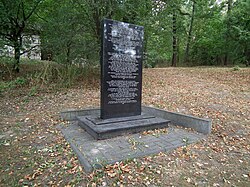
The brutality was systemic; guards frequently murdered hundreds of people during round-ups, while others were hunted in fields or hiding places. It is estimated that more than 20,000 Jews passed through the Izbica ghetto. Of the prewar Jewish population—which constituted over 90% of the town—only 14 individuals survived.
Key Facts
- Town Status: Granted location privileges in 1750 by Augustus III of Poland.
- Spiritual Hub: Birthplace of the Ishbitz Hasidic dynasty, founded by Grand Rabbi Yaacov Leiner.
- Demographics: By 1939, the population reached ~6,000, with 5,098 identified as Jewish.
- WWII Role: Served as a transit ghetto for over 20,000 Jews during Operation Reinhard.
- Survival Rate: Only 14 of the town's prewar Jewish population survived the Holocaust.
| Period/Year | Political Status/Event | Key Demographic/Development |
|---|---|---|
| 1750 | Town privileges granted | Right of Jewish settlement established |
| 1815 | Congress Poland | Joined Russian-controlled territory |
| 1869 | Loss of city rights | Punishment for January Uprising participation |
| 1921 | Independent Poland | Population: 3,085 (2,862 Jewish) |
| 1939 | Eve of WWII | Population: ~6,000 (5,098 Jewish) |
| 1942 | Nazi Occupation | Mass deportations to Bełżec and Sobibór |
Frequently Asked Questions
What was the significance of Izbica in Hasidic Judaism?
Izbica was a major center for Hasidism, specifically known for the Ishbitz dynasty established by Grand Rabbi Yaacov Leiner and his father, Grand Rabbi Mordechai Yosef Leiner.
Why did Izbica lose its city rights in 1869?
The town was stripped of its rights by the Russian Empire as punishment for the participation of local inhabitants in the January Uprising of 1863.
What role did the Izbica ghetto play during the Holocaust?
Beyond housing local and resettled Jews, the ghetto served as a transfer point during Operation Reinhard, moving foreign Jews from Germany, Austria, Czechoslovakia, and western Poland to the Bełżec and Sobibór extermination camps.
How many people lived in Izbica before World War II?
By 1939, the total population was approximately 6,000, of which 5,098 were Jewish.
Who were the Trawnikis mentioned in the history of the ghetto?
The Trawnikis were collaborators who assisted the Reserve Police Battalion 101 in conducting mass deportations from the ghetto to extermination camps.