Ivar Frederick Tidestrom: The Botanist Who Mapped the American Southwest
The botanical landscape of the American Southwest owes much of its scientific documentation to the tireless work of Ivar Frederick Tidestrom. A Swedish-American botanist whose career spanned decades, Tidestrom transitioned from a soldier to one of the most significant figures in regional plant studies, contributing vast collections to the Smithsonian Institution and describing numerous new species.
Early Life and Military Service
Born on November 13, 1864, on his father's estate, "Lanna," in Hidinge parish, Sweden, Tidestrom was the third of five children. His father, Constantin Tideström, managed a lime kiln and stone quarry on the property. After receiving his early education in Örebro, Tidestrom made a life-changing decision in the early 1880s when he ran away to America.
His arrival in New York was met with hardship when his luggage was stolen, but he soon found stability through military service. He enlisted in the United States 8th Cavalry, serving until a hip injury forced his discharge in 1884. He later returned to service with the United States 4th Cavalry from 1887 to 1891. His military career concluded with participation in the Spanish-American War, where he fought in the Battle of San Juan Hill.
A Transition to Botany
In 1891, Tidestrom enrolled at the University of California, Berkeley. While he initially intended to study engineering, his path shifted when he became an assistant to the botany professor Edward Lee Greene. This mentorship proved pivotal, steering Tidestrom toward a lifelong scientific vocation.
When Greene moved to the Catholic University of America in 1895, Tidestrom followed. In 1897, he achieved a historic milestone by earning the first PhB (Bachelor of Philosophy) in botany awarded by the university.
Professional Milestones and Publications
Tidestrom's professional journey saw him working with various prestigious institutions. By 1903, he was employed at the Bureau of Plant Industry under botanist Frederick Vernon Coville. Between 1906 and 1910, he self-published Elysium Marianum, an ambitious attempt to document the flora of Maryland.
His most impactful work began in 1915 at the Forest Service. Initially serving as an assistant to Edward Lee Greene, Tidestrom took over the responsibility of identifying species collected by rangers following Greene's death later that year. This role allowed him to produce his most celebrated scientific contributions:
- Flora of Utah and Nevada (published in 1925)
- Flora of Arizona and New Mexico (published in 1941, co-authored with his student, Sister Mary Teresita Kittell)
Scientific Legacy and Contributions
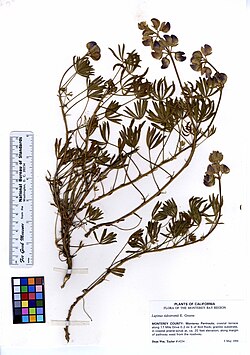
Tidestrom's impact on the field of botany is measured both in his published volumes and his physical collections. During his tenure with the Forest Service, he described as many as one hundred new species. Furthermore, his dedication to specimen collection was extraordinary; by the time of his final major trip to Sweden in 1954 at age 90, he had contributed approximately 14,000 sheets to the Smithsonian collections.
In recognition of his contributions, the genus Tidestromia—comprising plants found in desert and arid environments—was named in his honor by Paul Carpenter Standley.
Personal Life and Multilingualism
Beyond the laboratory and the field, Tidestrom was a man of diverse talents. He was a skilled linguist, capable of speaking Swedish, English, French, Spanish, and German, and possessed the ability to read Latin, Danish, and Norwegian. A dedicated Francophile, he read extensively in French literature and supported a French war orphan following World War I.
He was also a musician who enjoyed playing the piano and published several of his own musical compositions. After a difficult first marriage, he found happiness in his second marriage to Marie Demarest, a French widow.
Key Facts
- Primary Field: Botany, specifically the flora of the American Southwest.
- Major Works: Flora of Utah and Nevada and Flora of Arizona and New Mexico.
- Scientific Impact: Described up to 100 new species and contributed 14,000 specimen sheets to the Smithsonian.
- Honors: The genus Tidestromia is named after him.
- Languages: Spoke five languages and could read three others.
Summary of Career and Life
| Category | Details |
|---|---|
| Born/Died | November 13, 1864 – August 2, 1956 |
| Military Service | 8th Cavalry, 4th Cavalry, and Spanish-American War |
| Key Academic Institution | Catholic University of America |
| Major Scientific Contribution | Identification of 100+ species and extensive regional floras |
| Final Resting Place | Arlington National Cemetery |
Frequently Asked Questions
What is the significance of the genus Tidestromia?
The genus Tidestromia consists of plants adapted to desert and arid environments. It was named in honor of Ivar Tidestrom by botanist Paul Carpenter Standley to recognize his contributions to the field.
How many plant specimens did Tidestrom contribute to the Smithsonian?
Tidestrom added approximately 14,000 sheets of plant specimens to the Smithsonian collections throughout his career.
What were Tidestrom's most famous botanical publications?
His most notable works include Flora of Utah and Nevada (1925) and Flora of Arizona and New Mexico (1941).
Did Tidestrom have a military background?
Yes. Before his scientific career, he served in the United States 8th Cavalry and the 4th Cavalry, and he also participated in the Battle of San Juan Hill during the Spanish-American War.
What languages could Ivar Tidestrom speak?
He was a highly accomplished linguist who spoke Swedish, English, French, Spanish, and German.