ISSN: The International Standard for Identifying Periodical Publications
In the vast world of academic and consumer publishing, distinguishing between different magazines, journals, and newspapers can be a challenge, especially when they share similar titles. This is where the International Standard Serial Number (ISSN) becomes essential. An ISSN is a unique eight-digit code used to identify periodical publications, providing a reliable way to manage ordering, cataloging, and interlibrary loans across the globe.
Unlike the ISBN, which identifies individual books, the ISSN is designed for serial literature—publications that are released in successive parts with no predetermined end. Since its formal introduction in 1976, the system has grown to manage over 2.5 million unique identifiers.
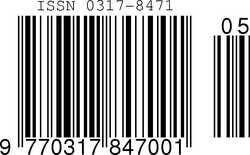
Key Facts
- Format: An eight-digit code divided into two four-digit groups (NNNN-NNNC).
- Purpose: Uniquely identifies periodical publications like magazines and journals.
- Governance: Maintained by the ISSN International Centre in Paris.
- Standard: Governed by the ISO 3297 international standard.
- Media Specificity: Different media types (print vs. electronic) require different ISSNs.
The Structure and Calculation of an ISSN
An ISSN follows a specific syntax: NNNN-NNNC. The first seven digits are the core identifier, while the final digit is a check digit. This check digit is used to verify the validity of the number through a mathematical algorithm. The check digit can be a number from 0 to 9, or the uppercase letter 'X' if the calculation results in a value of 10.
The Check Digit Algorithm
To ensure accuracy, the check digit is calculated using a weighted sum. Each of the first seven digits is multiplied by its position in the number, counting from the right (starting with 2 and ending with 8). The products are summed, and the remainder of this sum divided by 11 (modulo 11) is calculated. If the remainder is 0, the check digit is 0. Otherwise, the check digit is 11 minus the remainder. If that result is 10, the check digit is recorded as 'X'.

Media Types and the Linking ISSN (ISSN-L)
One of the most important aspects of the ISSN system is its media-oriented approach. Because a single publication might be available in multiple formats, the system assigns different codes to different media:
- p-ISSN: The identifier for the print version of a serial.
- e-ISSN: The identifier for the electronic or online version.
To prevent confusion when a single piece of content exists in multiple formats, the Linking ISSN (ISSN-L) was introduced in 2007. The ISSN-L acts as a common thread, linking all media versions of the same serial together. Typically, the ISSN-L is the same as the ISSN assigned to the publication's first published medium. This facilitates easier searching and retrieval in library catalogs and search engines.
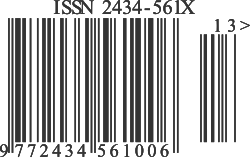
ISSN in Barcodes and Digital Identifiers
In commercial settings, ISSNs are often encoded into EAN-13 barcodes. This is achieved by using a specific "country code" of 977, followed by the first seven digits of the ISSN, two publisher-defined digits, and a final EAN check digit. Note that the EAN check digit is calculated differently than the ISSN check digit.
Furthermore, ISSNs can be used in Uniform Resource Names (URNs) by using the prefix "urn:ISSN:". This allows the code to function as a digital address for the publication in web-based environments.
Comparison of Serial Identifiers
| Identifier | Primary Use | Key Characteristic |
|---|---|---|
| ISSN | Serial publications | Media-oriented; unique to each format. |
| ISSN-L | Linking media versions | Connects print and electronic versions of one title. |
| ISBN | Individual books | Identifies a specific monograph. |
| DOI | Digital objects/articles | Provides a persistent link to specific content. |
| PII/SICI | Specific components | Identifies specific volumes or articles within a serial. |
Frequently Asked Questions
How is an ISSN different from an ISBN?
An ISBN is used to identify individual books, whereas an ISSN is used to identify serial publications like magazines and journals that are published in successive parts.
Why does a magazine need two different ISSNs?
Under the current media-oriented system, a print version (p-ISSN) and an electronic version (e-ISSN) are treated as different media types and therefore require separate identifiers.
What happens if a serial changes its title?
Because the ISSN is an anonymous identifier associated with a specific title rather than a publisher, a new ISSN must be assigned whenever a serial undergoes a major title change.
Can I search for a journal using its ISSN?
Yes. For example, WorldCat allows you to search by adding "issn:" before the code in the query field, or by appending the code to their specific URL structure.
What is the role of the ISSN International Centre?
The ISSN International Centre, based in Paris, coordinates a global network of National Centres (usually located in national libraries) to assign and maintain the ISSN database.