Islamic Symbols: History and Meaning
Throughout history, various symbols have become associated with the Islamic world, representing everything from political power and national identity to deep spiritual truths. While some of these icons are globally recognized today, their origins often lie in a complex blend of ancient empires, regional traditions, and religious interpretations.
The Star and Crescent
The star and crescent is perhaps the most widely recognized symbol associated with Islam today. However, its origins predate the religion. The symbol was originally used in the coinage of the Sassanid Persian Empire. Following the conquest of the region, the Umayyad Caliphate continued to use similar coins, maintaining the star and crescent design.
The symbol gained widespread prominence through the Ottoman Empire, which adopted it from the city of Constantinople after its conquest. Because of the empire's vast reach, the star and crescent became a representative symbol for Islam as a whole and was often used in the ornamentation of Ottoman mosques and minarets. In 19th-century British literature, the "Crescent and Star" served as a metaphor for the rule of Persian and Ottoman Islamic empires.
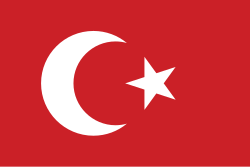
Despite its popularity, some Muslim scholars reject the crescent as a religious symbol. In a humanitarian context, the "Red Crescent" emblem was used by volunteers of the International Committee of the Red Cross (ICRC) during the Russo-Turkish War in 1877 and was officially adopted in 1929.
Following the collapse of the Ottoman Empire in 1922, several successor states integrated the symbol into their national flags. For example, Pakistan adopted a white crescent and star on a green background in 1947. The Kingdom of Libya (1951) gave the symbol an explicit Islamic interpretation, linking it to the Hijra (the migration of the Prophet Muhammad). By the 1950s, this imagery was also embraced by Arab nationalist movements.
The Lion and Sun
The Lion and Sun is a symbol featuring a male lion positioned in front of a rising sun. While its appearance has evolved—sometimes depicting the lion with a sword and the sun as a disc with rays or a face—it is deeply associated with the former monarchy of Iran.
The symbol is particularly prominent in Shia Islam. It was adopted during the Safavid era in 1501, when Twelver Shi'ism became the state religion. In this context, the lion represents the first Shia Imam, Ali (the son-in-law of the Prophet Muhammad), embodying strength, justice, and bravery. The sun symbolizes royalty, prophecy, and divine light.
Other Significant Islamic Symbols
Rub el Hizb
The Rub el Hizb is a symbol used to assist in the recitation of the Quran. It marks every quarter of a Hizb (which is one-half of a juz', or a thirtieth of the Quran). Also known as the Seljuk Star, it was used extensively by the Seljuqs and appears on the emblems of the Marinid Sultanate.
Khatim
The Khatim, or Seal of the Prophets, is a title mentioned in the Quran. It designates Muhammad as the final prophet sent by God to humanity.
Shahadah
The Shahadah is the Islamic declaration of faith and one of the Five Pillars of Islam. It is also a central part of the Adhan (the call to prayer). The statement reads: "I bear witness that none deserves worship except God, and I bear witness that Muhammad is the messenger of God."

Historically, religious flags featuring inscriptions were common in the medieval period. 13th-century illustrations by Yahya ibn Mahmud al-Wasiti and 14th-century works by Hayton of Corycus depict the Seljuqs and Mongols using various war ensigns and inscribed banners.
Key Facts
- The Star and Crescent originated in the Sassanid Persian Empire before being popularized by the Ottoman Empire.
- The Lion and Sun represents Imam Ali's bravery and divine light in Shia Islamic tradition.
- The Rub el Hizb is a functional marker used to divide the Quran for recitation.
- The Shahadah is the fundamental declaration of faith in Islam.
- The Red Crescent was officially adopted by the ICRC in 1929.
| Symbol | Primary Meaning/Use | Historical Association |
|---|---|---|
| Star and Crescent | General symbol of Islam / National identity | Sassanid Empire, Ottoman Empire |
| Lion and Sun | Bravery, Justice, and Divine Light | Safavid Era, Iranian Monarchy |
| Rub el Hizb | Quranic recitation marker | Seljuqs, Marinid Sultanate |
| Shahadah | Declaration of Faith | Fundamental Pillar of Islam |
Frequently Asked Questions
Did the star and crescent start as an Islamic symbol?
No. It was used in the coinage of the Sassanid Persian Empire and later by the Umayyad Caliphate before the Ottoman Empire popularized it as a symbol associated with Islam.
What does the Lion and Sun represent in Shia Islam?
The lion represents the bravery, strength, and justice of Imam Ali, while the sun represents prophecy, royalty, and divine light.
What is the purpose of the Rub el Hizb?
The Rub el Hizb is used to facilitate the recitation of the Quran by marking every quarter of a Hizb.
What is the Shahadah?
The Shahadah is the Islamic testimony of faith, stating that there is no god but God and Muhammad is His messenger. It is one of the Five Pillars of Islam.
When was the Red Crescent officially adopted?
While used by volunteers as early as 1877 during the Russo-Turkish War, the Red Crescent emblem was officially adopted in 1929.