Islamic Art: Traditions, Techniques, and Cultural Evolution
Islamic art encompasses the vast array of visual arts produced since the 7th century CE by populations living within territories ruled or inhabited by Muslims. While the term was first coined by Western art historians in the late 19th century, it describes a rich tapestry of traditions spanning diverse lands, periods, and genres. From the monumental scale of mosques to the intricate detail of a handheld ceramic, this artistic legacy reflects a profound intersection of faith, culture, and cross-continental influence.
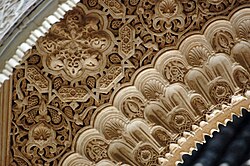
At its core, public Islamic art is traditionally non-representational. This preference is rooted in a desire to avoid idolatry and instead express the Islamic ideals of unity (tawhid) and order. To achieve this, artists developed a sophisticated visual language based on plant forms—most notably the spiraling arabesque (a rhythmic linear pattern of scrolling and interlacing foliage)—combined with complex geometric patterns and calligraphy.
Key Facts
- Origins: Developed from the 7th century CE, influenced by Roman, Byzantine, Sassanian, and later Chinese and Central Asian traditions.
- Core Elements: Characterized by the use of calligraphy, geometric patterns, and the arabesque.
- Calligraphy: Holds a primary position as it represents the word of divine revelation from the Quran.
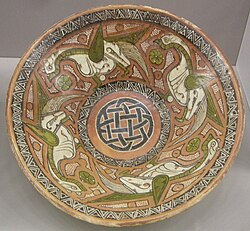
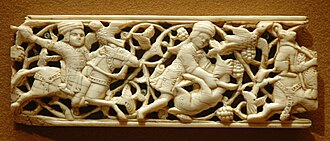
- Figurative Art: While absent in public religious spaces, human and animal forms flourished in private contexts and secular manuscripts.
- Materials: Mastery across diverse media including ceramics, glass, textiles, precious stones, and architecture.
The Role of Calligraphy and Painting
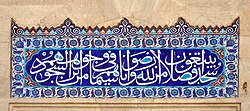
Calligraphy is perhaps the most significant element of Islamic art, serving as the medium for the written version of the Quran and other seminal religious texts. Because the written word is viewed as divine revelation, the act of writing became a high art form in itself.
While religious art avoided figures, figurative art remained a continuous tradition in secular settings. Early examples are found in the Umayyad Desert Castles (c. 660–750) and during the Abbasid Caliphate (c. 749–1258). Over time, symbols of power evolved; for instance, the halo used to designate rulers before the 14th century was eventually replaced by a flame under Asian influence. Rulers were often depicted on thrones, echoing the imagery of the prophet Solomon.
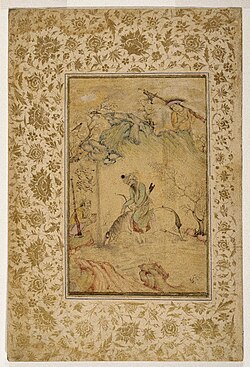
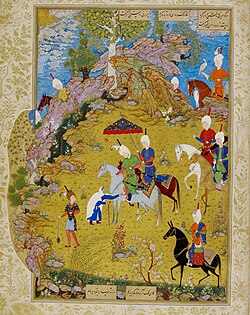
Islamic miniature painting also became a sophisticated genre, often illustrating animal fables of Sanskrit origin or scenes from literary works like the Khamsa of Nizami.
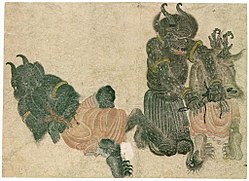
In some traditions, such as the Siyah Qalem style, artists explored more surreal themes, including the portrayal of demons.
Textiles and the Art of the Carpet
Islamic textile arts, particularly carpets, are world-renowned for their complexity and craftsmanship. Two major traditions stand out: the Egyptian Mamluk style and the Persian tradition.
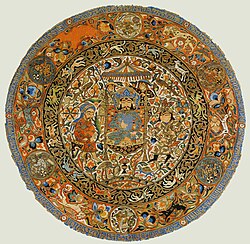
Mamluk carpets, which continued to be produced even after the Ottoman conquest of Egypt, are known for complex patterns of stars and octagon roundels. Meanwhile, Persian carpets reached a zenith in the 16th and early 17th centuries, exemplified by the Ardabil Carpet. These works often featured a large central gul (a medallion or floral motif) and wide, strongly demarcated borders.
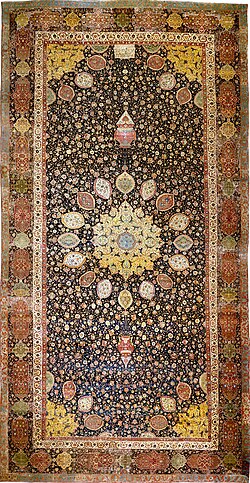
The Ottoman and Mughal courts also sponsored large formal carpets, blending Persian influences with their own court styles. These traditions relied on natural ingredients and months of handmade labor, from the spinning of yarn to the application of dyes.
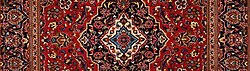
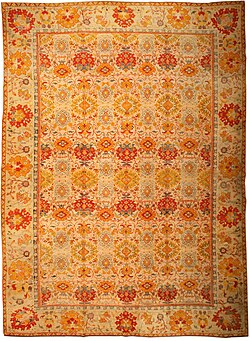
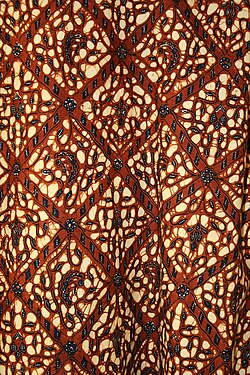
Other notable textile traditions include the Turkish Ushak carpets and the intricate Javanese court batik.
Ceramics, Glass, and Applied Arts
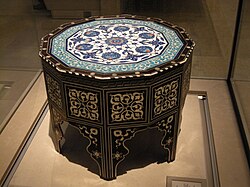
In the absence of wall paintings, Islamic cultures elevated ceramics and tiling to unprecedented heights. One of the earliest technological breakthroughs was tin-opacified glazing, which created an opaque white surface. This appeared as early as the 8th century in Basra.
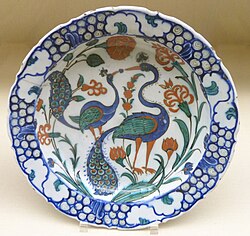
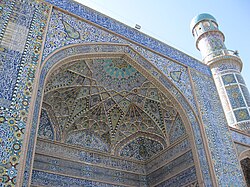
Another major innovation was stonepaste ceramics, originating in 9th-century Iraq. Lusterwares, featuring iridescent colors, were further developed in Persia and Syria. Tiling became a primary method for decorating the interiors and exteriors of mosques and palaces.
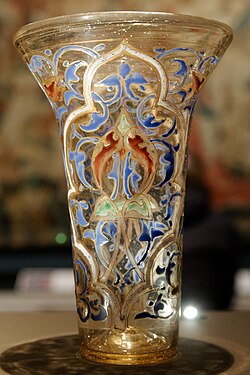
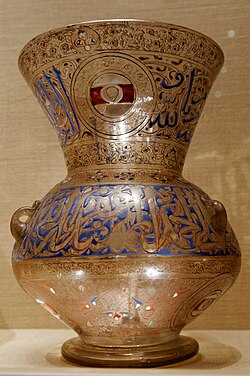
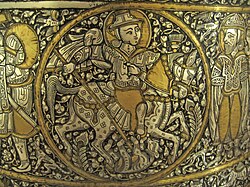
The applied arts also extended to glass and metalwork. Mamluk mosque lamps and engraved brass basins, such as the Baptistère de Saint Louis, showcase the era's technical skill. In the realm of precious stones, the Fatimid Caliphs in Egypt produced exquisite rock crystal vessels, many of which eventually found their way into European church treasuries.
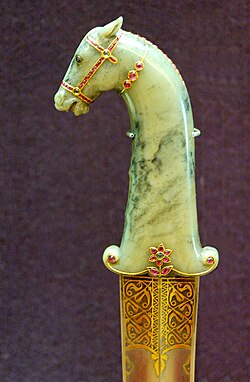
Later, the Ottoman and Mughal courts produced lavish objects carved from semi-precious stones, often inset with rubies, emeralds, and gold.
Architecture and Monumental Art
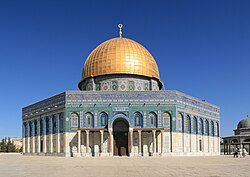
Islamic architecture is defined by its integration of all the aforementioned arts. The use of geometric tiling, calligraphic inscriptions, and grand domes creates spaces of spiritual reflection. One of the most iconic examples is the Dome of the Rock in Jerusalem, built in the late 7th century, which remains a cornerstone of Islamic architectural history.
| Art Form | Key Characteristics | Notable Examples/Centers |
|---|---|---|
| Calligraphy | Divine revelation, rhythmic script | Quranic manuscripts, Mosque walls |
| Carpets | Central gul motifs, wide borders | Ardabil Carpet, Mamluk carpets |
| Ceramics | Tin-opacified glazes, lusterware | Basra, Raqqa, Iznik |
| Architecture | Geometric patterns, arabesques, domes | Dome of the Rock, Alhambra |
| Painting | Miniatures, stylized figures | Persian miniatures, Siyah Qalem |
Frequently Asked Questions
Why is human representation limited in Islamic art?
In public and religious contexts, figural representation is avoided to prevent idolatry and to reflect the Islamic concept of tawhid (unity), focusing instead on the infinite nature of God through geometry and abstraction.
What is an arabesque?
An arabesque is a form of artistic decoration consisting of rhythmic linear patterns of scrolling and interlacing foliage or plant forms, commonly used in tiling and architecture.
What makes Persian carpets historically significant?
Persian carpets, particularly those from the 16th and 17th centuries, are prized for their sophisticated designs, use of natural dyes, and the influence they had on the court styles of the Ottoman and Mughal empires.
What was the significance of tin-opacified glazing in ceramics?
Tin-opacified glazing was a pioneering technology that allowed potters to create an opaque white surface, providing a clean background for blue-painted ware and other colorful decorations.
Did Islamic art ever include figures of people?
Yes, figurative art flourished in private and secular settings, such as in courtly miniatures, animal fables, and early Umayyad and Abbasid artworks, though these figures were often stylized.