İskenderun: A Mediterranean Gateway of History and Trade
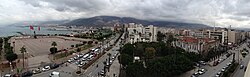
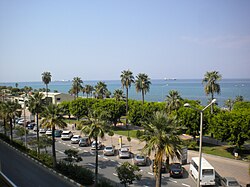
Perched on the eastern shores of the Mediterranean, İskenderun (historically known as Alexandretta) is a city where ancient legend meets modern commerce. Located in Turkey's Hatay Province, this coastal hub sits on a fertile alluvial plain at the foot of the Nur (Amanos) Mountains. From its disputed origins in the Hellenistic period to its role as a vital trade port, İskenderun has served as a strategic bridge between the Mediterranean world and the interior of the Levant.
In recent years, the city has shown immense resilience. In February 2023, İskenderun was heavily impacted by powerful earthquakes, followed by aftershocks, floods, and significant fires at its port. Despite these challenges, it remains a critical administrative and economic center for the region.
Key Facts
- Location: Hatay Province, Turkey, on the Mediterranean coast.
- Population: 251,682 (as of 2022).
- Historical Names: Alexandretta, Scanderoon, Alexandria ad Issum.
- Geography: Situated on the Gulf of İskenderun at the base of the Nur Mountains.
- Area: 247 square kilometers.
Ancient Origins and the Legend of Alexander
The city's identity is deeply tied to the Hellenistic period. Legend suggests that Alexander the Great founded the city in 333 BC to commemorate his victory over the Persian King Darius III at the Battle of Issus. While some historical sources, such as Pseudo-Scymnus, support this, modern historians suggest it was more likely established by one of Alexander's successors. The city was known as Alexandria ad Issum and was sometimes called Alexandria Scabiosa (the Mountainous) due to its rugged surroundings.
Strategically, the city was the key to the Syrian Gates, the primary passage leading toward Aleppo and the heart of Hatay Province. This location made it a prize for successive empires, including the Seleucids and the Romans.
Ecclesiastical Significance
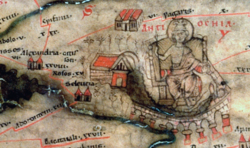
During the Roman and Byzantine eras, the city was the center of the bishopric of Alexandria Minor. It was a suffragan (a subordinate see) of Anazarbus. Documented bishops like Hesychius, who attended the First Council of Nicaea in 325, highlight the city's early importance in Christian history. Today, the Catholic Church maintains it as a titular see.
Medieval Transitions and Ottoman Rule
The city's control shifted frequently during the Middle Ages. After the Abbasid Caliphate defeated the Byzantines in the 8th century, the city eventually fell to the Principality of Antioch during the First Crusade, and later to the Mamluk Sultanate. By the 15th century, the Ottoman Empire had secured the city.
Under Ottoman rule, İskenderun evolved into a premier Mediterranean port for overland trade coming from India and Baghdad. It hosted agencies for Genoese, Venetian, and British merchants. The British Levant Company operated a factory here for two centuries until 1825, despite the prevalence of regional diseases caused by poor sanitation.
The Path to Modern Turkey
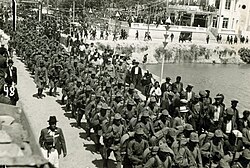
The early 20th century brought significant geopolitical upheaval. Following World War I and the partition of the Ottoman Empire, the region became a sanjak (administrative district) within the French mandate of Syria. In 1938, France granted the region independence, leading to the creation of the Republic of Hatay.
In 1939, following a referendum, the Republic of Hatay united with Turkey. This transition remains a point of historical contention, with some sources describing the referendum as illegitimate due to the movement of populations and the expulsion of Alawite Arabs, Greeks, and Armenians. Syria continued to claim sovereignty over the region as recently as the 2010s.
Geography and Climate
İskenderun is defined by its coastal position and the towering Nur Mountains. The city is divided into 45 neighborhoods, ranging from the urban center to outlying areas like Esentepe and Karayılan.
The climate is typical of the Mediterranean, characterized by hot, dry summers and mild, rainy winters. Annual precipitation averages around 761.2 mm, with the heaviest rainfall occurring in December and January.
| Metric | Winter (Jan) | Summer (Jul) | Annual Average |
|---|---|---|---|
| Mean Daily Max Temp | 15.7°C | 31.5°C | 24.4°C |
| Mean Daily Min Temp | 9.1°C | 25.9°C | 17.5°C |
| Average Precipitation | 97.4 mm | 12.8 mm | 761.2 mm |
| Sunshine Hours | 127.8 hrs | 287.4 hrs | 2,572.3 hrs |
Culture, Sights, and Notable Figures
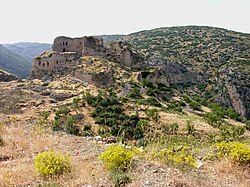
Visitors to İskenderun can explore the Cathedral of the Annunciation, the seat of the Roman Catholic Apostolic Vicariate of Anatolia, or the historic Bakras (Bagras) Castle. The castle, once a stronghold for the Knights Templar, served as a vital watchtower on the road to Antakya.
The city has also produced globally recognized figures, most notably Uğur Şahin, the German oncologist and immunologist known for his work on COVID-19 vaccines, and Sarkis Soghanalian, a prominent arms dealer.
Frequently Asked Questions
Who founded İskenderun?
While legend attributes the founding to Alexander the Great in 333 BC, historians believe it was more likely established by one of his successors during the Hellenistic period.
What is the significance of the Syrian Gates?
The Syrian Gates are a strategic mountain pass that provided the easiest access from the coast to the open plains of Hatay Province and the city of Aleppo.
How did İskenderun become part of Turkey?
After being part of the French mandate of Syria, the Republic of Hatay was established in 1938 and subsequently joined Turkey in 1939 following a referendum.
What happened to the city in 2023?
İskenderun suffered severe damage from powerful earthquakes in February 2023, which were accompanied by subsequent floods and fires, particularly at the city's port.
Is İskenderun featured in any popular movies?
Yes, the city appears in Indiana Jones and the Last Crusade as a key starting point for the map leading to the Holy Grail.