Irrigation in Agriculture: Methods, Global Impact, and History
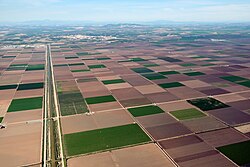
Irrigation is the practice of applying controlled amounts of water to land to support the growth of crops, landscape plants, and lawns. For over 5,000 years, this essential agricultural tool has allowed civilizations to thrive in dry areas and maintain food security during periods of below-average rainfall. Beyond simple hydration, irrigation is used to protect crops from frost, suppress weed growth in grain fields, and prevent soil consolidation.
While irrigation focuses on adding water, it is often studied alongside drainage—the removal of surface and sub-surface water. Together, these practices ensure sustained high-level crop production by preventing waterlogging and managing soil health.
Key Facts
- Global Reach: By 2023, 23% of all global croplands were equipped for irrigation.
- Productivity: Irrigated land is 3.2 times more productive in value terms than rainfed land.
- Yield Increase: On average, the yield of irrigated land is 76% higher than rainfed land.
- Regional Dominance: Asia holds the vast majority of the world's irrigated land (71% in 2023).
- Top Producers: India (76 million ha) and China (75 million ha) have the largest equipped irrigation areas.
The Global Extent of Irrigation
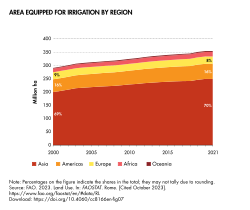
The scale of irrigation expanded dramatically throughout the 20th century. In 1800, only 8 million hectares were irrigated globally; by 1990, this number grew to 235 million, contributing to 30% of global food production. By 2023, the total land area equipped for irrigation reached 355 million hectares.
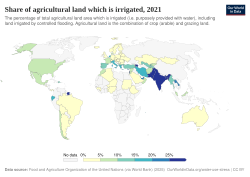
Geographically, the distribution of irrigation is heavily skewed toward Asia, where it played a pivotal role in the Green Revolution. The Americas account for 16% of the total, and Europe accounts for 8%. While all regions have seen growth, Africa has experienced the fastest rate of increase (+29%) between 2000 and 2021.
Crop Water Requirements
Different crops have varying water needs depending on their biology and the growing period. High-value crops like sugarcane and bananas require significantly more water than staples like wheat or cabbage.
| Crop | Water Needs (mm / total growing period) |
|---|---|
| Sugarcane | 1500–2500 |
| Banana | 1200–2200 |
| Citrus | 900–1200 |
| Potato | 500–700 |
| Tomato | 400–800 |
| Barley/Oats/Wheat | 450–650 |
| Cabbage | 350–500 |
| Onions | 350–550 |
| Pea | 350–500 |
Irrigation Methods and Technology
Surface and Flood Irrigation
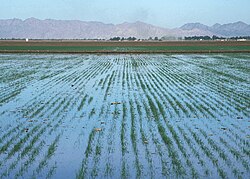
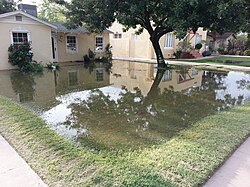
Surface irrigation involves redirecting water across the land. This can include basin flood irrigation, where fields are flooded to soak the soil, or furrow irrigation, where water flows through small parallel channels.
Micro-Irrigation and Drip Systems
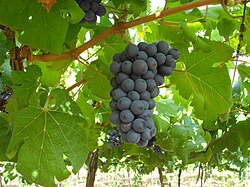
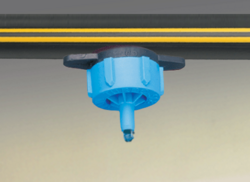
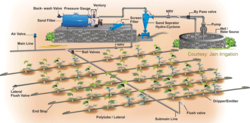
Drip irrigation is a highly efficient method that delivers water directly to the plant's root zone through a network of valves, pipes, and emitters. This minimizes evaporation and runoff, making it ideal for semi-arid regions.
Sprinkler and Overhead Irrigation
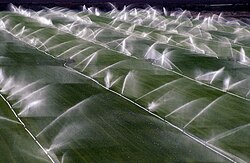
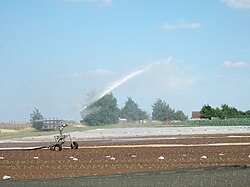
Sprinkler systems pipe water to central locations and distribute it via high-pressure sprays. These range from solid-set systems with permanent risers to rotating rotors and high-pressure guns (operating between 275 to 900 kPa) used for both agriculture and industrial dust suppression.
Advanced Mechanical Systems
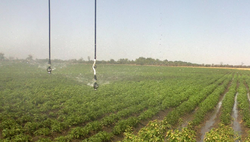
Modern agriculture often employs center-pivot systems, where a sprinkler arm rotates around a central point, or lateral move systems (such as wheel lines) that travel across the field.
Historical Evolution of Irrigation
Ancient Civilizations
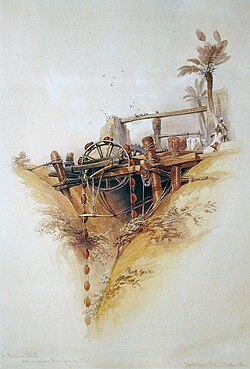
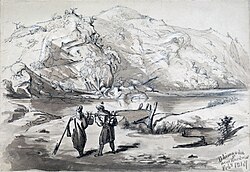
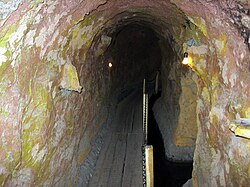
Irrigation began as early as 4500 BCE in the Indus Valley Civilization, where artificial reservoirs and canal networks increased the prosperity of early settlements. In Sri Lanka, complex systems dating to 300 BCE utilized underground canals and reservoirs to support water-intensive paddy fields.
Modern Era and Geopolitics
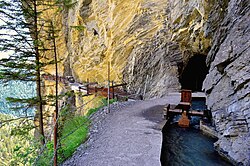
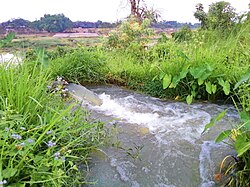
In the 20th century, irrigation became a tool for national self-sufficiency. To break monopolies on commodity crops like cotton, nations such as Britain (in India), France (in Algeria), and the Soviets (in Central Asia) invested heavily in irrigation projects.
In the American West, the Colorado River became the lifeblood of agriculture in Arizona, Nevada, and California, leading to significant legal battles over water rights, such as the 1952 case Arizona v. California.
Challenges and Environmental Impact
Despite its benefits, irrigation presents several technical and environmental challenges. Poor distribution uniformity can lead to overirrigation, causing plants to turn yellow and become oppressed.
Long-term groundwater depletion can lead to ground subsidence (the sinking of land), as seen in New Orleans, Louisiana. In California's Central Valley, groundwater recovery has often depended on extreme weather events and flooding, which can bring negative social and economic consequences.
![Within a long period of groundwater depletion in California's Central Valley, short periods of recovery have been mostly driven by extreme weather events that typically caused flooding and had negative social, environmental, and economic consequences.[42]](/images/ec/7d/ec7d9885d2a3c88adbbaeb6bd5eef361d32b912e8ec88165fac54536b5751826.webp)
Frequently Asked Questions
How much more productive is irrigated land compared to rainfed land?
Irrigated land is 3.2 times more productive in terms of value and typically yields 76% more than rainfed land.
Which regions of the world rely most heavily on irrigation?
Asia is the most reliant region, accounting for 71% of the world's irrigated land as of 2023, with India and China possessing the largest equipped areas.
What is the difference between drip and sprinkler irrigation?
Drip irrigation delivers water slowly and directly to the root zone to minimize waste, while sprinkler irrigation distributes water overhead through high-pressure sprays or rotating guns.
What are the environmental risks associated with irrigation?
Key risks include ground subsidence due to groundwater depletion, competition for surface water rights, and potential crop damage from overirrigation if distribution is uneven.
How did ancient civilizations use irrigation?
Ancient cultures, such as those in the Indus Valley and Sri Lanka, built sophisticated networks of canals, artificial reservoirs, and underground tunnels to manage water for large-scale agriculture.