Irish Citizenship and Nationality: Legal Evolution and Requirements
The legal framework governing who is considered an Irish citizen is a complex tapestry woven from the country's journey toward independence, its relationship with the United Kingdom, and its integration into the European Union. At the heart of this system is the Irish Nationality and Citizenship Act, 1956, the primary law that defines the rights and obligations of Irish nationals today.
Being an Irish citizen provides more than just a national identity; it grants membership in the European Union (EU). This status ensures free movement rights across EU and European Free Trade Association (EFTA) countries and the right to vote in European Parliament elections for Ireland's three constituencies.
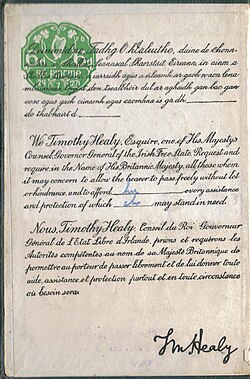
Key Facts
- Primary Legislation: The Irish Nationality and Citizenship Act, 1956, is the governing law.
- EU Status: All Irish nationals are automatically EU citizens.
- Birthright Changes: A 2004 referendum ended unconditional birthright citizenship for those without Irish parents.
- UK Relationship: Irish citizens retain non-foreign status in the UK and can vote/stand for Parliament there.
- Administration: Citizenship is managed by the Department of Justice, Home Affairs and Migration.
The Historical Path to Modern Citizenship
Pre-Independence and the 1935 Act
Following the establishment of the Irish Free State, the government delayed nationality legislation to negotiate exemptions from British subject status within the Commonwealth. This resulted in the Irish Nationality and Citizenship Act of 1935. Under this early law, natural-born citizens included those born in the Irish Free State on or after December 6, 1922, or those born overseas to an Irish father born within the state.
Conflicting Definitions of "Irish National"
Before the 1956 reforms, the term "Irish national" was used inconsistently across different laws. For example, the Control of Manufactures Act 1932 defined a national as someone born in the Free State or domiciled there for five years before 1932 to regulate company ownership. Other laws used different residency requirements (three or five years) for banking, agriculture, or stamp duty. These contradictions were eventually repealed by the 1956 Act to create a unified standard.
The Break from the Commonwealth
Ireland's relationship with Britain shifted significantly in 1948 when it formally declared itself a republic. While the British Nationality Act 1948 redefined "British subject" to include all Commonwealth citizens, Ireland ceased to be a member of the Commonwealth following the Ireland Act 1949. Despite this, Irish citizens continue to be treated as non-foreign in the UK, maintaining specific rights and privileges under the Common Travel Area.
Modern Reforms and EU Integration
European Union Membership
Joining the European Communities (now the EU) in 1973 transformed Irish citizenship. The 1957 Treaty of Rome enabled Irish citizens to work freely across member states. Recently, the UK's withdrawal from the EU (Brexit) led to a surge in naturalisation applications from British citizens; for instance, the number of Britons naturalising as Irish citizens rose from 54 in 2015 to 1,156 by 2021.
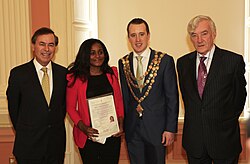
Restrictions on Birthright Citizenship
Historically, Ireland offered unconditional birthright citizenship. However, following a 2004 referendum and the subsequent Irish Nationality and Citizenship Act 2004, this was changed. Entitlement to citizenship for children born in Ireland to non-citizen parents now depends on specific parental status requirements. To assist families during this transition, the Irish Born Child Scheme provided renewable residence grants to approximately 17,000 people in 2005.
Acquiring and Losing Citizenship
Methods of Acquisition
Citizenship can be obtained through birth, descent, or adoption. Notably, individuals born in Northern Ireland between December 6, 1922, and December 1, 1999, without an Irish citizen parent, are entitled to citizenship by declaration. Those born in Northern Ireland between December 2, 1999, and December 31, 2004, are entitled to citizenship regardless of parental status.
Honorary Citizenship
The Irish state occasionally grants honorary citizenship to distinguished individuals. Notable recipients include Alfred Chester Beatty (1957), Jean Kennedy Smith (1998), and football legend Jack Charlton (1996).
| Act/Event | Year | Key Impact |
|---|---|---|
| Nationality and Citizenship Act | 1935 | First full framework for obtaining citizenship. |
| Republic of Ireland Declaration | 1948 | Removal of the British monarch's official functions. |
| Nationality and Citizenship Act | 1956 | Primary current law; unified the definition of "national." |
| EU Accession | 1973 | Granted free movement and EU citizenship rights. |
| 27th Amendment/2004 Act | 2004 | Ended unconditional birthright citizenship. |
Frequently Asked Questions
Does Irish citizenship grant EU rights?
Yes. Because Ireland is a member state of the European Union, all Irish citizens are also EU citizens, granting them the right to live, work, and vote in European Parliament elections.
Can people born in Northern Ireland be Irish citizens?
Yes. Depending on the date of birth and parental status, individuals born in Northern Ireland may be entitled to Irish citizenship by birth or by declaration.
How did the 2004 referendum change citizenship?
The referendum removed the constitutional right to automatic birthright citizenship for children born in Ireland to non-Irish parents, moving the authority to determine these requirements to legislation.
What is the status of Irish citizens in the UK after Brexit?
Despite the UK leaving the EU, Irish citizens continue to have free movement in the UK and Crown Dependencies and retain the right to vote and stand for Parliament in the UK.
Who administers Irish citizenship?
Citizenship and naturalisation are administered by the Department of Justice, Home Affairs and Migration.