Iodine: Properties, Chemistry, and Biological Importance
Iodine is a fascinating element of the periodic table, known for its striking visual transitions and critical role in human health. A member of the halogens (Group 17), iodine is a nonmetal that exists as a lustrous metallic gray solid at room temperature, but it is perhaps most famous for its ability to transform into a rich violet gas.
First isolated in 1811 by Bernard Courtois, iodine takes its name from the Ancient Greek word iōdēs, meaning "violet," referring to the distinct color of its vapor. From its use in medical imaging to its essential role in the endocrine system, iodine is a cornerstone of both industrial chemistry and biological function.

Key Facts
- Atomic Number: 53
- Symbol: I
- Standard Atomic Weight: 126.90447 u
- Phase at STP: Solid
- Characteristic Color: Violet (gas)
- Primary Biological Role: Component of thyroid hormones T3 and T4
- Common Oxidation States: −1, +1, +3, +5, +7
Physical and Atomic Properties
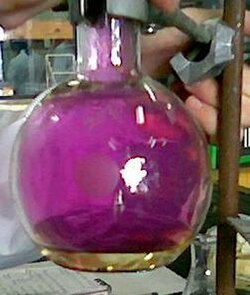
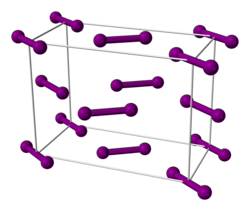
Iodine is unique among the common halogens for being a solid at standard temperature and pressure (STP). It possesses a base-centered orthorhombic crystal structure. One of its most notable physical characteristics is sublimation, the process where a substance transitions directly from a solid to a gas without passing through a liquid phase.
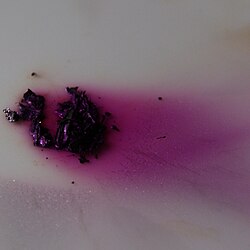
While it can be melted into a black/violet liquid at 113.7 °C, it readily produces a purple vapor that is highly characteristic of the element.
At the atomic level, iodine is a p-block element with an electron configuration of [Kr] 4d 10 5s 2 5p 5. It has a Pauling electronegativity of 2.66, making it less electronegative than fluorine, chlorine, and bromine.
Summary of Physical Constants
| Property | Value |
|---|---|
| Melting Point | 386.85 K (113.7 °C) |
| Boiling Point | 457.4 K (184.3 °C) |
| Density (at 20 °C) | 4.944 g/cm3 |
| Heat of Fusion | 15.52 kJ/mol |
| Heat of Vaporisation | 41.57 kJ/mol |
Chemical Behavior and Compounds
Iodine exhibits a wide range of chemistry, primarily acting as an oxidizing agent. It can form various binary compounds, including halides and oxides. For example, iodine monochloride is a significant halide compound, while iodine pentoxide represents its higher oxidation states.
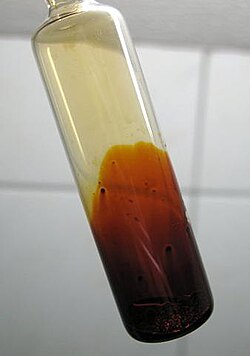
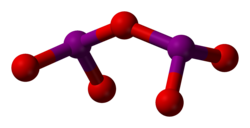
Iodine also forms charge-transfer complexes, which are chemical species where a charge is partially transferred from one molecule to another. These complexes often result in distinct color changes during chemical reactions.
![I2•PPh3 charge-transfer complexes in CH2Cl2. From left to right: (1) I2 dissolved in dichloromethane – no CT complex. (2) A few seconds after excess PPh3 was added – CT complex is forming. (3) One minute later after excess PPh3 was added, the CT complex [Ph3PI]+I− has been formed. (4) Immediately after excess I2 was added, which contains [Ph3PI]+[I3]−.[51]](/images/a7/5c/a75c528a4767413c97f3c408c801d4e19349ccdf338ab2f660fcdd8bcd480beb.jpg)
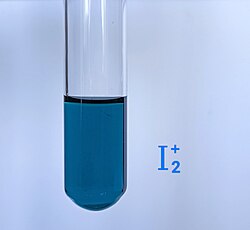
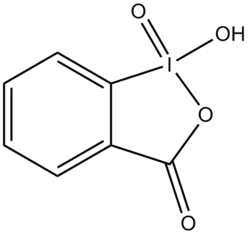
In organic chemistry, organoiodine compounds are frequently used as intermediates in synthesis. Additionally, iodine can form polyiodine compounds, such as the triiodide ion (I3−), which is central to many analytical chemistry applications.
Applications of Iodine
The versatility of iodine allows it to be used across multiple industries:
- Medical Imaging: Iodine-containing compounds, such as diatrizoic acid, are used as radiocontrast agents in X-ray imaging to make internal organs and blood vessels more visible.
- Biocides: Due to its antimicrobial properties, iodine is widely used as a disinfectant and antiseptic.
- Chemical Analysis: Iodine solutions are used to test for the presence of starch, producing a deep blue-black color.
- Industrial Use: It serves as a co-catalyst in various organic syntheses and is used in the production of optical polarizing films.

Biological Role and Health
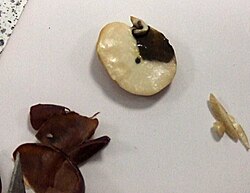
Iodine is an essential micronutrient for humans. Its primary biological function is its incorporation into the thyroid hormones T3 (triiodothyronine) and T4 (thyroxine). These hormones regulate metabolism, growth, and development.
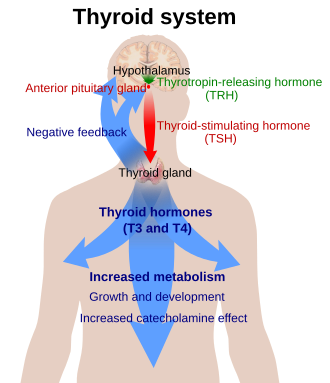
Iodine deficiency can lead to significant health issues, most notably the development of a goiter (enlargement of the thyroid gland) and impaired cognitive development in children. To prevent these disorders, many countries implement salt iodization programs.
![Comparison of the iodine content in urine in France (in microgramme/day), for some regions and departments (average levels of urine iodine, measured in micrograms per litre at the end of the twentieth century (1980 to 2000))[108]](/images/47/bf/47bf00f52044cf05bb7af1cb39f55221d0c5ae986e6931461becc6dec1158090.jpg)
Safety and Hazards
While essential in trace amounts, concentrated iodine is hazardous. It is classified as a danger due to its toxicity and irritant properties. It can cause skin burns, eye damage, and respiratory irritation if inhaled.

Frequently Asked Questions
What is the characteristic color of iodine vapor?
Iodine vapor is known for its rich, distinct violet or purple color.
Why is iodine important for the thyroid gland?
Iodine is a critical component of the thyroid hormones T3 and T4, which are necessary for regulating the body's metabolism and ensuring proper growth and development.
What happens when iodine is used to test for starch?
When a solution of iodine comes into contact with starch, it forms a complex that produces a characteristic deep blue-black color, making it a useful tool for chemical analysis.
What is sublimation in the context of iodine?
Sublimation is the process by which solid iodine transitions directly into a violet gas without first melting into a liquid, provided the pressure is below its triple point.
How is iodine used in X-ray imaging?
Iodine is used in radiocontrast agents, such as diatrizoic acid, because its high atomic number allows it to absorb X-rays effectively, providing clear contrast for internal bodily structures.