Internet Service Providers: How Connectivity Works and the Net Neutrality Debate
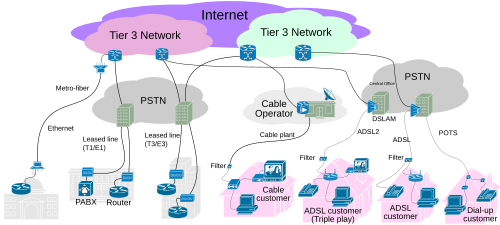
In our hyper-connected world, the seamless flow of data is often taken for granted. However, behind every website loaded and every video streamed is a complex ecosystem of organizations known as Internet Service Providers (ISPs). An ISP is any organization that provides services related to accessing, managing, or participating in the Internet. These entities can range from massive commercial corporations to community-owned non-profits and private organizations.
Beyond simple connectivity, ISPs offer a wide array of specialized services, including Internet transit, domain name registration, web hosting, and colocation. To understand how the global web functions, it is essential to look at how these providers are structured and the regulatory battles that shape our digital experience.
Key Facts
- ISPs can be commercial, non-profit, community-owned, or privately owned.
- The ISP hierarchy is divided into Tier 1, Tier 2, and Tier 3 providers.
- Net neutrality refers to the principle of treating all internet data equally.
- Wireless ISPs (WISPs) use technologies like Wi-Fi mesh or licensed frequency bands to provide access.
- The Affordable Connectivity Program provides monthly discounts for low-income U.S. households.
The Hierarchy of Internet Connectivity
The Internet is not a single monolithic entity but a collection of interconnected networks. These networks are categorized into tiers based on how they handle data transit and peering—the process where networks connect to exchange traffic.
Tier 1, 2, and 3 Providers
Tier 1 ISPs form the backbone of the internet. They are the highest level of connectivity and do not need to purchase transit from any other network to reach the rest of the web. Tier 2 ISPs sit in the middle; they often have their own large networks but must pay Tier 1 providers for transit, though they may engage in peering with other Tier 2 networks to reduce costs.
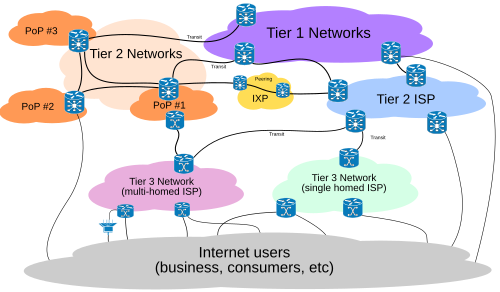
Tier 3 ISPs are typically the providers that connect directly to end-users, such as businesses and individual households. Unlike higher tiers, Tier 3 providers do not engage in peering and must purchase transit from Tier 1 or Tier 2 providers to access the global internet.
Technical Infrastructure and Transmission
To move massive amounts of data across cities or even oceans, transit ISPs utilize advanced optical technologies. Optical Transport Networks (OTN) and Dense Wavelength-Division Multiplexing (DWDM) allow data to be transmitted through optical fiber over long distances. For metropolitan areas, providers use specialized pluggable modules in routers, such as QSFP-DD or 400ZR, to manage high-speed data center interconnects.
Types of Internet Access Technologies
While fiber optics and wired connections are common, different environments require different technological approaches:
- Wireless ISPs (WISP): These providers use wireless networking, ranging from common Wi-Fi mesh systems to proprietary equipment operating on specific frequency bands (such as 2.4 GHz or 5.8 GHz) and licensed frequencies.
- Satellite Internet: Provides connectivity via orbiting satellites, often used in remote areas where terrestrial cables cannot reach.
- Metro and Long-Haul Networks: Metro networks handle data within a city, while long-haul networks transport data over vast distances, often utilizing submarine cables.
The Net Neutrality Conflict
One of the most significant regulatory debates in recent history involves net neutrality—the concept that ISPs should treat all internet traffic equally, without favoring specific content or applications.
Regulatory Shifts in the United States
The debate has seen significant fluctuations in policy. In early 2015, the U.S. Federal Communications Commission (FCC) moved to preserve net neutrality by reclassifying broadband as a telecommunications service under Title II of the Communications Act of 1934. This allowed the FCC to enforce rules ensuring an open internet.
However, this stance shifted in 2017 when the FCC, under new leadership, proposed the end of these rules. This led to the repeal of net neutrality regulations, which officially took effect on June 11, 2018.
Summary of ISP Classifications and Services
| Classification | Primary Function | Key Characteristic |
|---|---|---|
| Tier 1 ISP | Internet Backbone | Does not pay for transit; connects directly to the core. |
| Tier 2 ISP | Regional/National Transit | Purchases transit from Tier 1; may peer with others. |
| Tier 3 ISP | End-User Access | Purchases transit to provide service to consumers. |
| WISP | Wireless Access | Uses radio frequencies and mesh networks. |
Frequently Asked Questions
What is the difference between an ISP and a Web service?
An ISP provides the connection and infrastructure required to access the internet, whereas a web service refers to the specific applications or content (like email or social media) that you access once you are connected.
How does the Affordable Connectivity Program help users?
In the U.S., this program provides monthly discounts of up to $30 for households at or below 200% of the Federal Poverty Guidelines, and up to $75 for certain households on tribal lands.
What is peering in the context of ISPs?
Peering is a practice where two different networks connect with each other to exchange traffic directly, often without paying for transit, to improve efficiency and speed.
What does net neutrality mean for the average user?
Net neutrality ensures that your ISP cannot intentionally slow down certain websites or charge extra for "fast lanes" to specific content providers, keeping the internet an open playing field.
What technologies are used for long-distance data transmission?
Long-distance or "ultra long haul" transmission (over 1500 km) often utilizes submarine cables and advanced optical systems like DWDM to move data across oceans and continents.