Internet Protocol Suite: The History and Evolution of TCP/IP
The modern digital world relies on a foundational set of rules known as the Internet protocol suite. This architecture allows diverse computer networks to communicate seamlessly, regardless of their underlying hardware. Born from Cold War-era research and academic collaboration, the transition from early experimental networks to the global internet was driven by a need for "internetworking"—the ability to connect different types of networks into a single, cohesive system.
The Foundations: ARPANET and Early Research
The origins of the protocol suite trace back to the late 1960s, sponsored by the Defense Advanced Research Projects Agency (DARPA). In 1968, BBN was tasked with creating Interface Message Processors (IMPs) for the ARPANET. These IMPs served as the first generation of gateways, which we recognize today as routers.
Under the leadership of Frank Heart and Bob Kahn, the first four IMPs were developed between September and December 1969 at a cost of nearly US$1 million. The first successful transmission occurred between the University of California, Los Angeles (UCLA) and the Stanford Research Institute (SRI). While the intended message was "LOGIN," the SRI host crashed after the first two letters, making "LO" the first message ever sent over the ARPANET.
Following this success, Steve Crocker's Network Working Group developed the Network Control Program (NCP), the first host-to-host protocol. However, as DARPA expanded into mobile packet radio and satellite services in the early 1970s, it became clear that a more flexible system was needed to bridge these disparate technologies.
The Birth of TCP/IP and Internetworking
In 1973, Vinton Cerf of Stanford University and Bob Kahn began designing a new protocol generation to enable internetworking. Working with the International Network Working Group (INWG), they proposed a fundamental shift: instead of the network itself ensuring reliability, that responsibility would be shifted to the end hosts. This allowed the core network to remain simple and efficient.
By 1974, the Transmission Control Program was specified. However, early versions were monolithic, providing only a reliable byte stream. Experts like Bob Metcalfe, Danny Cohen, and Jonathan Postel argued that this lacked flexibility. Postel, who edited the Request for Comments (RFCs)—the technical documents that guide internet development—pushed for a layered approach to avoid scalability issues.
In 1978, this led to the split of the original program into two distinct protocols: the Internet Protocol (IP), a connectionless layer for routing, and the Transmission Control Protocol (TCP), a connection-oriented service ensuring reliable delivery.
This design followed the end-to-end principle, pioneered by Louis Pouzin and Hubert Zimmermann in the CYCLADES network. This principle dictates that the network should only handle the efficient routing of traffic, while the "intelligence" resides at the edge nodes.
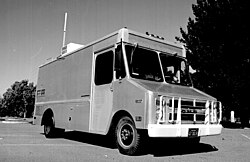
Testing the Global Connection
Before full adoption, the protocols underwent rigorous testing. In 1975, a two-network test linked Stanford and University College London. By November 1977, a more ambitious three-network test successfully moved data across packet radio, satellite networks, and the ARPANET, connecting the US, UK, and Norway.
![Diagram of the first internetworked connection. On a rainy Tuesday, November 22, 1977, data flowed from the van to SRI in Menlo Park and the University of Southern California via England, Boston, and Sweden across three types of networks: packet radio, the satellite network, and the ARPANET.[29]](/images/09/a4/09a40695c7cd21328609cec6b7a9c41ebc1bdb586114a27b6d9f727cfb21fa95.jpg)
Global Adoption and Commercialization
The transition to the modern standard happened rapidly in the early 1980s. In March 1982, the US Department of Defense mandated TCP/IP as the standard for all military networking. On January 1, 1983—known as "flag day"—the ARPANET officially migrated from NCP to TCP/IP.
Commercial adoption followed through industry workshops and the first Interop conference in 1985. Major corporations like IBM, AT&T, and DEC adopted TCP/IP despite having their own proprietary protocols. IBM, specifically through Barry Appelman's group, integrated TCP/IP into systems such as MVS, VM, and OS/2.
The spread of the protocol was further accelerated in 1989 when the University of California, Berkeley released the TCP/IP code for BSD UNIX into the public domain. For home users, the Trumpet Winsock stack was pivotal for Windows 3.1, allowing internet access via serial connections and modems before Microsoft integrated a native stack into Windows 95.
Technical Standards and Architecture
Today, the technical standards for the suite are managed by the Internet Engineering Task Force (IETF). The architecture is defined primarily in RFC 1122 and 1123, which organize the suite into four abstraction layers:
- Link Layer: Handles the physical movement of data across a local medium.
- IP Layer: Manages addressing and routing of packets across networks.
- Transport Layer: Ensures reliable data transfer (TCP) or fast, connectionless delivery (UDP).
- Application Layer: Where high-level protocols (like HTTP or FTP) operate.
While the original Internet Protocol version 4 (IPv4) served the world for decades, the exhaustion of available addresses led to the development of Internet Protocol version 6 (IPv6).
| Era/Date | Key Milestone | Primary Protocol/Technology |
|---|---|---|
| 1969 | First ARPANET message sent | IMPs (Early Routers) |
| Early 1970s | Host-to-host communication | NCP (Network Control Program) |
| 1978 | Protocol split for layering | TCP and IP |
| 1983 | ARPANET "Flag Day" migration | TCP/IP (IPv4) |
| 1989 | Public domain release | BSD UNIX TCP/IP code |
| Modern Era | Address space expansion | IPv6 |
Key Facts
- First Message: The first message sent over ARPANET was "LO," intended to be "LOGIN."
- The Split: Jonathan Postel split the monolithic Transmission Control Program into TCP and IP in 1978 to improve layering and scalability.
- Flag Day: January 1, 1983, marks the official switch of ARPANET from NCP to TCP/IP.
- End-to-End Principle: This design philosophy places network intelligence at the edge nodes rather than within the network core.
- Standardization: The IETF is the body responsible for the formal specifications of the suite.
Frequently Asked Questions
What is the difference between TCP and IP?
The Internet Protocol (IP) is responsible for addressing and routing packets of data so they can travel across networks to the correct destination. The Transmission Control Protocol (TCP) sits on top of IP and ensures that the data arrives reliably, in the correct order, and without errors.
Why was the transition from NCP to TCP/IP necessary?
The original Network Control Program (NCP) was not designed for "internetworking"—connecting different types of networks like satellite and radio. TCP/IP was created to hide the differences between local network protocols, allowing diverse systems to communicate.
What is the "end-to-end principle"?
The end-to-end principle is the design philosophy that the network core should remain simple, focusing only on moving packets, while complex functions like error checking and session management are handled by the computers at the ends of the connection.
What is the role of the IETF?
The Internet Engineering Task Force (IETF) is the open community that develops and promotes the technical standards that make the internet work, documenting them through the Request for Comments (RFC) series.
Why was IPv6 developed?
IPv6 was developed to replace IPv4 because the world ran out of available IPv4 addresses. IPv6 provides a vastly larger address space to accommodate the billions of devices connecting to the internet.