International Holocaust Remembrance Alliance: Advancing Global Education and Memory
The International Holocaust Remembrance Alliance (IHRA) is a leading intergovernmental organization dedicated to strengthening and promoting Holocaust education, research, and remembrance on a global scale. Founded in 1998, the alliance unites governments and academic experts to ensure that the lessons of the Holocaust are preserved and that the commitments of the Declaration of the Stockholm International Forum on the Holocaust are upheld.
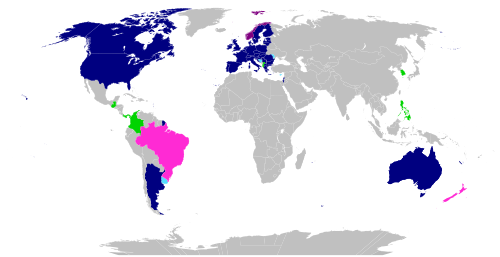
Originally established as the Task Force for International Cooperation on Holocaust Education, Remembrance, and Research (ITF), the organization rebranded as the IHRA in January 2013. Headquartered in Berlin, Germany, it currently comprises 34 member countries, one liaison country, and seven observer countries.
Key Facts
- Founded: 1998 by Göran Persson, then-Prime Minister of Sweden.
- Purpose: To advance Holocaust education, research, and remembrance worldwide.
- Membership: 35 total countries (including members, liaison, and observers).
- Key Document: The Working Definition of Antisemitism, adopted in 2016.
- Headquarters: Berlin, Germany.
History and Evolution
The IHRA began its journey in May 1998 under the leadership of Göran Persson. Early adopters of the initiative included Germany and Israel, followed by France, Italy, Poland, and the Netherlands in 1999. To provide academic rigor, renowned Holocaust scholar Yehuda Bauer served as the organization's academic advisor.
The Stockholm International Forum on the Holocaust
A pivotal moment in the organization's history occurred from January 26–28, 2000, with the convening of the Stockholm International Forum on the Holocaust. This event marked the 55th anniversary of the liberation of Auschwitz. The forum brought together heads of state, historians, and survivors from 45 countries. Nobel Prize laureate Elie Wiesel served as the honorary Chairman, while Professor Yehuda Bauer led the academic committee.
The forum resulted in the unanimous adoption of the Stockholm Declaration. This declaration served as a transnational foundation for the struggle against genocide. Following this success, subsequent conferences were held between 2001 and 2004, focusing on preventing genocide, truth, justice, reconciliation, and combatting intolerance.
The Working Definition of Antisemitism
In 2016, the IHRA adopted the Working Definition of Antisemitism, a non-legally binding document originally published by the EUMC in 2005. The definition provides illustrative examples to help governments and organizations identify antisemitism, including classical tropes, Holocaust denial, and the application of double standards to the State of Israel.
The definition has seen widespread adoption. The European Parliament called for its application in 2017, and the United States integrated it into Executive Order 13899 in 2018 and a 2023 comprehensive strategy to counter antisemitism. Despite its utility, the definition has faced criticism from some who argue it is too broad or conflates anti-Zionism with antisemitism.
Adoption Status by Selected Countries
| Country | Status | Date of Adaptation |
|---|---|---|
| United Kingdom | Member | 12 December 2016 |
| Israel | Member | 22 January 2017 |
| Germany | Member | 20 September 2017 |
| United States | Member | 11 December 2019 |
| France | Member | 3 December 2019 |
| Ireland | Member | 16 January 2025 |
Organizational Structure and Membership
The IHRA operates through a rotating annual chairmanship. The member country holding the chair hosts Plenary meetings—up to twice a year—and covers the associated costs. The organization also maintains specialized working groups, including the Academic Working Group (AWG) and the Memorials and Museums Working Group (MMWG).
Membership Requirements
Any UN member country may apply for membership. Applicants typically enter as Observer countries before seeking full membership. To be accepted, a country must:
- Establish a Holocaust Memorial Day (typically January 27).
- Demonstrate a senior-level political commitment to Holocaust education.
- Ensure that archives from the Holocaust period (1933–1950) are open for research.
- Allow for academic and public examination of its historical past during the Holocaust.
Challenges and Diplomatic Relations
The IHRA has navigated several diplomatic complexities. In 2009, Norway's chairmanship was criticized by Jewish groups when the country commemorated the 150th anniversary of author Knut Hamsun, a known Nazi sympathizer.
The organization also had a strained relationship with the Holy See. The Vatican initially withdrew from an agreement to join as an observer in 2009, reportedly due to concerns over the declassification of records regarding Pope Pius XII. However, relations improved significantly on March 2, 2020, when the Vatican officially opened the Apostolic Archive covering Pius XII's tenure (1939–1958), a move commended by the IHRA as vital for safeguarding the historical record.
Frequently Asked Questions
What is the primary goal of the IHRA?
The primary goal of the International Holocaust Remembrance Alliance is to unite governments and experts to strengthen and promote Holocaust education, research, and remembrance worldwide, while upholding the Stockholm Declaration.
What is the IHRA Working Definition of Antisemitism?
It is a non-legally binding definition adopted in 2016 that provides a framework and illustrative examples—such as Holocaust denial and classical tropes—to help organizations identify and combat antisemitism.
How does a country become a member of the IHRA?
A UN member country must apply and be approved by the Plenary. They usually start as an Observer and must demonstrate a commitment to Holocaust education, establish a Memorial Day, and open their 1933–1950 archives to researchers.
Who founded the IHRA and when?
The organization was founded in 1998 by Göran Persson, who was the Prime Minister of Sweden at the time.
What is the significance of the Stockholm Declaration?
Adopted during the 2000 Stockholm International Forum on the Holocaust, the declaration serves as a joint commitment by participating nations to fight genocide and ensure the Holocaust is remembered globally.