International College Beirut: A Legacy of Academic Excellence in Lebanon
The International College (IC) is a premier independent, non-profit international school located in Beirut, Lebanon. Serving a diverse student body from across Lebanon, the Middle East, and the globe, IC is dedicated to its motto: Inspire. Grow. Lead. With an enrollment of over 3,500 students, the institution operates across two distinct campuses—one in the heart of the capital, Ras Beirut, and another in the urban hillsides of Ain A'ar.
Chartered in Massachusetts, United States, the college provides a comprehensive educational journey from nursery through 12th grade, blending rigorous academic standards with a multicultural perspective.
Key Facts
- Established: 1891 (135 years of history).
- Campuses: Ras Beirut and Ain A'ar.
- Student Population: 3,500+ students.
- Languages of Instruction: Arabic, English, and French.
- Accreditations: NEASC, CIS, IB, and the Agency for French Education Abroad.
- Sustainability: First green school building in Lebanon and the Middle East with LEED Gold certification.
A Rich History of Evolution
The origins of the International College date back to 1891 in Smyrna, within the Ottoman Empire. Founded by Canadian educator Alexander MacLachlan as the American Boys’ School, the institution graduated its first class of five students in 1895 and was subsequently renamed the American Collegiate Institute for Boys.
The school expanded its reach in 1913 by opening an elementary school and later added a French language Section Secondaire in 1926. A pivotal shift occurred in 1936 when Dr. Bayard Dodge of the American University of Beirut (AUB) invited the college to relocate to Beirut to serve as AUB's preparatory school, earning it the nickname "The Prep." In its inaugural Beirut year, the school hosted 901 students from 37 different countries and 16 religious sects.
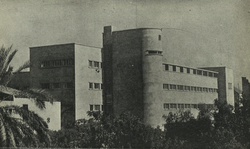
By the 1960s, IC established its own board of trustees, separated from AUB, and transitioned into a co-educational institution by admitting women. Even during the challenges of the Lebanese Civil War, the school remained a beacon of stability under the leadership of Dr. Alton Reynolds, maintaining classes for students of all faiths in Ras Beirut. To better serve the children of alumni in outlying areas, a satellite campus was opened in Ain A’ar in 1988.
Academic Structure and Curricula
IC employs a multilingual approach, utilizing Arabic, English, and French within the Primary Years Programme (PYP) curricular framework. The school is divided into several key stages:
Elementary and Middle School
- Elementary School (Grades 1-5): Instruction is delivered in either English or French, with Arabic remaining mandatory for all students.
- Middle School (Grades 6-9): This four-year cycle offers three distinct paths: the Lebanese Program (preparing for the official Brevet exam), the College Preparatory Program (English medium), and the French Program (preparing for the French Baccalaureate).
Secondary School Programs
The Secondary School consists of a three-year cycle offering four specialized diplomas to meet various university goals:
- Lebanese Baccalaureate: Follows the Lebanese Ministry of Education curriculum with English or French tracks for core sciences and math.
- French Baccalaureate: Follows the French Ministry of Education curriculum, with all core subjects taught in French.
- International Baccalaureate (IB) Diploma: A globally recognized two-year curriculum requiring high English proficiency and specific nationality or exemption status.
- American College Preparatory Program (CPP): A rigorous two-year non-baccalaureate diploma designed for students holding foreign passports.
Campus Life and Student Development
Beyond academics, IC emphasizes holistic growth through athletics and civic duty. The school's mascot, the Cougar, represents a wide array of sports including soccer, basketball, tennis, swimming, and even pickleball. Students stay connected through the school newspaper, Inside IC, and the yearbook, Torch.
A cornerstone of the high school experience is the Civic Engagement and Service Learning (CCSL) program. Participation is mandatory, requiring students to engage in two community projects annually, such as environmental awareness or volunteering at centers for the disabled and elderly.
Institutional Overview
| Category | Details |
|---|---|
| Head of School | Tobin I. Wait |
| Average Class Size | 24 students |
| Tuition Range | ±$9,500 - $14,000 |
| School Colors | Green and White |
| Notable Alumni | Salim Hoss, Nawaf Salam, Ghassan Tueni |
Frequently Asked Questions
What are the different campuses of International College?
IC operates two campuses: the main campus in Ras Beirut and a satellite campus in Ain A'ar. The Ain A'ar campus serves students from nursery through Grade 9, following the same curriculum as the Beirut campus.
Which languages are taught at IC?
The school is trilingual, with Arabic, English, and French used as mediums of instruction across various programs.
What is the LEED Gold certification mentioned in the honors?
LEED (Leadership in Energy and Environmental Design) Gold certification indicates that the school building meets high international standards for sustainability and environmental efficiency, making it the first of its kind in Lebanon and the Middle East.
Who can enroll in the American College Preparatory Program?
The American Program is specifically designed for students who hold a foreign passport.
Is community service required for students?
Yes, all high school students must participate in the Civic Engagement and Service Learning (CCSL) program, completing two community projects per year.