Institute of Science Tokyo Campuses and Global Research Bases
The Institute of Science Tokyo maintains a sophisticated network of academic hubs designed to foster innovation across diverse scientific disciplines. With six distinct campuses and a wide array of overseas bases, the institution integrates specialized medical, dental, and technical facilities to support its comprehensive research and educational goals.
Key Facts
- Six Campuses: The institution operates six primary campuses, including specialized sites for medical and dental studies.
- Yushima Hub: The Yushima Campus serves as the primary center for medical and dental schools, featuring the 126m-tall M&D tower.
- Konodai Foundation: Undergraduate medical and dental students begin their academic journey at the Konodai Campus in Chiba Prefecture.
- Global Reach: The institute maintains a significant international presence with research centers and offices across Africa, Asia, Europe, and the Americas.
Primary Academic Campuses
The university's infrastructure is distributed across several key locations, each serving a specific role in the academic ecosystem.
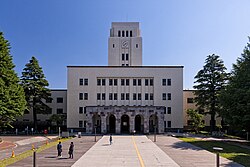
Ookayama Campus
The Ookayama Campus serves as one of the central pillars of the institute's operations.
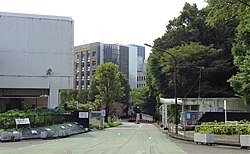
Suzukakedai Campus
The Suzukakedai Campus provides essential space for the institution's expanding scientific endeavors.
Yushima Campus
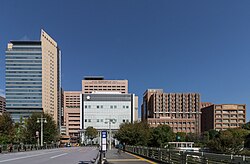
Located in Bunkyō near Ochanomizu Station, the Yushima Campus is the primary hub for the medical and dental schools. It houses the main university hospital and advanced research facilities, most notably the 126m-tall M&D tower. Historically, this site was part of the Tokyo Women's Higher Normal School (now Ochanomizu University). To accommodate the growth of the Tokyo Higher Normal School for Dentistry, the Ministry of Education relocated the women's school to Otsuka in 1930, allowing for the expansion of the main campus.
Due to limited land availability, the Yushima and Surugadai campuses are characterized by high-density, high-rise architecture. The research buildings, in particular, utilize a maximum building-to-land ratio, giving the campus a unique vertical profile for a national research institute. The campus covers a ground area of 45,090m² with a total building area of 273,054m².
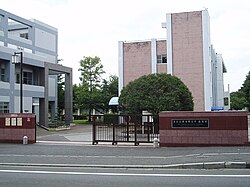
Surugadai Campus
Also situated near Ochanomizu Station, the Surugadai Campus is home to the Institute of Biomaterials and Bioengineering, the M&D data center, and portions of the Medical Research Institute. This compact site has a ground area of 5,597m² and a building area of 18,028m².
Konodai Campus
The Konodai Campus, located in Ichikawa City, Chiba Prefecture, is the starting point for undergraduate medical and dental students. It is approximately a 40-minute train ride from the Yushima Campus. This site hosts the former Faculty of Liberal Arts, the Kohnodai Library, student dormitories, a gymnasium, and various athletic grounds. The campus spans a ground area of 61,049m² with a building area of 13,965m².
Campus Specifications Summary
| Campus | Primary Function | Ground Area (m²) | Building Area (m²) |
|---|---|---|---|
| Yushima | Medical & Dental School / Hospital | 45,090 | 273,054 |
| Surugadai | Biomaterials & Bioengineering | 5,597 | 18,028 |
| Konodai | Undergraduate Medical/Dental Entry | 61,049 | 13,965 |
Global Research Network
Beyond its Japanese campuses, the Institute of Science Tokyo operates several overseas bases to facilitate international collaboration and research:
- Africa: Ghana-Science Tokyo Research Collaboration Center (at the Noguchi Memorial Institute for Medical Research) and the E-JUST Office in Alexandria, Egypt.
- Asia: Science Tokyo-MU Partnership Siriraj Office, Science Tokyo ANNEX Bangkok, the Philippines Office (Manila), and the China Office (Beijing).
- Americas: Latin American Collaborative Research Center (LACRC) and Science Tokyo ANNEX Berkeley.
- Europe: Science Tokyo ANNEX Aachen.
- Other: CU-Science Tokyo Research and Education Collaboration Center.
Frequently Asked Questions
Where do undergraduate medical and dental students begin their studies?
Undergraduate medical and dental students start their university studies at the Konodai Campus located in Ichikawa City, Chiba Prefecture.
What is the most prominent feature of the Yushima Campus?
The most prominent feature is the 126m-tall M&D tower, which is part of the campus's high-rise research and medical infrastructure.
How far is the Konodai Campus from the Yushima Campus?
The Konodai Campus is approximately 40 minutes away from the Yushima Campus by train.
Which campus houses the Institute of Biomaterials and Bioengineering?
The Institute of Biomaterials and Bioengineering is located at the Surugadai Campus.
Does the Institute of Science Tokyo have a presence in Europe?
Yes, the institute maintains an international presence in Europe through the Science Tokyo ANNEX Aachen.