Information Technology: The Evolution of Computing and Data Systems
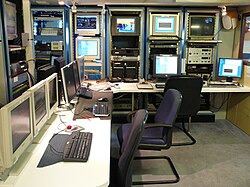
Information technology (IT) is the study and application of computers, telecommunication systems, and various devices used to create, process, store, retrieve, and transmit information. While many people associate IT primarily with computers and networks, the field is much broader, encompassing distribution technologies such as telephones and television. As an application of computer science and computer engineering, IT serves as the backbone of modern organizational processes and global communication.
An IT system typically consists of hardware, software, and peripheral equipment operated by a specific group of users. Whether it is a communications system or a complex computer network, successful IT projects require meticulous planning and ongoing maintenance to ensure they align with organizational goals and maintain optimal functionality.
Key Facts
- IT encompasses computers, telecommunications, and information distribution technologies.
- The history of IT is divided into four phases: pre-mechanical, mechanical, electromechanical, and electronic.
- The Zuse Z3 (1941) was the world's first programmable computer.
- Digital storage capacity surpassed analog storage capacity in 2002.
- The invention of the microprocessor in 1971 paved the way for the personal computer revolution.
The Historical Evolution of Computing
The journey of information technology can be categorized into four distinct developmental phases based on the technologies used for processing and storage: pre-mechanical (3000 BC – 1450 AD), mechanical (1450 – 1840), electromechanical (1840 – 1940), and electronic (1940 to present).
Early Mechanisms and Mechanical Computing
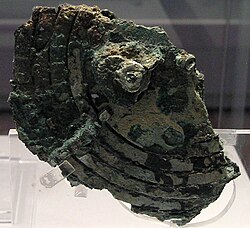
Humans have used devices to aid computation for millennia, beginning with simple tools like tally sticks. One of the most significant ancient artifacts is the Antikythera mechanism from the first century BC, which is considered the earliest known mechanical analog computer and the first known geared mechanism. It wasn't until 1645 that mechanical calculators capable of performing the four basic arithmetic operations were developed.
The Rise of Electronic and Programmable Machines
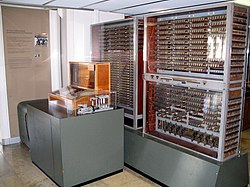
The early 1940s saw the emergence of electronic computers utilizing relays or thermionic valves. A landmark in this era was the Zuse Z3, completed in 1941, which stands as the world's first programmable computer. During World War II, the Colossus was developed as the first electronic digital computer, though it was designed for the specific task of decrypting messages rather than general-purpose computing.
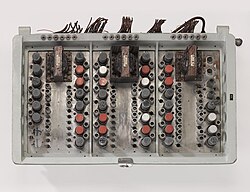
The transition to modern computing was solidified by the Manchester Baby, the first recognizably modern electronic digital stored-program computer, which ran its first program on June 21, 1948. The subsequent development of the transistor at Bell Laboratories in the late 1940s revolutionized the industry by drastically reducing power consumption.
The Semiconductor Revolution
The shift from vacuum tubes to transistors allowed for much smaller and more efficient machines. For example, the Ferranti Mark I used 4,050 valves and consumed 25 kilowatts, whereas the first transistorized computer at the University of Manchester consumed only 150 watts by 1953. This momentum continued with the invention of the integrated circuit (IC) in 1959 and the microprocessor in 1971, which led to the birth of the personal computer (PC) and modern Information and Communications Technology (ICT).

Data Management: Storage and Databases
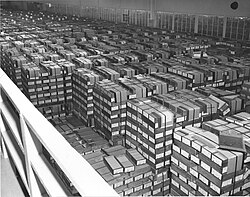
As computing power grew, so did the need to manage vast amounts of information. IBM introduced the first hard disk drive in 1956 as part of the 305 RAMAC system. While magnetic disks and optical media like CD-ROMs remain common, the landscape changed significantly in 2002 when digital storage capacity exceeded analog capacity for the first time.
To handle the complexity of large datasets, Database Management Systems (DMS) emerged in the 1960s. While early systems like IBM's IMS used hierarchical storage, the 1970s saw Ted Codd propose the relational storage model. This model, using tables, rows, and columns, led to the release of the first commercial relational database management system (RDBMS) by Oracle in 1981.
| Metric/Type | Details/Value |
|---|---|
| Year Digital Exceeded Analog | 2002 |
| 2007 Global Digital Storage Split | 52% Hard Disks, 28% Optical, 11% Magnetic Tape |
| Worldwide Capacity Growth | From <3 exabytes (1986) to 295 exabytes (2007) |
| Capacity Doubling Rate | Approximately every 3 years |
The Impact of Connectivity and Communication
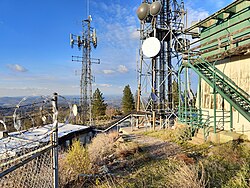
The convergence of telecommunications and computing technology has fundamentally altered global commerce and social interaction. The rise of the internet has transformed marketing; in 2002, American internet goods sales exceeded $28 billion, growing to $289 billion in e-commerce by 2012. Today, technology is integrated into almost every aspect of life, from telecommunication towers to the simple act of sending an email.

Ethics in the Digital Age
With increased reliance on technology comes a host of ethical challenges. Modern IT environments must navigate issues such as copyright breaches, employee monitoring, unsolicited emails (spam), hacking, and the use of cookies or spyware by websites to track user activity.
Frequently Asked Questions
What are the four phases of IT development?
The four phases are pre-mechanical (3000 BC – 1450 AD), mechanical (1450 – 1840), electromechanical (1840 – 1940), and electronic (1940 to present).
What was the first programmable computer?
The Zuse Z3, completed in 1941, is recognized as the world's first programmable computer.
How has data storage changed over time?
Data storage has transitioned from analog devices to digital formats. In 2002, digital storage capacity officially surpassed analog capacity, and by 2007, nearly 94% of data stored worldwide was digital.
What is a relational database?
A relational database is a type of database management system that organizes data into tables consisting of rows and columns, a model proposed by Ted Codd in the 1970s.
What are some common ethical concerns in IT?
Key ethical concerns include copyright infringement, unauthorized access by hackers, privacy issues regarding employee monitoring, and the use of spyware or cookies to track user behavior.