Indian Army in World War I: Contribution and Campaigns
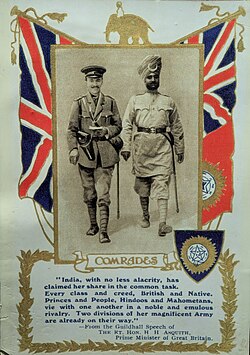
At the dawn of the 20th century, the Indian Army stood as one of the most significant military forces in the world. Serving under the allegiance of the British Empire, it functioned as a vital strategic reserve, capable of deploying troops across vast distances to secure imperial interests. During World War I, the army underwent massive expansion, evolving from a professional volunteer force into a million-man army that fought in nearly every major theater of the conflict.
The scale of mobilization was unprecedented. While the army began the war in 1914 with approximately 240,000 men, by November 1918, its strength had grown to 548,311 regulars. When including non-combatant roles and volunteers, nearly 1.3 million men had stepped forward to serve by the war's end.
Key Facts
- Total Volunteers: Nearly 1.3 million men volunteered for service by 1918.
- Overseas Service: Over one million Indian troops served outside of India.
- Human Cost: At least 74,187 Indian soldiers died during the war.
- Global Reach: Troops fought in France, Mesopotamia, East Africa, Egypt, Palestine, and China.
- Force Composition: Included the regular army, Princely State Imperial Service Brigades, and the Auxiliary Force.
Organization and Structure
Following the reforms of Herbert Kitchener, the Indian Army was organized into divisions consisting of one cavalry and three infantry brigades. A typical infantry brigade comprised one British battalion and three Indian battalions. Notably, Indian battalions were smaller than their British counterparts, consisting of 30 officers and 723 other ranks, compared to the British 29 officers and 977 other ranks.
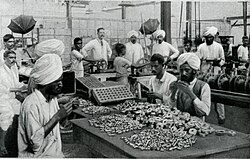
The army was often structured along social lines, with companies segregated by religion, caste, or tribe. Beyond the regular army, the British could call upon the Imperial Service Brigades (from Princely States) and the Auxiliary Force (European volunteers). By the end of the war, 26,000 men from the Princely States had served overseas.
Major Campaigns and Expeditionary Forces
The Indian Army was deployed via several Expeditionary Forces, each tasked with specific strategic goals across the globe.
The Western Front (Force A)
On the Western Front, Indian cavalry divisions played a crucial role. Initially the 1st and 2nd Cavalry Divisions (later renumbered as the 4th and 5th), these troops were often held in reserve for breakthroughs. However, they frequently served in the trenches as dismounted infantry. They participated in major engagements including the Battle of the Somme, the Battle of Cambrai, and the advance to the Hindenburg Line.
The Mesopotamian Campaign (Force D)
The campaign in Mesopotamia (modern-day Iraq) was predominantly an Indian Army effort. Under the command of Frederick Stanley Maude, Indian forces advanced toward Baghdad, capturing the city in March 1917. While successful, the campaign was costly; over 11,000 were killed and more than 12,000 died of disease.
Palestine and Egypt (Forces E and F)
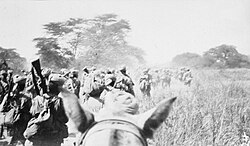
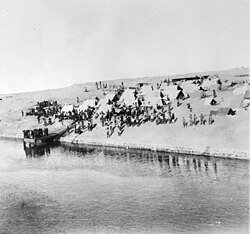
Indian troops were essential in defending the Suez Canal and later in the conquest of Palestine. The 4th and 5th Cavalry Divisions transferred from France to join the fight, alongside the 15th Imperial Service Cavalry Brigade. These forces were instrumental in the capture of Jerusalem and Damascus.
Other Global Operations
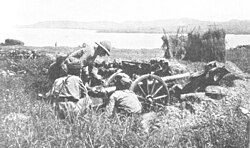
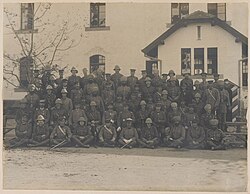
The Indian Army's reach extended to East Asia. In China, the 36th Sikhs participated in the Siege of Qingdao (October–November 1914), a German-controlled port. This small contingent helped the Japanese-led force secure the port with relatively low casualties.
Summary of Indian Army Contributions
| Category | Detail/Statistic |
|---|---|
| Initial Strength (1914) | 240,000 men |
| Total Volunteers (by 1918) | ~1.3 million |
| Overseas Deployment | Over 1 million troops |
| Fatalities | At least 74,187 |
| Key Theaters | France, Mesopotamia, Palestine, Egypt, East Africa, China |
Aftermath and Legacy
The end of the Great War did not bring immediate peace. The Indian Army remained active in the Third Afghan War (1919) and multiple Waziristan campaigns throughout the 1920s and 30s. However, the war left the army with a critical shortage of experienced officers due to high casualty rates.
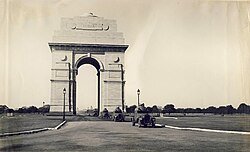
The bravery of the soldiers was recognized through numerous awards, including the Victoria Cross, awarded to individuals such as Darwan Singh Negi and Karanbahadur Rana. Today, the India Gate stands as a permanent memorial to the 70,000 Indian soldiers who lost their lives during the conflict.
Frequently Asked Questions
How many Indian soldiers fought in World War I?
Over one million Indian troops served overseas, and nearly 1.3 million men volunteered for service in total by 1918, including those in non-combatant roles.
What was the role of the Indian Army in Mesopotamia?
The Mesopotamian campaign was largely an Indian Army operation. They were responsible for the advance and capture of Baghdad in 1917 and the eventual surrender of Turkish forces following the Battle of Sharqat.
Did Indian soldiers fight on the Western Front?
Yes, primarily in cavalry divisions. While they were often held in reserve for breakthroughs, they frequently fought as dismounted infantry in the trenches during battles like the Somme and Cambrai.
What were the Imperial Service Brigades?
These were forces provided by the Princely States of India. In 1914, they consisted of 22,613 men across 20 cavalry regiments and 14 infantry battalions, with 26,000 serving overseas by the war's end.
How is the sacrifice of Indian soldiers commemorated?
The India Gate is the primary monument commemorating the 70,000 Indian soldiers who died during the war.