Iceland National Football Team: The Rise of Strákarnir okkar
Known affectionately as Strákarnir okkar (Our Boys), the Iceland men's national football team has evolved from a regional competitor into a respected force on the global stage. Governed by the Knattspyrnusamband Íslands (KSÍ) and competing under the UEFA confederation, Iceland has defied expectations by qualifying for both the European Championship and the FIFA World Cup, bringing international attention to the small island nation.
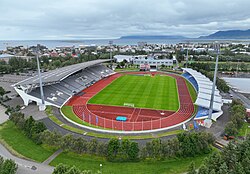
The team plays its home matches at Laugardalsvöllur, the national stadium in Reykjavík, which has served as the backdrop for some of the country's most historic footballing moments.
Key Facts
- Highest FIFA Ranking: 18th (February–March 2018).
- World Cup Debut: 2018 (Reached the group stage).
- European Championship Peak: Quarter-finals in 2016.
- All-time Top Scorer: Gylfi Sigurðsson with 28 goals.
- Most Capped Player: Birkir Bjarnason with 113 appearances.
- Current Head Coach: Arnar Gunnlaugsson.
Historical Journey and Major Tournaments
Iceland's official international journey began on July 17, 1946, with a match against Denmark. While the early decades were marked by regional play, the 21st century saw a meteoric rise in the team's competitive quality and global standing.
Euro 2016: The Breakthrough
The 2016 UEFA European Championship marked a turning point for Icelandic football. The team not only qualified for its first major tournament but stunned the world by reaching the Quarter-finals. Their journey included a historic victory over Austria and a memorable Round of 16 win against England, before eventually falling to France with a score of 5–2.
2018 FIFA World Cup
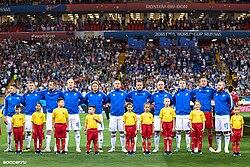
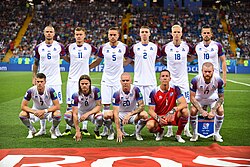
Following their European success, Iceland became the smallest nation ever to qualify for the FIFA World Cup finals in 2018. Competing in Group D, they secured a famous 1–1 draw against Argentina, though they were eliminated after losses to Nigeria and Croatia.
Player Records and Legacy
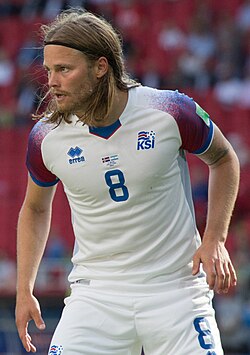
The success of the national team has been built on the backs of dedicated players who have set enduring records. Birkir Bjarnason holds the record for the most appearances, having earned 113 caps between 2010 and 2022.
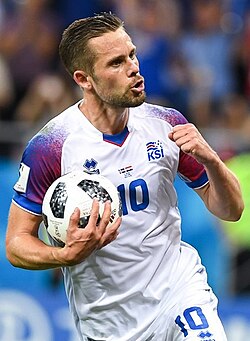
In terms of offensive prowess, Gylfi Sigurðsson leads the nation as the all-time top scorer with 28 goals. Other legendary figures include Eiður Guðjohnsen, who scored 26 goals in 88 appearances.
Team Statistics and Performance
Iceland's performance has fluctuated over the years, with a FIFA ranking that has seen dramatic swings—from a low of 131st in 2012 to a peak of 18th in 2018. Their competitive record includes championships in the Baltic Cup (2022) and the Greenland Cup (1980, 1984).
| Category | Detail |
|---|---|
| Association | Knattspyrnusamband Íslands (KSÍ) |
| Confederation | UEFA |
| Home Stadium | Laugardalsvöllur |
| Best World Cup Result | Group Stage (2018) |
| Best Euro Result | Quarter-finals (2016) |
| Current Kit Provider | Puma (2020–present) |
Recent Form and Future Outlook
Under the leadership of head coach Arnar Gunnlaugsson and captain Orri Óskarsson, Iceland continues to compete in high-level fixtures. Recent 2026 World Cup qualification matches have seen mixed results, including a dominant 5–0 win over Azerbaijan and a hard-fought 2–2 draw against France in Reykjavík. The team is currently preparing for the 2026–27 Nations League, with upcoming fixtures against Estonia, Luxembourg, and Bulgaria.
Frequently Asked Questions
Who is the all-time leading goalscorer for Iceland?
Gylfi Sigurðsson is the all-time top scorer for the Iceland national team, with a total of 28 goals.
What is Iceland's best ever finish in a major tournament?
Iceland's best finish was reaching the Quarter-finals of the UEFA European Championship in 2016.
Which player has the most caps for the national team?
Birkir Bjarnason holds the record for the most appearances, with 113 caps.
When did Iceland first qualify for the FIFA World Cup?
Iceland qualified for its first FIFA World Cup in 2018, where they competed in the group stage in Russia.
What is the nickname of the Iceland national team?
The team is known as Strákarnir okkar, which translates to "Our Boys" in English.