ICAO: Governing Global Civil Aviation Standards
The International Civil Aviation Organization (ICAO) is a specialized agency of the United Nations dedicated to ensuring the safe and orderly growth of international civil aviation. Established on April 4, 1947, ICAO serves as the global forum for cooperation between member states, creating the standards and recommended practices that allow aircraft to cross borders safely and efficiently.
Headquartered in Montreal, Quebec, Canada, the organization operates in six official languages: Arabic, Chinese, English, French, Russian, and Spanish. Its primary goal is to harmonize aviation regulations worldwide, from the technical specifications of runways to the protocols used by air traffic controllers.
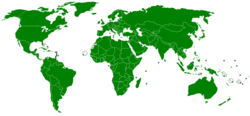
Key Facts
- Founded: April 4, 1947.
- Status: United Nations specialized agency.
- Headquarters: Montreal, Canada.
- Current Secretary General: Juan Carlos Salazar Gómez.
- Core Function: Establishing international standards for air navigation, airport codes, and aircraft registration.
- Global Reach: Maintains seven regional offices and one sub-office across the globe.
Organizational Structure and Governance
ICAO is governed by a structured system designed to balance the interests of major aviation powers with geographic representation. The organization's main organs include the Triennial Assembly, the ICAO Council, and the ICAO Secretariat.
The ICAO Council
The Council is the executive body of the organization. Its members are divided into three distinct groups based on their role in global aviation:
- Group I (Chief Importance): Countries of primary importance to international aviation.
- Group II (Large Contributions): Countries that make significant contributions to international air navigation.
- Group III (Geographic Representations): Countries elected to ensure a balanced global representation.
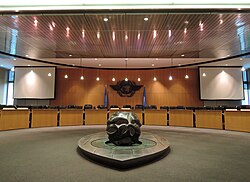
Leadership
The agency is led by the Secretary General, currently Juan Carlos Salazar Gómez of Colombia, who took office in August 2021. The Council is presided over by a President, with Salvatore Sciacchitano of Italy serving in the role from 2020 to the present.
Technical Standards and Air Navigation
One of ICAO's most critical functions is the work of the Air Navigation Commission, which develops the technical specifications required for global flight safety.
Aerodrome Reference Code
To ensure that aircraft can safely land at various airports, ICAO utilizes an Aerodrome Reference Code. This system uses a number to categorize the runway field length and a letter to categorize the aircraft's wingspan and main gear span.
| Code Letter | Wingspan | Main Gear Span | Example Aircraft |
|---|---|---|---|
| A | < 15 m | < 4.5 m | BN-2 Islander, Tecnam P2012 |
| B | 15–24 m | 4.5–6 m | CRJ 100/200, Embraer ERJ, Saab 340 |
| C | 24–36 m | 6–9 m | A320 family, B737, ATR 42/72 |
| D | 36–52 m | 9–14 m | A300, B767, DC-10 |
| E | 52–65 m | 9–14 m | A350, B747, B777, B787 |
| F | 65–80 m | 14–16 m | A380, B747-8, Antonov An-124 |
Measurement Systems
While ICAO recommends the International System of Units (SI), the aviation industry often uses a mix of recommended and de facto standards. For example, while kilometers (km) are recommended for ground distance, nautical miles (nmi) remain the industry standard. Similarly, flight levels are measured in feet (ft) despite the recommendation for meters (m).
Global Operations and Environmental Initiatives
ICAO operates through a network of regional offices to provide localized support:
- APAC: Bangkok, Thailand (Sub-office in Beijing, China)
- ESAF: Nairobi, Kenya
- EUR/NAT: Paris, France
- MID: Cairo, Egypt
- NACC: Mexico City, Mexico
- SAM: Lima, Peru
- WACAF: Dakar, Senegal
Beyond safety, ICAO addresses modern challenges such as air quality and the Carbon Offsetting and Reduction Scheme for International Aviation, aiming to mitigate the environmental impact of global flight. The agency also establishes regulations for the registration and operation of drones (unmanned aircraft systems).
Frequently Asked Questions
What is the primary purpose of ICAO?
ICAO is a UN specialized agency that creates international standards and recommended practices for civil aviation to ensure safety, security, and efficiency in global air travel.
Where is ICAO headquartered?
The headquarters of ICAO are located in Montreal, Quebec, Canada.
How does the Aerodrome Reference Code work?
It uses a combination of a number (based on runway length) and a letter (based on aircraft wingspan and gear span) to determine if a specific aircraft can safely operate at a particular airport.
Which languages are official at ICAO?
The official languages are Arabic, Chinese, English, French, Russian, and Spanish.
Does ICAO handle environmental issues?
Yes, ICAO manages air quality standards and the Carbon Offsetting and Reduction Scheme for International Aviation to reduce the industry's carbon footprint.