Ibn Saud: The Founder and First King of Saudi Arabia
Abdulaziz bin Abdul Rahman Al Saud, known globally as Ibn Saud, was a visionary statesman and religious leader who forged the modern state of Saudi Arabia. From his early years in exile to his eventual coronation, Ibn Saud's life was defined by a relentless drive to unify the fragmented tribal territories of the Arabian Peninsula under a single banner.
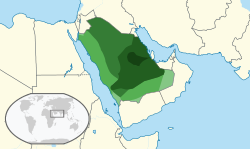
His journey began with the recapture of Riyadh in 1902, sparking three decades of strategic conquests. By blending military prowess with religious leadership, he consolidated power over the central and northern regions of Arabia, eventually establishing the Kingdom of Saudi Arabia on September 23, 1932.
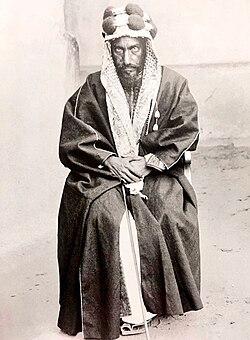
Key Facts
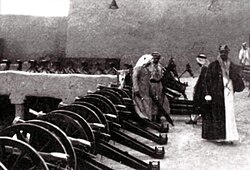
- Full Name: Abdulaziz bin Abdul Rahman bin Faisal Al Saud.
- Reign: King of Saudi Arabia from September 23, 1932, to November 9, 1953.
- Major Achievements: Unified Nejd and Hejaz; presided over the discovery of petroleum in 1938.
- Family Legacy: Fathered 45 sons, all of whom have served as subsequent kings of Saudi Arabia.
- Diplomatic Reach: Established critical early relations with the United Kingdom and the United States.
Early Life and the Path to Power
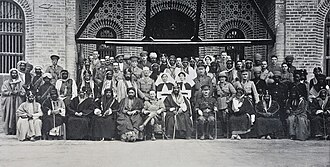
Born on January 15, 1876, in Riyadh, Abdulaziz was the son of Abdul Rahman bin Faisal, the last Emir of Nejd, and Sara bint Ahmed Al Sudairi. His early life was marked by instability; in 1890, his family was forced into exile from Riyadh. This period of displacement served as a catalyst for his ambition to restore the House of Saud to power.
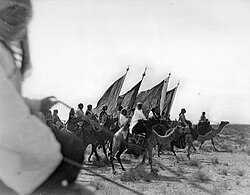
In 1902, Ibn Saud successfully reconquered Riyadh, marking the beginning of the Third Saudi State. Over the next twenty years, he expanded his influence through a series of military campaigns and alliances, eventually consolidating control over Nejd by 1921.
The Conquest of Hejaz and Unification
A pivotal moment in his rise occurred in 1925 when his forces captured Mecca from Sharif Hussein, ending seven centuries of Hashemite rule. Shortly after, on January 8, 1926, he was proclaimed the King of Hejaz during a bayaa (oath of allegiance) ceremony at the Great Mosque of Mecca.
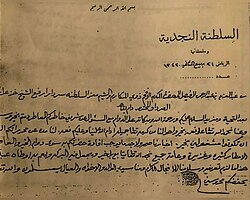
For several years, Ibn Saud ruled Nejd and Hejaz as separate entities. However, following the Treaty of Jeddah in 1927—which saw the British government recognize the independence of his realms—he moved toward full unification. On September 23, 1932, the Kingdom of Saudi Arabia was formally established.
Governance and Economic Transformation
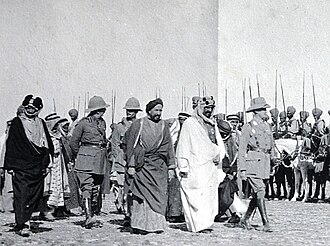
As King, Ibn Saud focused on stabilizing his new nation and integrating diverse tribal groups. He moved the seat of government to Murabba Palace in 1938, which remained his residence until his death. His rule was characterized by a commitment to Islamic revivalism, which bolstered pan-Islamism but also led to the destruction of early historical sites, such as the Al-Baqi Cemetery, to align with specific religious beliefs.
The most transformative event of his reign was the discovery of petroleum in 1938 by the Chevron Corporation. Having granted a concession in 1933, Ibn Saud later gave American oil companies substantial authority over the fields in 1944, laying the foundation for the kingdom's immense future wealth.
International Relations and Diplomacy
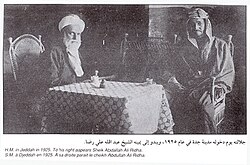
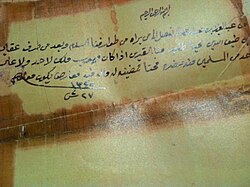
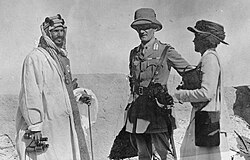
Ibn Saud was a skilled diplomat who navigated the complex geopolitics of the early 20th century. He maintained a strategic "friendship and cooperation" pact with Britain starting in 1915 to ensure stability and prevent attacks on British protectorates.
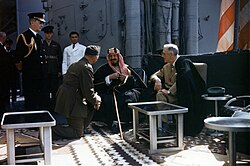
His relationship with the United States was similarly pivotal. In 1945, he held a historic meeting with U.S. President Franklin D. Roosevelt aboard the USS Quincy following the Yalta Conference, cementing a long-term strategic partnership between the two nations.
Personal Life and Legacy
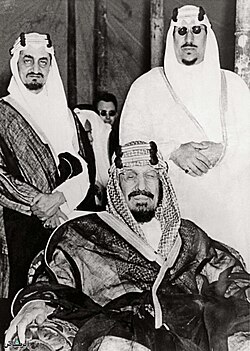
Standing between 1.85m and 1.88m, Ibn Saud was noted for his charismatic personality and commanding presence. His personal life was deeply intertwined with state-building; he had twenty-two consorts, many of whom were married to forge essential alliances with various clans. He fathered nearly one hundred children, including 45 sons.
In his final years, the King struggled with heart disease and arthritis. He passed away in his sleep on November 9, 1953, at Shubra Palace in Ta'if, at the age of 77. He was buried in the Al Oud cemetery in Riyadh.
| Title | Period | Region/State |
|---|---|---|
| Emir / Sultan / King | 1902–1932 | Nejd |
| King | 1926–1932 | Hejaz |
| King | 1932–1953 | Saudi Arabia |
Frequently Asked Questions
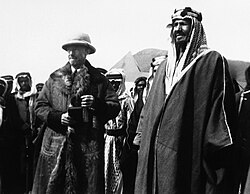
![Ibn Saud (seated left) with his brother-in-law Mubarak Al Sabah[66] in Kuwait, 1910](/images/31/d8/31d8c1c83f8932dada1f05270bcb827d3fb7f8515388ca14ba8abc0be39bd2e0.jpg)
When was the Kingdom of Saudi Arabia officially founded?
The Kingdom of Saudi Arabia was formally unified and established on September 23, 1932, under the leadership of King Abdulaziz (Ibn Saud).
How did oil discovery impact Ibn Saud's reign?
Petroleum was discovered in 1938 by the Chevron Corporation. This discovery, and the subsequent partnerships with American oil companies, transformed the kingdom's economy from a tribal society to a global energy powerhouse.
What was the significance of the Treaty of Jeddah?
Signed on May 20, 1927, the Treaty of Jeddah was crucial because the British government officially recognized the independence of the Hejaz and Nejd with Ibn Saud as their ruler.
Who succeeded Ibn Saud as King?
Following his death in 1953, he was succeeded by his son, King Saud.
What was the role of the Ikhwan in his rise to power?
The Ikhwan were religious revivalists and military forces that supported Ibn Saud's conquests; however, they later revolted against him and his alliance with the British Empire and Kuwait.