IBM Italy Labor Relations and the Second Life Virtual Strike
Labor relations in Italy are characterized by a structured system of local representation. Workplaces are typically managed through unitary representatives of trade unions, known as RSU (Rappresentanza Sindacale Unitaria). These RSU structures often maintain affiliations with larger national Italian trade unions to coordinate worker interests and negotiate collective agreements.
Union Activity at IBM Italy
IBM workers in Italy have a long history of organized labor activity dating back to the 1970s. This tradition of representation continues into the present day. In the IBM 2025 RSU elections, representatives were elected from several prominent trade unions, primarily FIOM (affiliated with CGIL) and FIM (affiliated with CISL), with additional representation from USB.
The 2007 Virtual Strike
A landmark event in the history of digital labor disputes occurred in 2007 when IBM announced the cancellation of a performance bonus valued at $1,000 per employee. In response, the RSU IBM Vimercate, representing 9,000 workers, coordinated an innovative form of protest: a "virtual strike."
The protest took place on September 27 within Second Life, a simulation software that IBM utilized both for internal employee operations and external marketing efforts. By leveraging the company's own digital infrastructure, workers were able to stage a protest in a virtual environment.
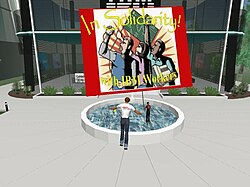
The action gained international momentum, with between 500 and 1,500 IBM employees from around the world signing up to disrupt IBM's virtual facilities. This digital disruption was performed in solidarity with the Italian union's collective agreement negotiations. While the virtual strike unfolded, traditional pickets were simultaneously organized outside physical IBM facilities in Italy. The movement received additional support from Union Network International.
Outcome and Aftermath
The pressure from both physical and virtual protests coincided with significant leadership changes. On October 24, one month after the virtual strike, the CEO of IBM Italy resigned. Shortly thereafter, the $1,000 performance bonuses were reinstated. Although the company claimed the reinstatement of bonuses was unrelated to the strikes, the timing marked a significant conclusion to the dispute.
Key Facts
- RSU: Unitary representatives of trade unions that provide local workplace representation in Italy.
- Affected Workforce: The RSU IBM Vimercate represented 9,000 employees during the 2007 dispute.
- The Dispute: Triggered by the cancellation of a $1,000 performance bonus.
- Virtual Participation: 500 to 1,500 global IBM employees participated in the Second Life strike.
- Union Affiliations: Key unions involved include FIOM (CGIL), FIM (CISL), and USB.
| Detail | Information |
|---|---|
| Date of Virtual Strike | September 27, 2007 |
| Platform Used | Second Life |
| Bonus Amount at Stake | $1,000 per employee |
| Global Participants | 500 - 1,500 employees |
| Key Result | CEO resignation and bonus reinstatement (Oct 24) |
Frequently Asked Questions
What is an RSU in the context of Italian workplaces?
RSU stands for unitary representatives of trade unions, which are local bodies that represent workers within a specific workplace and are often affiliated with national unions.
Which unions were involved in the IBM 2025 RSU elections?
The elections saw members elected from FIOM (CGIL), FIM (CISL), and to a lesser extent, USB.
Why did IBM workers use Second Life for their strike?
IBM used Second Life for both internal employee purposes and external marketing, making it a strategic location for workers to disrupt company facilities virtually.
How many employees participated in the virtual strike?
Between 500 and 1,500 IBM employees from across the globe participated in the virtual disruption.
What was the final result of the 2007 protest?
The performance bonuses were reinstated and the CEO of IBM Italy resigned on October 24, although the company denied the resignation and bonuses were a direct result of the strikes.