Ian Watson: The Life and Literary Legacy of a Science Fiction Visionary
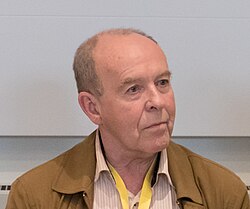
Ian Watson was a prolific and intellectually daring writer who bridged the gap between rigorous academic study and imaginative speculative fiction. Known for weaving complex scientific and linguistic theories into his narratives, Watson carved a unique niche in the science fiction landscape, producing dozens of novels and short stories that challenged the boundaries of the genre.
Early Life and Academic Foundations
Born on April 20, 1943, in St Albans, England, Watson's early professional life began far from the world of letters. In 1959, he worked as an accounts clerk for Runciman's, a shipping company based in Newcastle, though he found the experience unsatisfying.
Watson soon pivoted toward his passion for literature. He graduated from Balliol College, Oxford, in 1963 with a degree in English Literature, followed by a research degree in 1965 focusing on 19th-century English and French literature. This deep academic grounding in linguistics and classical texts would later become a hallmark of his writing style.
A Global Teaching Career
Before committing fully to writing, Watson spent over a decade in academia, often in international settings. From 1965 to 1967, he served as an English lecturer at University College Dar es Salaam in Tanzania. He then moved to Japan, teaching at two different universities in Tokyo between 1967 and 1970.
Upon returning to England, Watson taught Future Studies—an interdisciplinary field examining trends to predict future possibilities—at Birmingham Polytechnic from 1970 to 1976. This period of studying the future likely informed the speculative depth of his subsequent literary works. In 1976, he left academia to pursue a full-time career as a professional writer.
Literary Achievements and Innovations
Watson's bibliography is extensive, comprising more than two dozen novels and numerous short story collections. His debut novel, The Embedding, won the Prix Apollo in 1975. The work was notably based on generative grammar (a linguistic theory describing the rules governing how sentences are formed), with the title specifically referencing the process of center embedding.
He continued to garner critical acclaim with The Jonah Kit, which won the BSFA (British Science Fiction Association) Award for Best Novel in 1977. Other significant works include Miracle Visitors, God's World, and The Flies of Memory.
Watson was also a pioneer in collaborative writing. In 1980, he and Michael Bishop authored Under Heaven's Bridge, the first transatlantic science fiction collaboration, coordinated entirely via typewriters and postal services.
Diverse Contributions: From Gaming to Cinema
Beyond his standalone novels, Watson contributed to several major franchises and media. He wrote a series of novels for the Warhammer 40,000 universe, including Space Marine and the Inquisition War trilogy (Inquisitor—later retitled Draco, Harlequin, and Chaos Child), which were republished by The Black Library in 2002.
His versatility extended to the silver screen, where he is credited as the author of the screen story for the motion picture A.I. Artificial Intelligence. He also collaborated with Italian surrealist Roberto Quaglia on The Beloved of My Beloved (2009) and co-wrote The Waters of Destiny series with Andy West in 2012.
Watson's short fiction appeared in a wide array of publications, including Weird Tales, New Writings in the Fantastic, the Canadian anthology Lust For Life, and the Mammoth Book of Best New Erotica volume 7. Many of these stories were translated into various non-English languages.
Key Facts
- Born: April 20, 1943 (St Albans, England).
- Died: April 13, 2026 (Gijón, Spain), aged 82.
- Major Awards: Prix Apollo (1975) and BSFA Award for Best Novel (1977).
- Academic Background: Oxford graduate in English Literature and research degree in 19th-century literature.
- Notable Collaborations: First transatlantic SF novel with Michael Bishop; screen story for A.I. Artificial Intelligence.
- Gaming Contributions: Author for the Warhammer 40,000 universe.
| Period/Year | Milestone/Role | Key Detail |
|---|---|---|
| 1963-1965 | Academic Study | Degrees from Balliol College, Oxford |
| 1965-1976 | Lecturing | Taught in Tanzania, Tokyo, and Birmingham |
| 1975 | First Novel | The Embedding (Prix Apollo winner) |
| 1977 | Award Success | The Jonah Kit (BSFA Award winner) |
| 1980 | Collaboration | Under Heaven's Bridge (Transatlantic SF) |
| 2002 | Gaming Literature | Warhammer 40,000 novels republished |
Frequently Asked Questions
What was the inspiration for Ian Watson's first novel?
His first novel, The Embedding, was based on concepts from generative grammar, specifically the linguistic process known as center embedding.
Which major awards did Ian Watson win?
Watson won the Prix Apollo in 1975 for The Embedding and the BSFA Award for Best Novel in 1977 for The Jonah Kit.
Did Ian Watson contribute to any films?
Yes, he is credited as the author of the screen story for the movie A.I. Artificial Intelligence.
What is the significance of Under Heaven's Bridge?
It was the first transatlantic science fiction novel collaboration, written by Ian Watson and Michael Bishop using typewriters and the postal service.
Which gaming universe did Ian Watson write for?
Watson wrote several novels for the Warhammer 40,000 line of games, including the Inquisition War trilogy.