Hubert Howe Bancroft: The Architect of Pacific Coast History
Hubert Howe Bancroft was more than just a historian; he was a relentless collector and publisher who sought to document the entire trajectory of the North American Pacific coast. From his roots in an abolitionist household in Ohio to the bustling streets of gold-rush era San Francisco, Bancroft dedicated his life to preserving the narratives of the West.
Early Life and Roots
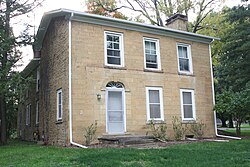
Born on May 5, 1832, in Granville, Ohio, Hubert Howe Bancroft was the son of Azariah Ashley Bancroft and Lucy Howe Bancroft. His family heritage traced back to Massachusetts and Vermont. Growing up in a household of staunch abolitionists—those opposed to the institution of slavery—Bancroft's family home served as a station on the Underground Railroad, a secret network of routes and safe houses used by enslaved African Americans to escape to free states and Canada.
Bancroft's formal education included one year at Doane Academy in Granville. Following this, he entered the professional world as a clerk in a bookstore in Buffalo, New York, owned by his brother-in-law. This early exposure to the book trade laid the foundation for his future career in publishing and archiving.
The Move to California and Business Success
In March 1852, Bancroft relocated to San Francisco, California, to establish a West Coast regional office for his firm. Armed with an inventory of books to sell, he capitalized on the booming economy of the era. His success in the trade naturally led him into the world of publishing, where he began to exert significant influence over the region's literary landscape.
Beyond business, Bancroft developed a passion for collecting. He amassed a massive library consisting of tens of thousands of volumes, including maps, printed documents, and manuscripts. Many of these were primary sources—firsthand accounts dictated to Bancroft or his staff by statesmen, settlers, and pioneers.
Devotion to Historical Scholarship
By 1868, Bancroft decided to pivot from commerce to scholarship. He resigned from his business, handing the reins to his brother, A.L. Bancroft, to devote himself entirely to writing and publishing history. His library grew exponentially; by 1900, it contained approximately 45,000 volumes. The scale of his collection was so vast that it required six people working for ten years just to complete the indexing. To protect these invaluable records, he moved the library to a fireproof building in 1881.
Bancroft's most ambitious project was a planned 39-volume history covering the Pacific coast from Central America to Alaska. While he employed various writers to assist in the research and drafting, he credited himself as the sole author. However, tragedy struck in 1886 when a fire destroyed the publishing establishment of A.L. Bancroft & Company, resulting in the loss of the printed sheets for seven of his history volumes.
Personal Life and Recognition
Bancroft's personal life was marked by both joy and loss. He married Emily Ketchum in 1859, and they had a daughter, Kate. Tragically, Emily passed away in childbirth in 1869. In 1879, he married Matilda Coley Griffing, with whom he had four children.
Despite lacking a college degree, Bancroft's intellectual contributions were widely recognized. In 1875, Yale University awarded him an honorary Master of Arts degree for his extensive work on the Native Races of the Pacific States. That same year, he was elected as a member of the American Antiquarian Society.
Death and Legacy
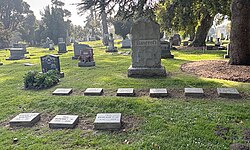
Hubert Howe Bancroft passed away on March 2, 1918, at the age of 85 at his country residence in Walnut Creek, California. Newspaper reports of the time cited acute peritonitis—a severe inflammation of the lining of the abdominal cavity—as the cause of death. He was interred at the Cypress Lawn Memorial Park in Colma, California.
Key Facts
- Born: May 5, 1832, in Granville, Ohio.
- Career: Transitioned from a bookstore clerk to a prominent publisher and historian in San Francisco.
- Library: Amassed roughly 45,000 volumes by 1900, including rare manuscripts and pioneer narratives.
- Major Work: Attempted a 39-volume history of the Pacific coast from Alaska to Central America.
- Honors: Received an honorary MA from Yale and membership in the American Antiquarian Society in 1875.
- Death: Died March 2, 1918, due to acute peritonitis.
| Category | Details |
|---|---|
| Early Life | Born in Ohio to abolitionist parents; family home was an Underground Railroad station. |
| Business | Established a San Francisco office in 1852; later founded A.L. Bancroft & Company. |
| Historical Focus | Pacific Coast region, including Native Races and pioneer narratives. |
| Library Size | Approximately 45,000 volumes by 1900. |
| Education | Doane Academy; honorary Master of Arts from Yale (1875). |
Frequently Asked Questions
What was Hubert Howe Bancroft's primary contribution to history?
Bancroft is best known for his massive effort to document the history of the North American Pacific coast, from Alaska to Central America, and for assembling one of the most comprehensive libraries of Western historical materials.
How did Bancroft's family influence his early life?
His parents were staunch abolitionists, and their home in Granville, Ohio, served as a station on the Underground Railroad, reflecting a family commitment to social justice and freedom.
Did Hubert Howe Bancroft have a formal college degree?
No, he did not graduate from college. However, his scholarly achievements were so significant that Yale University awarded him an honorary Master of Arts degree in 1875.
What happened to some of his published works?
In 1886, a fire destroyed the A.L. Bancroft & Company publishing establishment, which resulted in the loss of the sheets for seven volumes of his Pacific coast history.
Where is Hubert Howe Bancroft buried?
He is interred at the Cypress Lawn Memorial Park in Colma, California.