Housing Discrimination and the Legacy of Residential Segregation
Access to stable housing is more than just a matter of shelter; it is a primary vehicle for building generational wealth and ensuring economic security. However, historical and systemic barriers have long prevented marginalized groups from accessing the same opportunities as their white counterparts. From explicit exclusionary language in property deeds to the systemic denial of loans, housing discrimination has shaped the demographic and economic landscape of American cities.
The Mechanics of Housing Discrimination
Discrimination in housing often manifests through both formal policies and informal practices. A 2010 study by the University of Washington's Civil Rights and Labor History Program highlighted this reality, finding that records for over 400 properties in the Seattle suburbs contained discriminatory language—now illegal—that was originally designed to exclude various ethnic groups from residency.
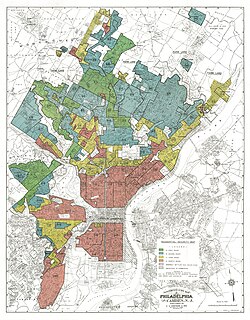
Beyond property deeds, the financial sector has played a critical role through redlining. This practice involves denying mortgages or financial services to specific geographic areas based on the racial or ethnic composition of those neighborhoods. Redlining became formalized with the National Housing Act of 1934, which created the Federal Housing Administration (FHA). This systemic approach to credit rationing—the limitation of loan availability regardless of the borrower's creditworthiness—primarily targeted black inner-city neighborhoods.
The impact of these practices often persisted long after formal policies changed. In the 1980s, investigative reporter Bill Dedman revealed through a Pulitzer Prize-winning series that banks in Atlanta frequently granted loans to lower-income white applicants while denying them to middle- or upper-income black applicants. To maintain these barriers, some institutions utilized blacklists to track and exclude specific groups, areas, or individuals from receiving business or aid.
The Economic Impact of Segregation
The consequences of discriminatory lending and housing practices are reflected in stark statistical disparities. In his 2001 book, Housing Discrimination and Residential Segregation as Causes of Poverty, author John Yinger noted that African-American and Hispanic mortgage applicants were 82% more likely to be rejected than white applicants. The rental market showed similar biases; black renters faced a 10.7% chance of total exclusion from available housing and a 23.3% chance of being shown fewer options than comparable white renters.
Because homeownership serves as a vital insurance policy against poverty, these barriers contribute directly to a substantial racial wealth gap. As of 2001, homeownership rates for black and Hispanic populations had never exceeded 50%.
| Metric | Finding/Statistic |
|---|---|
| Mortgage Denial Likelihood (Black/Hispanic vs. White) | 82% more likely to be turned down |
| Total Rental Exclusion (Black Renters) | 10.7% chance |
| Reduced Rental Options (Black Renters) | 23.3% chance |
| Peak Homeownership Rate (Black/Hispanic) | Below 50% |
Residential Segregation and Employment
The effects of discrimination extend beyond the home and into the labor market. Segregated housing patterns often create a physical mismatch between where African-Americans live and where suburbanizing jobs are located. This distance limits access to employment opportunities and the professional information networks that typically facilitate career growth for middle- and lower-class African-Americans.
The Black Suburbanization Lag
There is a documented phenomenon known as the black suburbanization lag, where African-Americans are less likely to move into suburban residential patterns compared to other groups. When this migration does occur, it often leads to different outcomes. Black suburbs are frequently characterized by lower population density and lower socioeconomic status.
Many of these areas are former manufacturing hubs with depleted tax bases, high debt levels, and inadequate municipal services. These conditions undermine the economic stability and middle-class lifestyle that suburban living is traditionally intended to provide.
Key Facts
- Redlining was formalized via the National Housing Act of 1934 and the Federal Housing Administration (FHA).
- African-American and Hispanic mortgage applicants were found to be 82% more likely to be denied loans than white applicants (2001 data).
- Homeownership rates for black and Hispanic populations remained below 50% as of 2001.
- Residential segregation creates a mismatch between housing locations and available suburban employment.
- The black suburbanization lag often results in residency in former manufacturing suburbs with weak tax bases and poor services.
Frequently Asked Questions
What is redlining?
Redlining is the discriminatory practice of denying mortgages or financial services to residents of certain areas based on the racial or ethnic composition of those neighborhoods, a practice formalized by the FHA after 1934.
How does housing discrimination affect wealth?
Since homeownership is a primary source of financial security and equity, the systemic denial of mortgages and the exclusion of marginalized groups from high-value areas create a lasting racial wealth gap.
What is the "black suburbanization lag"?
It is the trend where African-Americans are less likely to adopt suburban residential patterns than other groups, often resulting in their settlement in suburbs with lower socioeconomic status and weaker municipal infrastructure.
How does residential segregation impact employment?
Segregation often physically separates residents from suburban job centers and the professional networks associated with them, reducing employment options for middle- and lower-class African-Americans.
What is credit rationing in the context of housing?
Credit rationing is the broader academic category that includes redlining; it occurs when lenders limit the supply of loans to certain groups or areas regardless of the individual's ability to repay.