House Sparrow: Biology, Behavior, and Global Distribution
The House Sparrow (Passer domesticus) is one of the most ubiquitous birds in the world. A member of the family Passeridae, this small bird has developed a unique relationship with humans, often living in close proximity to urban settlements. From its diverse subspecies to its adaptable nesting habits, the House Sparrow is a fascinating example of avian resilience and evolution.
Key Facts
- Scientific Name: Passer domesticus
- Conservation Status: Least Concern (IUCN 3.1)
- Diet: Primarily granivorous (seed-eating), though nestlings are fed insects.
- Distribution: Global, including native ranges and introduced populations.
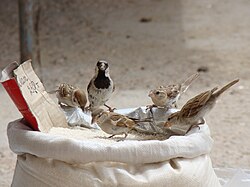
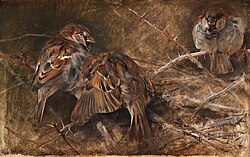
- Social Structure: Highly social birds that often roost and forage in groups.
Taxonomy and Physical Characteristics
Classified under the order Passeriformes, the House Sparrow is the type species of the genus Passer. These birds exhibit clear sexual dimorphism, meaning males and females look different.
Plumage and Appearance
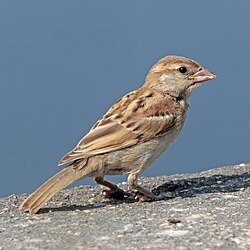
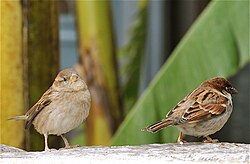
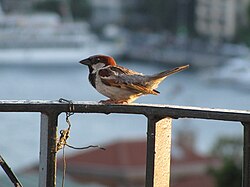
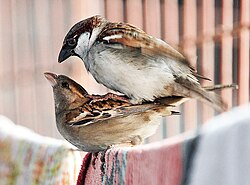
Males typically possess a grey crown and a distinctive black "bib" on the throat, which varies in size. Females and immature birds are more understated, featuring sandy-brown plumage and lacking the bold black markings of the adult male.
Subspecies and Variation
The species is divided into several groups, most notably the P. d. domesticus group and the P. d. indicus group. These variations occur across different geographic regions, such as the migratory P. d. bactrianus found in Kazakhstan or the P. d. balearoibericus in the Mediterranean region.
Distribution and Habitat
Originally native to Eurasia, the House Sparrow has been introduced to nearly every continent. They are highly adaptable and can be found in a variety of environments, though they prefer human-altered landscapes.
Habitat Preferences
While they are primarily associated with cities and towns, they also inhabit rural agricultural areas. In some regions, such as New Zealand and the United States, they have established resident populations far from their original range.
Behavior and Ecology
House Sparrows are known for their complex social interactions and high levels of social learning. They are active foragers and maintain strict body maintenance routines, including frequent preening.
Feeding and Locomotion
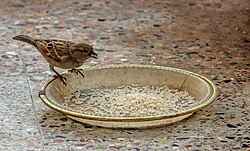
Their diet consists largely of seeds and grains, though they are opportunistic. Females, in particular, are often seen foraging for grains to sustain themselves and their young.
Sleep and Roosting
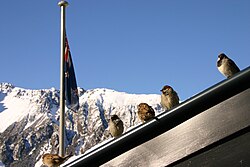
These birds are social sleepers, often gathering in large groups to roost for the night, which provides both warmth and protection from predators.
Breeding and Life Cycle
The breeding cycle of the House Sparrow is characterized by opportunistic nesting and intensive parental care.
Nesting Habits
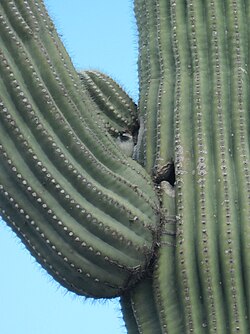
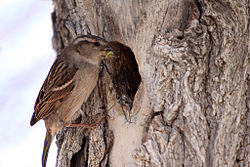
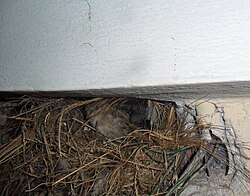
House Sparrows are flexible nesters. They may build nests in tree holes, thick shrubs, or man-made structures like eaves and vents. These nests are typically bulky structures made of grass and other available materials.
Eggs and Development
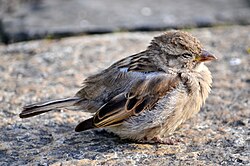
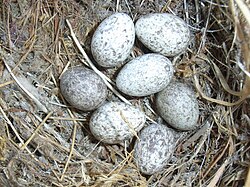
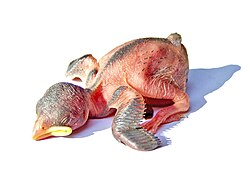
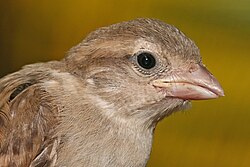
After the eggs hatch, the nestlings are cared for by both parents. Hatchlings are identified by their yellow gape—the soft, colorful edges of the mouth that signal the parents to provide food. As the juvenile matures, the pink bill hardens and the gape becomes less swollen.
Survival and Threats
Despite their "Least Concern" status, House Sparrows face various biological and environmental pressures.
Predation and Disease
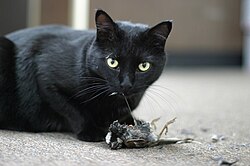
Domestic cats are among the primary predators of the House Sparrow. They are also susceptible to various avian parasites and diseases that can impact local population densities.
Population Trends
In recent decades, some urban areas—particularly in Europe—have reported significant declines in House Sparrow populations. Potential factors include changes in urban architecture (reducing nesting sites), changes in agricultural practices, and the impact of electromagnetic radiation or pollution.
Summary of House Sparrow Characteristics
| Feature | Description |
|---|---|
| Scientific Classification | Family Passeridae, Genus Passer |
| Primary Diet | Seeds, grains, and insects (for young) |
| Nesting Sites | Tree holes, man-made structures, cacti |
| Key Predators | Domestic cats, hawks |
| Conservation Status | Least Concern |
Frequently Asked Questions
What is the difference between a male and female House Sparrow?
Males have a grey crown and a black bib on their throat, while females and immature birds have a more uniform sandy-brown plumage and lack the black bib.
Where do House Sparrows build their nests?
They are highly adaptable and build nests in a variety of locations, including tree cavities, thickets, and man-made structures like building crevices.
Why are House Sparrow populations declining in some cities?
Possible reasons include a lack of suitable nesting sites in modern buildings, changes in insect availability for feeding young, and environmental pollutants.
Are House Sparrows migratory?
Most House Sparrows are resident birds, meaning they stay in one area year-round, although some specific subspecies, such as P. d. bactrianus, are migratory.
What do House Sparrow hatchlings eat?
While adults primarily eat seeds, parents provide nestlings with protein-rich insects to support their rapid growth and development.