Horse Artillery: The High-Mobility Firepower of Pre-Modern Warfare
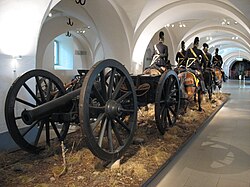
For centuries, the battlefield was a contest of speed and power. While traditional field artillery provided devastating firepower, it was often slow and cumbersome, leaving it unable to keep pace with the rapid movements of cavalry. The solution was horse artillery: a specialized branch of light, fast-moving field artillery designed for maximum agility. Unlike standard artillery, where gunners marched on foot or rode on the carriages, every member of a horse artillery crew was mounted on their own horse.
This distinction allowed these units to provide critical fire support to cavalry divisions across Europe, the Americas, and Asia from the early 17th to the mid-20th century. By combining the destructive force of cannons with the speed of a cavalry charge, horse artillery changed the dynamics of tactical engagement.
Key Facts
- Definition: Light artillery where all crew members are mounted on horses for rapid deployment.
- Primary Role: Providing mobile fire support to cavalry and disrupting enemy infantry formations.
- Tactical Edge: Ability to "shoot-and-scoot," deploying and relocating guns in under a minute.
- Peak Usage: Reached its zenith during the Napoleonic Wars, particularly within the French revolutionary army.
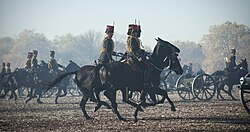
- Modern Status: Now primarily used for ceremonial duties in countries like the UK and the Netherlands.
Tactics and Operational Versatility
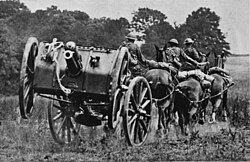
The primary advantage of horse artillery was its ability to deploy rapidly. Crews were trained to quickly dismount and unlimber—the process of detaching the guns from their caissons (two-wheeled carriages or limbers). Once deployed, they could rapidly fire round shot, shells, or grapeshot at the enemy.
Once the objective was achieved, the crews would "limber-up," reattaching the guns to the caissons and remounting their horses to move to a new position. This agility allowed them to outmaneuver foot artillery and act as a rearguard to cover the retreat of slower units. In offensive actions, they often targeted infantry squares, disrupting the formation with concentrated fire to make the infantry vulnerable to cavalry charges.
The Element of Surprise
Because they moved with the speed of cavalry, enemy forces often mistook horse artillery for standard cavalry units. This led to lethal surprises when the batteries suddenly wheeled around, unlimbered, and opened fire. The most proficient batteries could complete this entire sequence in less than sixty seconds.
The Evolution of Mounted Firepower
Origins in the 17th and 18th Centuries
The concept began as a hybrid of cavalry and artillery. In the 17th century, Lennart Torstensson of Sweden utilized irregular horse artillery during the Thirty Years' War to support the forces of Gustavus Adolphus. While other nations attempted similar mobility through tactics like the caracole (a maneuver where cavalry fired pistols and retreated) or by using dragoons (mounted infantry), these methods often sacrificed too much speed.
In the early 18th century, Russia introduced light horse artillery using 2-pound cannons and 3-pound mortars. This influenced Frederick the Great of Prussia to establish the first regular horse artillery unit in 1759. Frederick emphasized relentless drill and discipline, ensuring that every artilleryman was a skilled horseman.
Technical Modernization
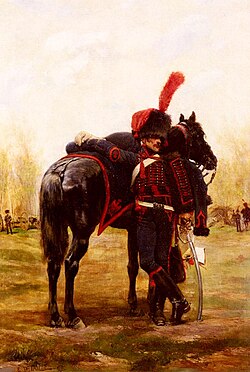
The late 18th century saw significant technical leaps. Jean-Baptiste de Gribeauval introduced improvements to French cannons, making them lighter and easier to aim. Simultaneously, Henry Shrapnel developed a new, deadly type of ammunition that increased the lethality of these mobile units. By the 1790s, most major European powers, including Great Britain, Denmark, and the Dutch Republic, had adopted riding batteries.
The Zenith: Napoleonic and 19th Century Warfare
The Napoleonic Wars marked the peak of horse artillery efficiency. The French revolutionary army created the largest force of its kind, consisting of eight regiments of six-gun batteries by 1795. These units typically utilized 6-pounders pulled by six horses, though heavier 12-pounders required teams of twelve.
The logistical demand was immense; a single battery of six guns could require between 160 and 200 horses. The ideal horse was strongly built, roughly 15–16 hands high, and capable of rapid movement.
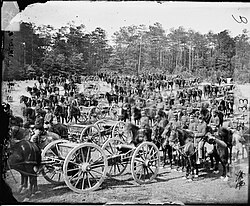
In the Americas, the U.S. Army utilized "flying artillery" to decisive effect during the Mexican-American War. During the American Civil War, horse artillery—officially termed "light artillery"—was used by both the Union's Horse Artillery Brigade and Confederate units, such as the battery commanded by John Pelham under J.E.B. Stuart.
Modern Decline and Ceremonial Legacy
The decline of horse artillery mirrored the decline of the cavalry. As infantry firepower and foot artillery became more potent, horses became too vulnerable on the modern battlefield. By World War I, while some nations like France and the UK used specialist guns (such as the Ordnance QF 13-pounder), the transition toward tanks and self-propelled artillery was inevitable.
Horse artillery saw its final combat roles in World War II with the Wehrmacht's cavalry divisions on the Eastern Front and the Imperial Japanese Army in Malaya. Additionally, the tachanka—a horse-drawn carriage mounting a heavy machine gun—was used by Russian and Polish forces through the early 1940s.
Summary of Horse Artillery Specifications
| Gun Type | Typical Horse Team | Primary Role | Key Characteristic |
|---|---|---|---|
| 6-pounder | 6 Horses | Cavalry Support | High Mobility |
| 9-pounder | 8 Horses | General Field Support | Balanced Power/Speed |
| 12-pounder | 12 Horses | Heavy Fire Support | Maximum Impact |
| Tachanka | Horse-drawn | Mobile Machine Gun | Rapid Fire/Movement |
Frequently Asked Questions
How did horse artillery differ from standard field artillery?
The primary difference was mobility. In horse artillery, every crew member rode their own horse, whereas in standard field artillery, gunners either marched on foot or rode on the gun carriages and wagons.
What does it mean to "unlimber" a gun?
Unlimbering is the process of detaching the artillery piece from its caisson (the two-wheeled carriage used for transport) so that it can be positioned and fired.
Why was horse artillery effective against infantry squares?
Infantry squares were designed to repel cavalry charges. Horse artillery could quickly deploy and fire concentrated grapeshot or shells into the square, breaking the formation and leaving the infantry vulnerable to a subsequent cavalry charge.
Which nation had the most significant horse artillery force?
The French revolutionary army is considered to have had the largest and most efficient force, reaching eight regiments of six-gun batteries by 1795.
Does horse artillery still exist today?
It no longer serves a combat role but is maintained for ceremonial purposes. Examples include the King's Troop, Royal Horse Artillery in the UK and the Gele Rijders (Yellow Riders) in the Netherlands.