Horatio Alger: The Life and Legacy of America's Rags-to-Riches Storyteller
Horatio Alger is a name synonymous with the "rags-to-riches" narrative—the idea that through hard work, honesty, and a bit of luck, anyone can rise from poverty to prosperity. While his stories became a cornerstone of the American Dream, the man behind the books lived a life marked by academic brilliance, professional instability, and personal controversy.
Key Facts
- Born: January 13, 1832, in Chelsea, Massachusetts.
- Education: Graduated Phi Beta Kappa from Harvard University in 1852.
- Most Famous Work: Ragged Dick (1868), which detailed a bootblack's rise to middle-class status.
- Career Shift: Transitioned from a Unitarian ministry to a full-time career as a juvenile novelist.
- Legacy: Sold approximately 20 million copies of his works in the U.S. by 1926.
Early Life and Academic Excellence
Born into a family with deep roots in the New England Puritan aristocracy, Alger was the son of Horatio Alger Sr., a Unitarian minister, and Olive Augusta Fenno. His lineage included descendants of the Pilgrim Fathers and figures from the Constitutional Convention. Despite struggling with myopia (nearsightedness) and asthma, Alger was a precocious student tutored in classical studies by his father.
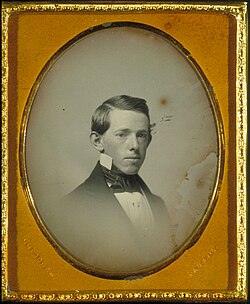
Financial difficulties forced the family to move to Marlborough, Massachusetts, in 1845. After completing his preparatory studies at Gates Academy, Alger entered Harvard University in 1848. He excelled in the rigorous environment, graduating eighth in his class of 88 and earning Phi Beta Kappa honors.
Early Literary Ambitions
While at Harvard, Alger began his professional writing career, selling essays and poems to the Pictorial National Library. He was heavily influenced by the works of Henry Wadsworth Longfellow, Walter Scott, and Herman Melville. However, his lack of aristocratic wealth prevented him from joining elite campus circles like the Porcellian Club.
Professional Struggles and the Ministry
Following graduation in 1852, Alger faced a period of instability. He cycled through various roles, including a brief stint at Harvard Divinity School, a position as an assistant editor at the Boston Daily Advertiser, and teaching roles at The Grange and Deerfield Academy. During this time, he published his first book, Bertha's Christmas Vision (1856), and a satirical poem, Nothing to Do (1857).
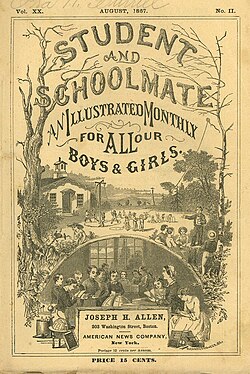
In 1864, Alger became the pastor of the First Unitarian Church and Society of Brewster, Massachusetts. He spent his time ministering to the parish and organizing activities for local boys, while also writing for The Student and Schoolmate, a magazine focused on moral writings for youth.
Controversy and Relocation to New York
Alger's ministerial career ended abruptly in 1866. A church committee investigated reports that Alger had sexually molested boys, describing the acts as "gross familiarity." After admitting to being "imprudent," Alger left town and dissolved his association with the church. Unitarian officials in Boston decided against further action after receiving a letter of remorse from Alger and assurances from his father that he would not seek another church post.
Alger relocated to New York City, where he abandoned the ministry entirely. He became fascinated by the thousands of vagrant children flooding the city after the Civil War. This environment provided the raw material for his most successful works.
The Rise of Ragged Dick
In 1867, Alger began serializing Ragged Dick in Student and Schoolmate. The story of a poor bootblack's ascent to respectability became a massive success and was expanded into a novel in 1868. This success led to a contract for the Ragged Dick Series, cementing Alger's role as a premier author of juvenile fiction.
Later Years and Declining Fortune
Despite his literary fame, Alger often struggled financially. He spent years tutoring the sons of banker Joseph Seligman and later informally adopted street boys, such as Charlie Davis and John Downie, who lived in his apartment. In the late 1870s, he traveled to California to find new inspiration, though the resulting Western-themed stories were less successful than his urban tales.
By the 1890s, the quality of Alger's writing declined. His plots became repetitive, and he introduced elements of violence—such as throttling—that were absent from his earlier, more moralistic works. His income dwindled, and in 1896, he suffered a nervous breakdown, moving permanently to his sister's home in South Natick, Massachusetts.
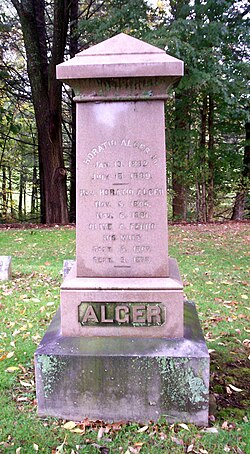
Horatio Alger died on July 18, 1899, from complications of bronchitis and asthma. He left behind very little money, and per his wishes, his sister destroyed his personal letters and manuscripts.
Summary of Horatio Alger's Career
| Period | Primary Focus | Key Milestone/Work |
|---|---|---|
| 1848–1852 | Education | Graduated Harvard (Phi Beta Kappa) |
| 1864–1866 | Ministry | Pastor in Brewster, MA |
| 1867–1870s | Juvenile Fiction | Publication of Ragged Dick |
| 1880s | Biographies | Works on James A. Garfield and Abraham Lincoln |
| 1896–1899 | Retirement | Relocated to South Natick, MA |
Frequently Asked Questions
What is the "Horatio Alger myth"?
It refers to the narrative of a poor person achieving success through hard work and virtue, a theme central to Alger's most popular books like Ragged Dick.
Why did Horatio Alger leave the ministry?
Alger left the ministry in 1866 following an investigation by a church committee into allegations that he had sexually molested boys.
Did Horatio Alger actually experience poverty?
While he experienced "genteel poverty" during his time at Harvard and faced financial instability later in life, he was born into a family with significant social and intellectual connections.
How successful were his books after his death?
His works saw a resurgence after his death, selling approximately 20 million copies by 1926, though interest plummeted shortly thereafter.
Who completed his final unfinished work?
Edward Stratemeyer completed the unfinished novel Young Captain Jack, which was published in 1901 as Alger's final work.