Horace Walpole: The Father of Gothic Fiction and Master of the Grand Tour
Horace Walpole (1717–1797) was a true polymath of the 18th century. A British Whig politician, historian, and antiquarian, he is perhaps best remembered today as the architect of the Gothic novel and a pioneer of neo-Gothic architecture. From the halls of Parliament to the whimsical towers of his private estate, Walpole lived a life defined by intellectual curiosity and a penchant for the dramatic.
His literary legacy is anchored by The Castle of Otranto (1764), the first Gothic novel, and a massive collection of letters that serve as a vital social and political record of his era. These letters, published by Yale University Press in 48 volumes, offer an intimate glimpse into the mind of a man who viewed the world as both a comedy and a tragedy.
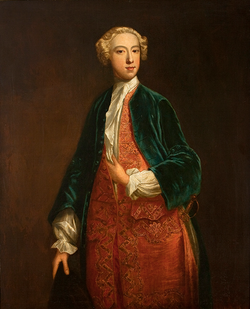
Key Facts
- Literary Milestone: Wrote The Castle of Otranto, launching the Gothic fiction genre.
- Architectural Legacy: Built Strawberry Hill House, reviving the Gothic style long before the Victorian era.
- Linguistic Contribution: Coined the word serendipity in a 1754 letter.
- Political Career: Served as a Member of Parliament for Callington, Castle Rising, and King's Lynn.
- Noble Title: Became the 4th Earl of Orford at age 74.
Early Life and the Grand Tour
Born in London on September 24, 1717, to Robert Walpole and Catherine Shorter, Horace was well-positioned for a life of leisure and learning. His father secured him several sinecures—positions requiring little to no work but providing significant income. By 1745, his total income from these offices reached approximately £3,400 per annum.
Walpole's education took him to King's College, Cambridge, though he spent significant time away from his studies. Between 1739 and 1741, he embarked on the Grand Tour, a traditional trip across Europe for upper-class young men. His travels took him through Venice, Genoa, Paris, and several other French cities, broadening his artistic and cultural horizons before his return to London in September 1741.
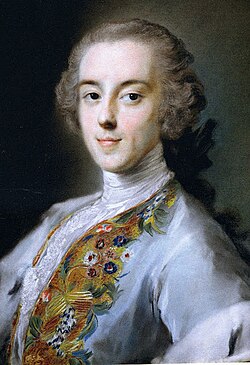
Political Career and Philosophy
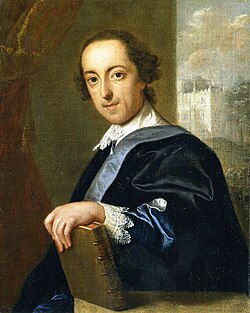
Walpole entered the House of Commons in 1741, representing the rotten borough of Callington—a constituency with very few voters that allowed wealthy patrons to control the seat. Despite holding the position for thirteen years, he never actually visited Callington.
His political trajectory saw him represent several areas over three decades:
- Callington: 1741–1754
- Castle Rising: 1754–1757
- King's Lynn: 1757–1769
Politically, Walpole aligned with the Whigs and shared a classical liberal philosophy similar to that of Edmund Burke, particularly regarding the American Revolution and the issue of slavery. He was known for his sharp wit and occasional controversy, once describing the execution of King Charles I as "the least bad of all murders."
Strawberry Hill and the Gothic Revival
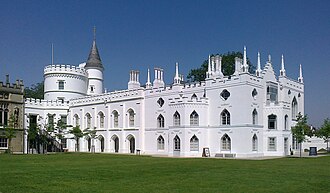
In 1749, Walpole began constructing Strawberry Hill in Twickenham. This residence was not merely a home but an architectural experiment. By reviving the Gothic style—characterized by pointed arches and ornate tracery—he predated the Victorian Gothic revival by several decades. His friends affectionately mocked him as "The Abbot of Strawberry."
The house became a cultural hub, hosting members of the Blue Stockings Society, an informal group of intellectual women and men, including the poet Anna Laetitia Barbauld in 1774.
Literary Contributions and Later Years
While his political career ended in 1769, Walpole's intellectual output accelerated. In 1764, he published The Castle of Otranto, blending elements of romance and horror to create the Gothic genre. Beyond fiction, he was a prolific historian and art critic, authoring works such as Anecdotes of Painting in England.
Walpole's correspondence is perhaps his most enduring contribution to history. In a letter dated January 28, 1754, he coined the term serendipity, inspired by the fairy tale The Three Princes of Serendip. He also penned the famous observation: "This world is a comedy to those that think, a tragedy to those that feel."
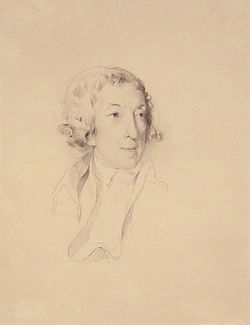
In 1791, following the death of his nephew, Horace became the 4th Earl of Orford at the age of 74. He passed away on March 2, 1797, and was laid to rest at St Martin's Church in Houghton, Norfolk.
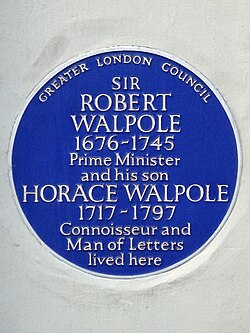
Summary of Horace Walpole's Life
| Category | Details |
|---|---|
| Lifespan | September 24, 1717 – March 2, 1797 |
| Primary Roles | Politician, Writer, Art Historian, Antiquarian |
| Key Work | The Castle of Otranto (1764) |
| Architectural Feat | Strawberry Hill House |
| Political Party | Whigs |
| Education | King's College, Cambridge |
Frequently Asked Questions
What is Horace Walpole's most famous literary work?
His most famous work is The Castle of Otranto, published in 1764, which is widely credited as the first Gothic novel.
How did the word "serendipity" originate?
Horace Walpole coined the word in a 1754 letter, deriving it from the Persian fairy tale The Three Princes of Serendip.
What was Strawberry Hill House?
Strawberry Hill was Walpole's home in Twickenham, where he revived the Gothic architectural style long before it became popular in the Victorian era.
Was Horace Walpole actually the son of Sir Robert Walpole?
While officially the son of Sir Robert Walpole, rumors persisted after his death that his biological father was Carr, Lord Hervey, due to a lack of physical resemblance to Sir Robert and a close resemblance to the Hervey family.
What were "rotten boroughs" in the context of Walpole's career?
Rotten boroughs were parliamentary constituencies with very small populations that were easily controlled by a single wealthy patron, allowing Walpole to hold seats in places like Callington without ever visiting them.