Homology in Biology: Shared Ancestry and Evolutionary Design
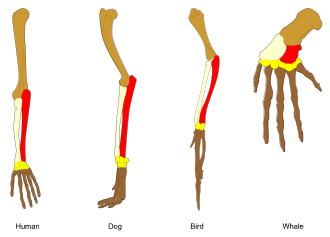
In the study of life, homology refers to the similarity in anatomical structures or genes between organisms of different taxa that results from shared ancestry. Crucially, these similarities persist regardless of whether the structures currently serve the same function. From the wing of a bat to the arm of a human, homology reveals the hidden threads of heredity that connect diverse species across the tree of life.
Evolutionary biology explains these homologous structures as retained traits from a common ancestor. Over millions of years, natural selection subjects these inherited blueprints to adaptive modifications, reshaping them to suit different environmental needs and purposes.
Key Facts
- Definition: Similarity due to shared ancestry, not necessarily shared function.
- Distinction: Homology is based on ancestry; analogy is based on similar function despite different origins.
- Scope: Occurs at the anatomical, genetic, and behavioral levels.
- Serial Homology: Repetitive structures within a single organism (e.g., vertebrae) that share a developmental origin.
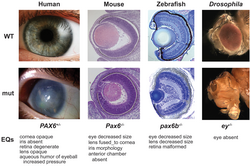
- Deep Homology: Genetic mechanisms (like pax6) that control similar organ development across vastly different taxa.
The History of Homology
The observation of biological similarities dates back to Aristotle (c. 350 BC). However, early interpretations viewed these patterns as part of a static "great chain of being" rather than evidence of change. In 1555, Pierre Belon provided an explicit analysis by systematically comparing human and bird skeletons.
![Pierre Belon systematically compared the skeletons of birds and humans in his Book of Birds (1555).[1]](/images/0c/75/0c75b60c52e36250b9bd3b19c7425356278b2f96652c9ce71d18497305c739d5.jpg)
The 18th and 19th centuries saw a shift toward evolutionary thinking. In 1790, Goethe proposed his foliar theory, suggesting flower parts are derived from leaves. Later, Étienne Geoffroy Saint-Hilaire argued that structures were shared across fishes, reptiles, birds, and mammals. The formal term "homology" was coined in 1843 by anatomist Richard Owen, who defined it as the same organ in different animals regardless of form or function.
In 1859, Charles Darwin provided the definitive explanation: homologous structures exist because organisms share a body plan inherited from a common ancestor, marking them as branches of a single tree of life.
Homology vs. Analogy
It is essential to distinguish between homology and analogy. While homologous structures share an ancestral origin, analogous structures evolve independently to solve similar problems—a process known as convergent evolution.
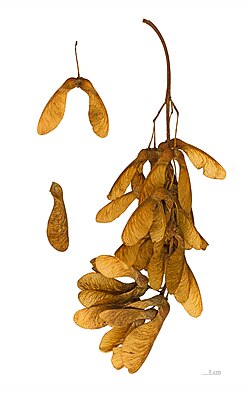
For example, the wings of a bird and the wings of a bee both allow for flight, but they do not share a common ancestral wing structure. Similarly, the wings of sycamore maple fruits are analogous to insect wings, but not homologous.
Homology Across Different Taxa
In Animals and Arthropods
Homologies provide the foundation for biological classification. Some are intuitive, such as the forelimbs of vertebrates (whales' flippers, horse legs, and human arms). Others are "deep homologies," such as the pax6 genes, which control eye development in both vertebrates and arthropods despite the organs looking entirely different.
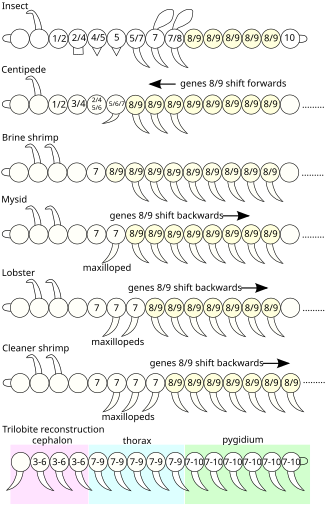
In arthropods, body segments (somites) show clear homologous patterns. For instance, the antennae of a shrimp and the chelicerae of a spider are homologous structures derived from the same ancestral segments.
In Plants
Plant homology is evident in the transformation of primary organs. Leaves can be modified into defensive spines or storage structures (like the swollen leaves of succulents). Stems can become thorns or tubers, such as in potatoes.
Flower development further illustrates this. Carpels, stamens, petals, and sepals are all homologous to leaves. This is governed by the ABC model of flower development, where specific combinations of genes determine the organ's identity: A genes alone create sepals, A and B create petals, B and C create stamens, and C alone creates carpels.

Developmental and Genetic Homology
In developmental biology, serial homology occurs when organs develop from similar origins within the same embryo, such as the repeating legs of a centipede or the vertebrae in a backbone.
At the molecular level, sequence homology refers to similarities in DNA or protein sequences. These are termed orthologous if they diverged due to a speciation event. Even when sequences diverge so much that similarity is hard to detect, the overall protein structure often remains conserved, allowing scientists to prove homology through structural alignment.
![A multiple sequence alignment of mammalian histone H1 proteins. Alignment positions conserved across all five species analysed are highlighted in grey. Positions with conservative, semi-conservative and non-conservative amino acid replacements are indicated.[38]](/images/c0/82/c082bdd43004d4eb0af1fd28b373aebba29fefa448da1a63e30e574c3e102580.png)
Behavioral Homology
While more controversial than anatomical homology, some researchers suggest that certain behaviors are inherited. For example, there is evidence that dominance hierarchies observed in various primate species are homologous, reflecting a shared ancestral social structure.

| Type of Homology | Definition | Example |
|---|---|---|
| Anatomical | Shared physical structure from common ancestor | Vertebrate forelimbs (wings, arms, flippers) |
| Serial | Repetitive structures within one organism | Centipede legs or vertebrate vertebrae |
| Deep (Genetic) | Shared genetic control for different organs | pax6 gene in vertebrate and insect eyes |
| Sequence (Orthologous) | Genes diverged by speciation | Mammalian histone H1 proteins |
| Behavioral | Shared ancestral behavioral patterns | Primate dominance hierarchies |
Frequently Asked Questions
What is the main difference between homology and analogy?
Homology is similarity due to shared ancestry (e.g., human arm and bat wing), whereas analogy is similarity due to shared function despite different ancestry (e.g., bird wing and insect wing).
What is serial homology?
Serial homology refers to structures that are repeated in a series within a single organism and develop from similar embryonic origins, such as the segments of a centipede's body.
How does the ABC model explain plant homology?
The ABC model describes how different combinations of A, B, and C genes in the floral meristem trigger the development of sepals, petals, stamens, and carpels, all of which are homologous to leaves.
What are orthologous sequences?
Orthologous sequences are homologous genes in different species that evolved from a common ancestral gene through a speciation event.
Can structures be homologous if they look completely different?
Yes. Because natural selection modifies structures for different purposes, homologous organs can diverge significantly in appearance and function, such as the flipper of a whale and the wing of a bird.