Historical Accounts: The Evolution of Global Historiography
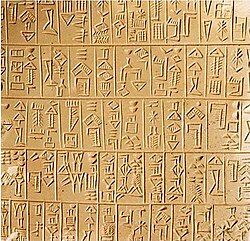
The recording of human events is as old as civilization itself. From the earliest independent societies emerging around 3500 BCE in Egypt, Mesopotamia, and Sumer, humanity has sought to document its existence. While early records—such as the accounts of Egyptian Pharaohs—varied in reliability, many have been recovered through modern archaeological excavations. Over millennia, different cultures developed unique traditions for interpreting these accounts, evolving from simple storytelling into a rigorous academic discipline known as historiography (the study of how history is written).
Key Facts
- Earliest Records: Civilizations in Egypt, Mesopotamia, and Sumer began recording history around 3500 BCE.
- Greek Pioneers: Herodotus is known as the "father of history," while Thucydides introduced a method based on human cause and effect rather than divine will.
- Chinese Foundations: Sima Qian established professional historical writing in China with the Records of the Grand Historian.
- South Asian Continuity: The Mahavamsa and Culavamsa provide one of the world's longest unbroken historical records.
- Scientific Shift: Ibn Khaldun introduced a "new science" to history, focusing on systematic bias and state propaganda.
The Development of History in Europe
Early Greek historical writing began with figures like Hellanicus of Lesbos, Xanthus of Lydia, and Hecataeus of Miletus, who wrote unadorned accounts of cities and legends. However, the field shifted significantly with Herodotus (484 BCE – c. 425 BCE), who composed The Histories. His contemporary, Thucydides (c. 460 BCE – c. 400 BCE), further refined the craft in his History of the Peloponnesian War by rejecting divine intervention in favor of human choices and logical cause-and-effect.
Following the Greco-Roman era, history in the West was heavily influenced by religious perspectives, notably through the works of Saint Augustine during the medieval period. It was not until around 1800 that Georg Wilhelm Friedrich Hegel introduced a more secular, philosophical approach to the study of the past.
The Transition to Social Science
By the 17th and 18th centuries, historians in France and Germany began utilizing written sources—which had become abundant since the High Middle Ages (c. 1000–1300)—to conduct research. While early modern histories often served political or ideological agendas, the 20th century saw a shift toward objectivity. Historians moved away from glorifying "great men" and nationalistic epics, treating history instead as a social science. A notable example is the Annales School in France, which pioneered quantitative history by using raw data to analyze the lives of ordinary people.
Historical Traditions in East Asia
Ancient Chinese history is characterized by a rich variety of narrative and annalistic forms. The Zuo Zhuan (5th century BCE) and the Spring and Autumn Annals (attributed to Confucius) provide early chronicles of the State of Lu and other periods. Other significant works include the Book of Documents, one of the Five Classics, and the Zhan Guo Ce, which compiled materials on the Warring States period.
The professionalization of Chinese history is credited to Sima Qian (around 100 BCE). His Records of the Grand Historian was a monumental work that spanned back to the 16th century BCE. By including biographies of both prominent figures and commoners, Sima Qian influenced all subsequent Chinese historians, including the Ban family of the Eastern Han dynasty.
Chronicles of South Asia
In Sri Lanka, the Mahavamsa (c. 5th century CE) stands as a primary historical text. Compiled by Mahanama of Anuradhapura based on earlier Sinhala commentaries called Atthakatha, it was preceded by the simpler Dipavamsa (4th century CE). A later companion volume, the Culavamsa, extends the record from the 4th century up to the British takeover in 1815.
Together, these works form one of the longest unbroken historical accounts in existence, documenting indigenous peoples like the Nāga and Yakkha. In South India, Sangam literature provides a secular and religious window into ancient Tamil culture, mentioning everything from the pigtails of Brahmin boys to the harbor trade and Buddhist monasteries in the Chola capital under King Karikala.
Additionally, the Greek writer Megasthenes authored Indica, an account of Mauryan India. Although the original is lost, fragments survive in the writings of Diodorus Siculus, Strabo, Pliny, and Arrian.
West Asian Contributions and the Philosophy of History
The 14th-century Arab historian and sociologist Ibn Khaldun revolutionized the field with his work Muqaddimah (1377). He criticized the uncritical acceptance of data and "idle superstition," proposing instead a scientific method he called his "new science." By analyzing the roles of communication, propaganda, and systematic bias, Ibn Khaldun is widely regarded as the father of historiography.
| Region | Key Figure/Work | Primary Contribution |
|---|---|---|
| Europe | Thucydides | Introduced cause-and-effect historical method |
| Europe | Annales School | Developed quantitative and cultural history |
| East Asia | Sima Qian | Established professional historical writing in China |
| South Asia | Mahavamsa | One of the world's longest unbroken historical records |
| West Asia | Ibn Khaldun | Founded the philosophy of history and scientific analysis |
Frequently Asked Questions
Who is considered the father of history?
Herodotus is generally acclaimed as the "father of history" for composing The Histories between the 450s and 420s BCE.
How did Thucydides differ from Herodotus in his approach?
Unlike Herodotus, Thucydides viewed history as the result of human choices and actions rather than divine intervention, focusing on cause and effect.
What is the significance of the Annales School?
The Annales School of French historians introduced quantitative history, using raw data to track the lives of typical individuals and establishing the field of cultural history.
What makes the Mahavamsa unique?
The Mahavamsa, especially when combined with the Culavamsa, provides a continuous historical record of over two millennia, making it one of the longest unbroken accounts in the world.
What was Ibn Khaldun's "new science"?
Ibn Khaldun's "new science" was a scientific method for studying history that involved interpreting the past critically and analyzing the roles of state propaganda and systematic bias.