Historic American Buildings Survey and its Sister Programs
Preserving the physical history of a nation requires more than just protecting standing walls; it requires a systematic approach to documentation. The Historic American Buildings Survey (HABS) was established to create a comprehensive record of the builder's art in the United States, ensuring that the architectural evolution of the country is captured for future generations.
The Origins of HABS
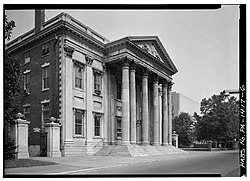
Founded in 1933, HABS began as a proposal by Charles E. Peterson, a landscape architect with the National Park Service. While it was initially conceived as a temporary "ten-week" make-work program to provide employment for architects, photographers, and draftsmen during the Great Depression, the initiative proved indispensable and continues to operate today. Its mission was further solidified by the Historic Sites Act of 1935.
The program focused on documenting a representative sampling of American architectural heritage. Rather than focusing solely on elite monuments, HABS aimed to document "the worthy and not just the wealthy," as noted by acting Chief Catherine Lavoie in 2011. This inclusive approach encompassed a wide array of structures, including public buildings, churches, residences, bridges, forts, barns, mills, shops, and rural outbuildings.
Building the Archive
Guided by instructions from Washington, D.C., HABS recorders utilized multi-format surveys to build a massive primary source database. To date, the collection includes more than 581,000 measured drawings, large-format photographs, written histories, and original field notes covering over 43,000 historic structures and sites, ranging from Pre-Columbian times to the twentieth century.
The program also drew expertise from earlier private efforts, such as Eleanor Raymond's Early Domestic Architecture of Pennsylvania (1931), Charles Morse Stotz's Western Pennsylvania Architectural Survey, and the White Pine Series of Architectural Monographs. Many contributors from these projects eventually joined HABS, including renowned photographers such as Jack Boucher—who served the project for over four decades—Robert W. Tebbs, Richard Koch, and Jet Lowe.
Expanding the Scope: HAER and HALS
As the need to document non-architectural heritage grew, the National Park Service (NPS) expanded its efforts through two sister programs.
Historic American Engineering Record (HAER)
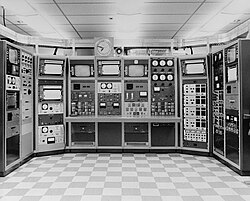
Established on January 10, 1969, through a partnership between the NPS and the American Society of Civil Engineers, the Historic American Engineering Record (HAER) focuses on engineering artifacts, mechanical structures, and historic sites. HAER also collaborates with the Maritime Administration to document historic vessels before they are disposed of. Because of their close relationship, the two programs are frequently referred to collectively as "HABS/HAER." Eric DeLony led the HAER program from 1987 to 2003.
Historic American Landscapes Survey (HALS)
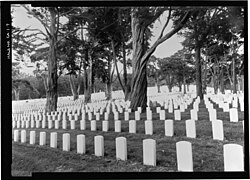
The Historic American Landscapes Survey (HALS) was established in October 2000 by the NPS and the American Society of Landscape Architects. This program systematically documents historic American landscapes, building upon the foundation of the Historic American Landscape and Garden Project (1935–1940), which had recorded Massachusetts gardens under the supervision of HABS and funding from the Works Progress Administration.
HALS became a permanent federal program in 2010 following a Tripartite Agreement between the NPS, the Library of Congress, and the American Society of Landscape Architects. The NPS remains responsible for planning, operations, and the standardization of recording guidelines.
The Library of Congress Collection
The permanent archives for HABS, HAER, and HALS are housed at the Library of Congress. This national repository makes a vast array of images, drawings, and documents available to the public via the Prints and Photographs Online Catalog. The collection includes records of existing structures as well as those that have been demolished or were only proposed, making HABS and HAER some of the most heavily utilized collections in the division.
Key Facts
- HABS was founded in 1933 as a Great Depression-era make-work program.
- The HABS archive contains over 581,000 measured drawings and photographs of more than 43,000 sites.
- HAER (est. 1969) documents engineering and mechanical artifacts, including historic vessels.
- HALS (est. 2000) focuses on the systematic documentation of historic landscapes.
- All three programs are permanently housed at the Library of Congress.
| Program | Established | Primary Focus | Key Partner |
|---|---|---|---|
| HABS | 1933 | Architectural heritage and buildings | National Park Service |
| HAER | 1969 | Engineering and mechanical artifacts | American Society of Civil Engineers |
| HALS | 2000 | Historic landscapes | American Society of Landscape Architects |
Frequently Asked Questions
What is the primary purpose of HABS?
The primary purpose of the Historic American Buildings Survey is to create a comprehensive archive of the United States' architectural heritage through measured drawings, photographs, and written histories.
How does HAER differ from HABS?
While HABS focuses on architecture and buildings, HAER (Historic American Engineering Record) specifically documents engineering artifacts, mechanical structures, and historic vessels.
Where can the public access these records?
The permanent collections are housed at the Library of Congress and are largely accessible through the Prints and Photographs Online Catalog.
What types of structures does HABS document?
HABS documents a wide variety of structures, including public buildings, churches, residences, bridges, forts, barns, mills, and shops, emphasizing a representative sampling of the built environment.
When did HALS become a permanent federal program?
HALS became a permanent federal program in 2010 following the signing of the Tripartite Agreement between the NPS, the Library of Congress, and the American Society of Landscape Architects.