Highland Games: Celebrating Scottish Strength and Culture
The Highland games (Scottish Gaelic: geamannan Gàidhealach) are a vibrant celebration of Scottish and Celtic culture, specifically the traditions of the Scottish Highlands. Held primarily during the spring and summer, these events serve as competitive strength sports and cultural festivals, not only in Scotland but across the globe wherever the Scottish diaspora has settled.
While the games are world-renowned for their displays of raw power and traditional attire, they are comprehensive festivals. They blend athletic competition with music, dance, and exhibits that showcase the rich heritage of Gaelic culture. From the skirl of the bagpipes to the sight of the kilt, the Highland games have become emblematic of Scotland's national identity.
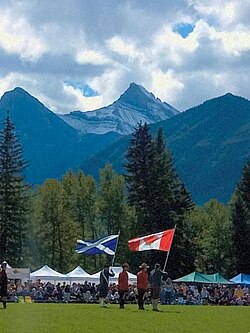
Key Facts
- Global Reach: As of 2000, there were at least 260 annual events worldwide, with over 100 in the US and dozens in Canada.
- Olympic Influence: Baron Pierre de Coubertin is claimed to have been influenced by the Highland games when planning the revival of the Olympic Games after seeing a display at the 1889 Paris Exhibition.
- Largest Scottish Event: The Cowal Highland Gathering in Dunoon is Scotland's largest, attracting roughly 23,000 spectators.
- Largest Northern Hemisphere Event: The Scottish Highland Gathering and Games in Pleasanton, California, holds this title, with record crowds reaching nearly 50,000 in 2015.
The Core Events of the Games
Heavy Athletics
The "heavy events" are the centerpiece of the games, testing the strength, technique, and endurance of the athletes. These competitions often involve throwing heavy objects for distance or height.
- Stone Put: A traditional strength event similar to the shot put.
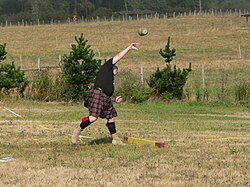
Stone put - Caber Toss: Perhaps the most iconic event, where a large wooden pole (caber) is flipped end-over-end.
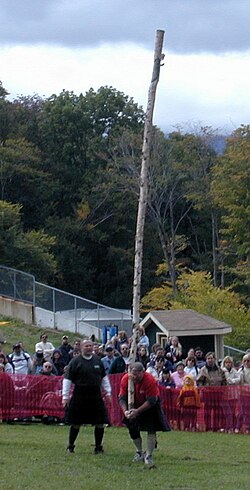
Caber toss - Weight Throw and Weight Over Bar: Competitions focusing on throwing a heavy weight for distance or lifting it over a horizontal bar.
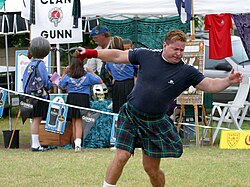
Weight throw 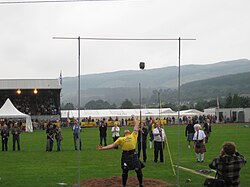
Weight over bar - Scottish Hammer Throw: A variation of the hammer throw using traditional equipment.
- Sheaf Toss and Keg Toss: Events involving the tossing of a sheaf of grain or a heavy keg.
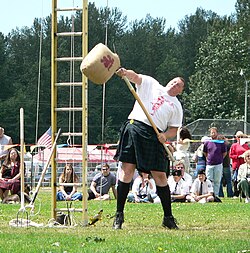
Sheaf toss - Maide-leisg: A traditional event, with the world's oldest competition held at the Carloway Show and Highland Games.
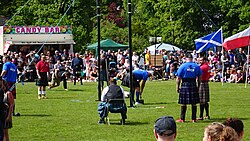
Music and Dance
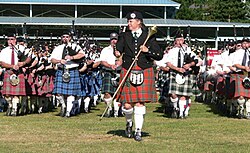
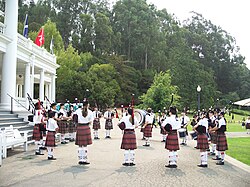
Beyond the athletics, the games are a sensory experience defined by traditional arts. Bagpipe band competitions, which date back to 1781, are a major draw. These bands often wear regiment-inspired uniforms, contributing to the enduring imagery of the Highlands. For example, the 2013 World Pipe Band Championships in Glasgow hosted over 8,000 performers.
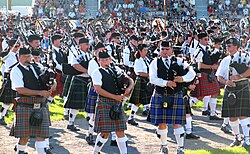
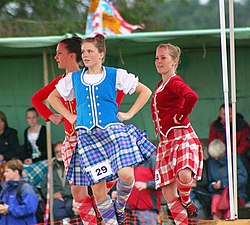
Highland dancing is another essential component, featuring highly technical competitions that preserve traditional Scottish steps.
Major Gatherings and Global Presence
The games are hosted in various formats, from small community gatherings to massive international festivals. In Scotland, events like the Braemar Gathering and the Inverness Highland Games (held at the Northern Meeting Park, the world's oldest Highland games stadium) are prestigious fixtures.
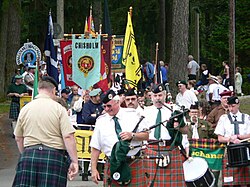
Outside of Scotland, the United States and Canada host some of the largest events. In the US, the New Hampshire Highland Games & Festival and the Grandfather Mountain games in North Carolina are among the most attended. Canada also maintains a strong tradition, with numerous games across provinces such as Alberta, Ontario, and Nova Scotia.
| Location | Event Name | Distinction |
|---|---|---|
| Dunoon, Scotland | Cowal Highland Gathering | Largest games in Scotland |
| Pleasanton, USA | Scottish Highland Gathering and Games | Largest in Northern Hemisphere |
| Inverness, Scotland | Inverness Highland Games | World's oldest stadium (Northern Meeting Park) |
| Burntisland, Scotland | Burntisland Highland Games | Second oldest in the world |
| Ceres, Scotland | Ceres Highland Games | Oldest free games in Scotland |
Frequently Asked Questions
What are the most famous events in the Highland games?
The most emblematic events are the heavy athletics, specifically the caber toss, stone put, weight throw, and weight over bar, alongside bagpipe and drumming competitions and Highland dancing.
Where is the largest Highland games event held?
While the Cowal Highland Gathering is the largest in Scotland, the Scottish Highland Gathering and Games in Pleasanton, California, is the largest in the Northern Hemisphere, attracting up to 50,000 people.
Did the Highland games influence the modern Olympics?
Yes, it is claimed that Baron Pierre de Coubertin was influenced by a display of Highland games at the 1889 Paris Exhibition while planning the revival of the Olympic Games.
How many Highland games are held worldwide?
As of 2000, there were at least 260 annual events globally, with a significant concentration in the United States (over 100) and Canada.
What is the significance of the bagpipes in these games?
Bagpipe band competitions are central to the games and have existed since 1781. They provide the musical backdrop and are a primary source of the traditional Highland imagery associated with the events.