The Vibrant World of Hibiscus: A Comprehensive Guide to the Rose Mallow
Known for their breathtaking, trumpet-shaped blooms and vivid colors, hibiscus plants are among the most recognizable flowers in the world. Belonging to the mallow family, Malvaceae, this diverse genus comprises several hundred species that thrive in tropical, subtropical, and warm temperate regions. Whether appearing as delicate annuals, hardy perennials, woody shrubs, or small trees, hibiscus plants bring a touch of exotic beauty to landscapes across the globe.
Key Facts
- Scientific Family: Malvaceae (mallow family).
- Species Count: Approximately 433 accepted species as of 2026.
- Flower Characteristics: Trumpet-shaped blooms ranging from 4 to 18 cm in width.
- Global Distribution: Native to warm temperate, subtropical, and tropical zones.
- Primary Uses: Ornamental landscaping, papermaking, textile fibers, and culinary beverages.
Botanical Characteristics
The hibiscus is characterized by its striking visual appeal and specific botanical structures. Its leaves are alternate (staggered along the stem) and range from ovate to lanceolate in shape, often featuring dentate (toothed or lobed) margins.
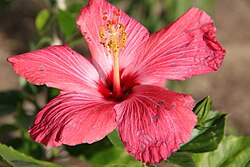
The flowers are the most prominent feature, appearing in a vast spectrum of colors including red, pink, white, yellow, orange, peach, blue, and purple. In some species, such as H. mutabilis and H. tiliaceus, the color of the flower actually changes as it ages. The plant produces a dry, five-lobed capsule fruit that dehisces—meaning it splits open at maturity—to release its seeds.

The Life Cycle and Structure
Hibiscus is considered an example of a complete flower, containing all the necessary reproductive organs. The fruit is typically red or white, housing several seeds within each of its five lobes.
Popular Species and Varieties
While there are hundreds of species, a few have gained worldwide popularity due to their ornamental value and cultural significance.
Ornamental Favorites
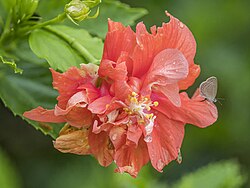
In tropical and subtropical climates, the Chinese hibiscus (Hibiscus × rosa-sinensis) is the most popular choice, prized for its showy hybrids. In temperate zones, the common garden hibiscus (Hibiscus syriacus), also known as the "rose of Sharon," is widely cultivated.
Regional Symbols
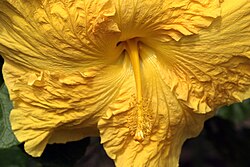
The yellow hibiscus serves as the state flower of Hawaii, though the Chinese hibiscus is more frequently encountered across the islands. Other notable species include the Kenaf (Hibiscus cannabinus), used industrially, and the Roselle (Hibiscus sabdariffa), used primarily for food and drink.
Practical and Industrial Uses
Beyond their beauty, hibiscus species provide significant material and nutritional value.
Landscaping and Ecology
Hibiscus plants are versatile additions to any garden, adapting well to pots, hanging baskets, and urban balcony spaces. They are highly effective at attracting pollinators, including bees, hummingbirds, and butterflies. Gardeners should, however, be mindful of mealybugs, which appear as white, cottony infestations on stems and buds.
Industrial Applications
- Paper: Hibiscus cannabinus (kenaf) is extensively utilized in the papermaking industry.
- Construction and Rope: In Polynesia, the inner bark of the sea hibiscus (Hibiscus tiliaceus) is processed into rope, and its wood is used to create floats for canoes.
Culinary and Beverage Uses
The calyces (the protective outer layer of the flower bud) of Hibiscus sabdariffa are used to create a tart, red, vitamin C-rich beverage. This drink is known by many names globally: bissap in West Africa, karkadé in Egypt and Sudan, agua de jamaica in Mexico, and sorrel in the Caribbean.
In addition to tea, dried hibiscus calyces are a delicacy in Mexico and can be candied for desserts. In the Philippines, Hibiscus aculeatus (known as labog) is used as a souring agent in native chicken soup.
Health Considerations and Precautions
While hibiscus is used in traditional practices like Indian Ayurveda and some claim that H. sabdariffa teas can lower blood pressure, there are important medical precautions to consider.
Pregnancy and Lactation
Hibiscus is not recommended during pregnancy. Animal studies have indicated that H. sabdariffa may stimulate contractions of the uterus and bladder, while H. × rosa-sinensis has shown contraceptive effects and emmenagogue properties (the ability to stimulate menstruation), which could potentially cause abortion.
Drug Interactions
Research suggests that H. sabdariffa may alter the pharmacokinetics (how the body processes a drug) of certain medications. It has been found to reduce the excretion of diclofenac and reduce the bioavailability of chloroquine. No significant interaction was observed with acetaminophen.
Cultural and Symbolic Significance
The hibiscus holds deep meaning in various cultures and religions. In Hinduism, the red hibiscus is associated with the goddess Kali and is offered to both Kali and Ganesha.
In the Pacific Islands, wearing a hibiscus flower behind the ear communicates relationship status: a flower behind the left ear indicates the wearer is married or taken, while the right ear indicates they are single. In the Philippines, children use the sticky juices of the gumamela (local name for hibiscus) mixed with soap to blow bubbles through papaya stalks.
The plant also serves as a national symbol for several countries:
- National Flower: Malaysia (H. × rosa-sinensis), South Korea (H. syriacus), Solomon Islands, and Niue.
- National Symbol: Haiti.
Hibiscus Summary Table
| Scientific Name | Common Name | Primary Use/Significance | Region |
|---|---|---|---|
| H. × rosa-sinensis | Chinese Hibiscus | Ornamental / National Flower of Malaysia | Tropical/Subtropical |
| H. syriacus | Rose of Sharon | Ornamental / National Flower of South Korea | Temperate (Asia) |
| H. sabdariffa | Roselle | Beverages (Tea) and Food | Global Tropical |
| H. cannabinus | Kenaf | Papermaking | Global |
| H. tiliaceus | Sea Hibiscus | Rope and Canoe Floats | Oceania/SE Asia |
| H. brackenridgei | Hawaiian Hibiscus | State Flower of Hawaii | Hawaii |
Frequently Asked Questions
What is the difference between the Rose of Sharon and the Chinese Hibiscus?
The Rose of Sharon (Hibiscus syriacus) is primarily grown in temperate zones and is the national flower of South Korea. The Chinese hibiscus (H. × rosa-sinensis) is a tropical/subtropical hybrid and is the national flower of Malaysia.
Is hibiscus tea safe to drink during pregnancy?
No, it is not recommended. Animal studies have shown that H. sabdariffa can stimulate uterine contractions and H. × rosa-sinensis may have contraceptive or emmenagogue effects.
What part of the hibiscus is used to make the red tea?
The tea is made from the calyces, which are the fleshy, outer protective layers of the flower bud, rather than the petals themselves.
Can hibiscus plants be grown in small urban spaces?
Yes, hibiscus is a versatile plant that adapts well to balcony gardens and can be grown in pots or as hanging plants.
What does it mean when a woman wears a hibiscus behind her ear in the Pacific Islands?
Wearing the flower behind the left ear typically signifies that the woman is married or in a relationship, while wearing it behind the right ear indicates she is single.