Herero and Nama War: The Colonial Conflict in German South West Africa
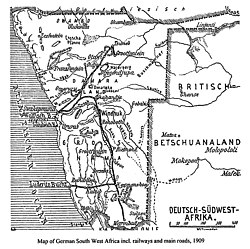
The conflict between 1904 and 1908 in German South West Africa (modern-day Namibia) stands as one of the most devastating episodes of the Scramble for Africa. Known variously as the Herero and Nama War, the Namibian-German War, or the war against the Ovaherero and Nama, this period was marked by a violent struggle for land, sovereignty, and survival. What began as a series of uprisings against colonial rule culminated in the systematic extermination of native peoples.
Key Facts
- Timeline: 1904–1908.
- Location: German South West Africa.
- Primary Belligerents: The German Empire against the Herero, Nama, and other Namibian groups.
- Key Leaders: Theodor Leutwein and Lothar von Trotha (Germany); Samuel Maharero (Herero) and Hendrik Witbooi (Nama).
- Human Cost: Approximately 65,000 to 70,000 Herero and at least 10,000 Nama perished.
- Outcome: German victory and the systematic extermination of native populations.
Pre-Colonial Tensions and German Expansion
Long before German arrival, the region was characterized by inter-ethnic conflict. Starting in 1830, migrations and resource scarcity caused by droughts led to warfare between clans. A significant conflict erupted when the Herero moved into traditional Nama lands. Under the leadership of Jonker Afrikaner, the Nama pushed them back, leading to a period of Nama dominance that lasted until the peace treaty of Hoachanas in 1858, which established the Nama as overlords of the Herero.
In the 1880s, German statesman Otto von Bismarck shifted toward imperial expansion. In 1882, Adolf Lüderitz acquired land at Angra Pequena (Lüderitz Bay) from Joseph Fredericks, a chief of the Oorlam people, in exchange for rifles, money, and toy soldiers. By 1884, the area was declared under the protection of the German Reich. By 1885, most tribes had entered arrangements with Germany, with the exception of the Witboois.
The Impact of Settlement
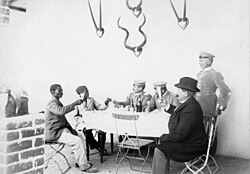
German settlement accelerated through the early 1900s. By 1903, nearly 3,000 Germans lived in towns like Windhoek, Swakopmund, and Lüderitz. This influx brought severe legal discrimination and the expropriation (the act of taking property from its owner) of native lands. The social dynamic was further strained by the fact that the vast majority of settlers were men, leading to widespread sexual violence and the forced concubinage of local women.
The Path to Rebellion
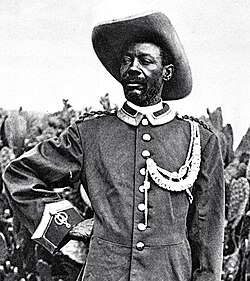
The Herero people faced mounting grievances. While some historians debate the urgency of the land crisis, the implementation of reserves by Governor Theodor Leutwein highlighted how little land the Herero actually retained. Furthermore, a 1903 statute intended to limit contracts instead pressured natives to repay debts to traders.
Tensions peaked with the construction of the Otavi railway. The financier, Otavigesellschaft, demanded not only land for the tracks but also all water rights and a 20-kilometer stretch along the line. Although Samuel Maharero agreed to provide the tracks free of charge, he refused further concessions, fearing the railway would bring an unstoppable wave of settlers.
The Outbreak of War
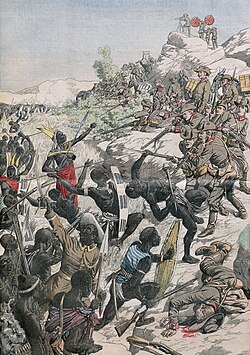
On January 12, 1904, the Herero clans launched an uprising. Approximately 8,000 warriors, armed with a mix of firearms and spears, attacked German farms and businesses. The initial phase was a stunning success for the rebels, who killed between 123 and 160 Germans—mostly farmers and traders. The Herero generally spared women, children, and non-German Europeans, focusing their attacks on the economic infrastructure of the colonists to force their permanent departure from Namibia.
The German Response
The German colonial forces were initially surprised. With only about 766 regular soldiers, they were reinforced by reservists, settler volunteers, and scouts from the Baster and Witbooi groups. Despite being outnumbered, the colonial forces possessed superior organization and weaponry. Leutwein managed to neutralize the Bondelswarts uprising through a peace treaty, allowing him to concentrate his troops in the north to face the Herero.
The Aftermath and Legacy
By 1908, Germany had re-established control, but at a catastrophic human cost. Between 34,000 and 110,000 Africans died, many from combat, while others died of thirst while fleeing into the desert.
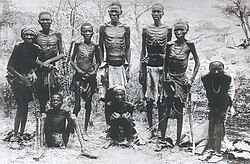
The international community and the German government eventually recognized the horror of these events. In 2004, Germany officially apologized for the atrocities. By 2015, the German government formally admitted that the massacres were equivalent to genocide. In 2021, Germany announced a payment of €1.1 billion to Namibia as a gesture of reconciliation.
| Category | Details |
|---|---|
| Belligerents | German Empire vs. Herero, Nama, and other Namibians |
| German Casualties | 676 KIA, 76 MIA, 907 WIA, 689 died of disease, 100 civilians |
| Native Casualties | 65,000–70,000 Herero; at least 10,000 Nama |
| Key Result | German victory; systematic extermination of native peoples |
| Reparations | €1.1 billion announced by Germany in 2021 |
Frequently Asked Questions
What caused the Herero and Nama to rebel against Germany?
The rebellion was driven by a combination of land expropriation, legal discrimination, sexual violence against native women, and grievances over the Otavi railway's demands for land and water rights.
Who were the primary leaders of the conflict?
The German forces were led by Theodor Leutwein and Lothar von Trotha. The native resistance was led by Samuel Maharero of the Herero and Hendrik Witbooi of the Nama.
How many people died during the conflict?
The loss of life was staggering: between 65,000 and 70,000 Herero and at least 10,000 Nama died. German losses included 676 killed in action and hundreds more from disease and wounds.
Does Germany recognize the conflict as a genocide?
Yes. While an apology was issued in 2004, the German government formally admitted in 2015 that the massacres were equivalent to genocide.
What is the current status of reparations?
Following a class action lawsuit by the Herero and a formal admission of genocide, Germany announced in 2021 that it would repay Namibia €1.1 billion.