Henry Yorke Stanger: Political Career and Advocacy
Henry Yorke Stanger was a dedicated member of the Liberal Party whose political journey reflected the competitive nature of early 20th-century British elections. While his path to Parliament involved several initial setbacks, he eventually secured a significant victory that shifted the political landscape of North-West London.
The Path to Parliament
Stanger's entry into electoral politics began in 1900. He first contested a by-election in Newark, a seat considered a safe stronghold for the Conservative Party. In this initial attempt, he was soundly defeated. Undeterred, he shifted his focus a few months later during the 1900 General Election to contest Nottingham South. Although this seat was more marginal—meaning the difference in votes between candidates was smaller—he again finished in second place.
His persistence paid off in early 1903 when the Liberal Party requested that he contest a constituency in North-West London. This strategic move culminated in the 1906 General Election, where Stanger was successfully elected as the Member of Parliament (MP) for Kensington North, successfully flipping the seat from Conservative to Liberal control.
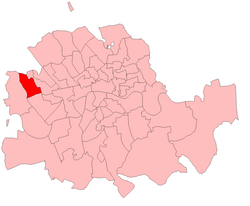
Election Results for Kensington North (1906)
The 1906 victory was a decisive one for Stanger, characterized by a significant swing in voter preference toward the Liberal Party.
| Party | Candidate | Votes | Percentage (%) | Change (±%) |
|---|---|---|---|---|
| Liberal | Henry Yorke Stanger | 4,416 | 56.8 | +13.1 |
| Conservative | William Ellis Hume-Williams | 3,358 | 43.2 | -13.1 |
The election saw a turnout of 10,270 voters (75.7%), resulting in a majority of 1,058 votes for Stanger.
Legislative Focus and Later Roles
During his time in office, Stanger was a vocal advocate for Women's Suffrage—the legal right for women to vote. In 1908, he took a direct legislative step by introducing a Private Member's Bill (a bill proposed by an MP who is not a government minister) to support this cause. Although the bill made considerable progress, it was ultimately blocked.
Stanger chose to stand down from Parliament in January 1910 after serving one term. Following his parliamentary career, he continued to serve in public capacities, acting as the Independent Chairman of the Nottinghamshire Joint Committee under the Coal Mines (Minimum Wage) Act 1912.
Key Facts
- Party Affiliation: Liberal Party.
- Parliamentary Seat: MP for Kensington North (elected 1906).
- Suffrage Advocacy: Introduced a Private Member's Bill for Women's Suffrage in 1908.
- Election Victory: Won Kensington North with 56.8% of the vote, gaining the seat from the Conservatives.
- Post-Parliamentary Role: Independent Chairman of the Nottinghamshire Joint Committee (Coal Mines Act 1912).
Frequently Asked Questions
Which political party did Henry Yorke Stanger represent?
Henry Yorke Stanger was a member of the Liberal Party.
How many times did Stanger run for office before winning?
He ran twice unsuccessfully in 1900—first in a Newark by-election and then in the General Election for Nottingham South—before winning the seat for Kensington North in 1906.
What was Stanger's contribution to women's rights?
He was a strong supporter of Votes for Women and introduced a Private Member's Bill in 1908 to advance Women's Suffrage.
When did he leave Parliament?
Stanger stood down from his position as an MP in January 1910 after serving one term.
What role did he hold after his time in Parliament?
He served as the Independent Chairman of the Nottinghamshire Joint Committee under the Coal Mines (Minimum Wage) Act 1912.